Elephants
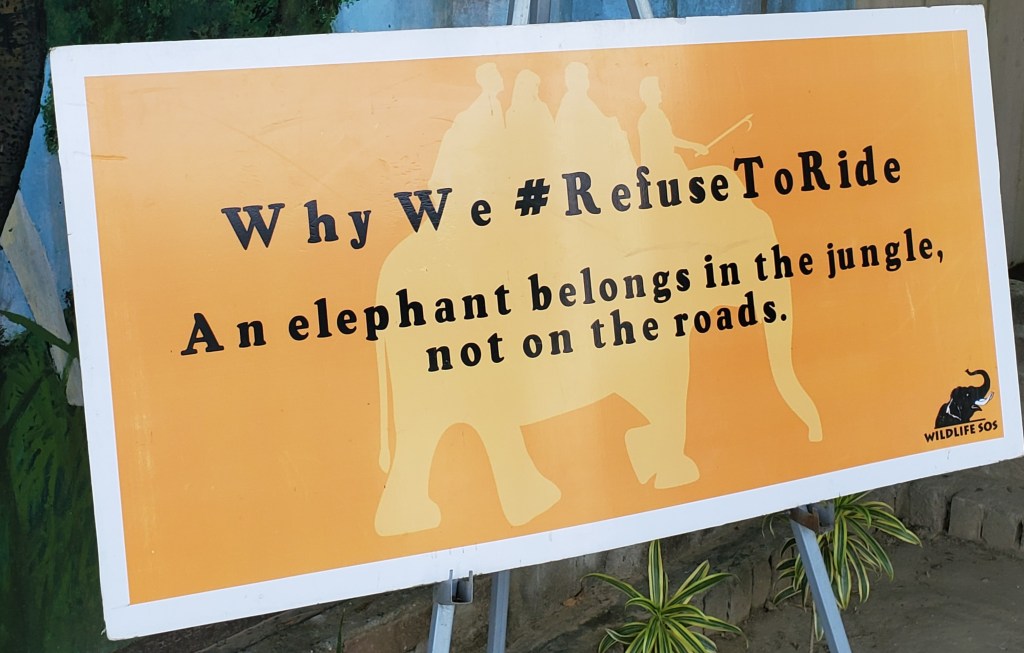
We visited an elephant sanctuary in Mathura which is about 30 minutes outside Agra. It is run by Wildlife SOS, an Indian non-profit. The organization has multiple missions. Here, they rescue elephants that are abused for human or entertainment uses, mainly in the circus or as riding or Temple elephants. Elephants are a sacred animal to Hindus–we learned that elephants will be kept in temples across India during certain festivals. They are made to stand without moving for 20 hours a day. To do this, they are chained in place with spikes placed at their haunches, so that they are stabbed if they move.
They have 23 elephants currently, and they have multiple cases ongoing to rescue more. Since 2009, they have rescued over 200 elephants, allowing them to live out their retirement in peace and with medical treatment.
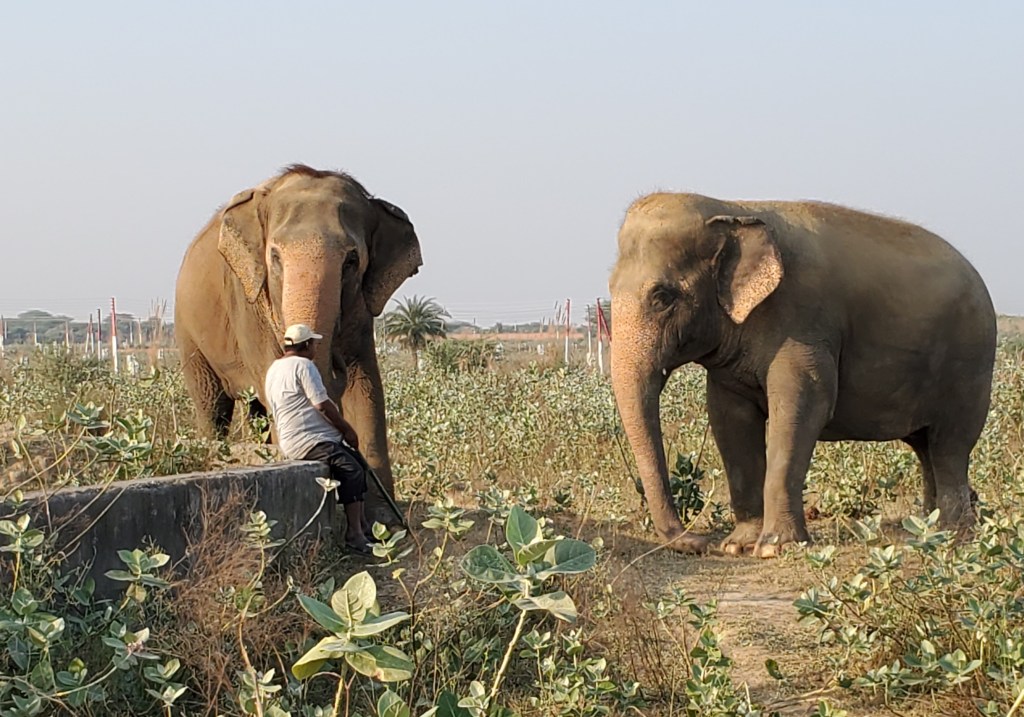
This is Asha and Suzy. Asha was a riding elephant in Jaipur. She has a ripped ear and shoulder injuries. Suzy spent 60 years in the circus. As she aged, she became blind and therefore useless to her owners. They abandoned her in the wild. A good samaritan called Wildlife SOS to help her since she would have no chance in the wild. She can sense Asha’s movement, so she follows her around. She’s a survivor–she’s my favorite.
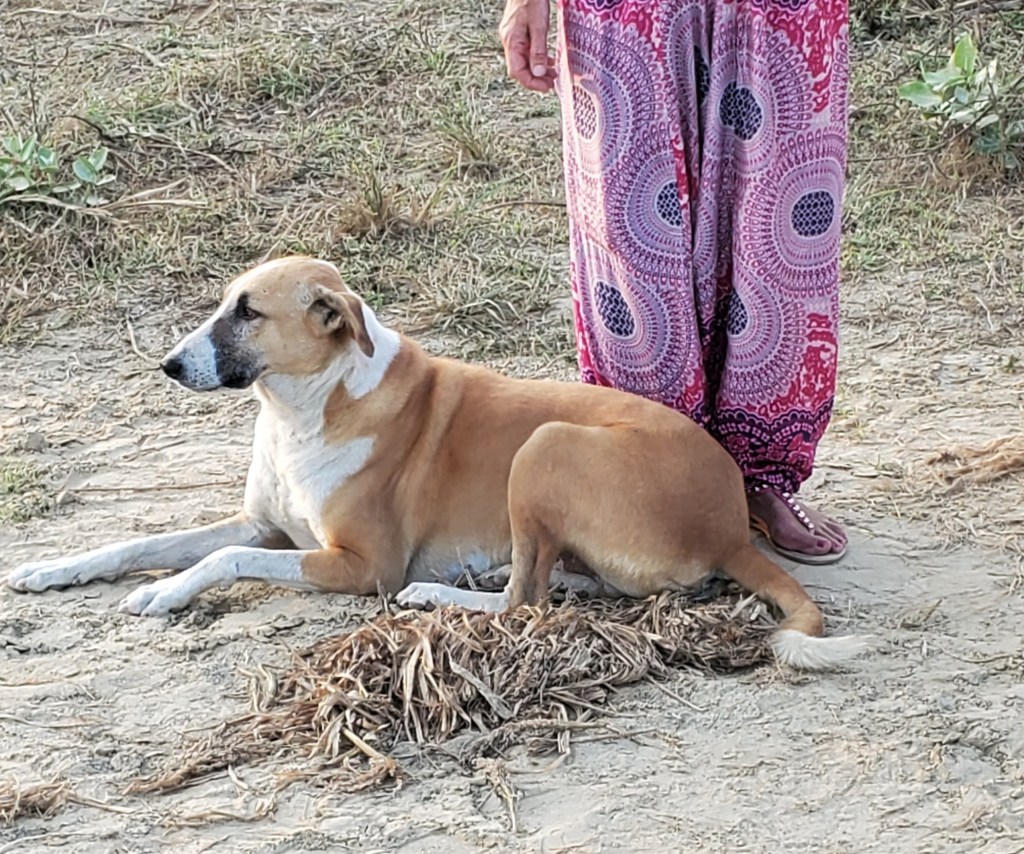
They had a few dogs that live with them at the sanctuary. The elephant handlers also live onsite. This is the Indian Cody. He demanded attention and wouldn’t let you stop if you started petting him. Cody also likes to lay on feet–a great asset in the winter. This lady couldn’t move for 5 minutes. =)
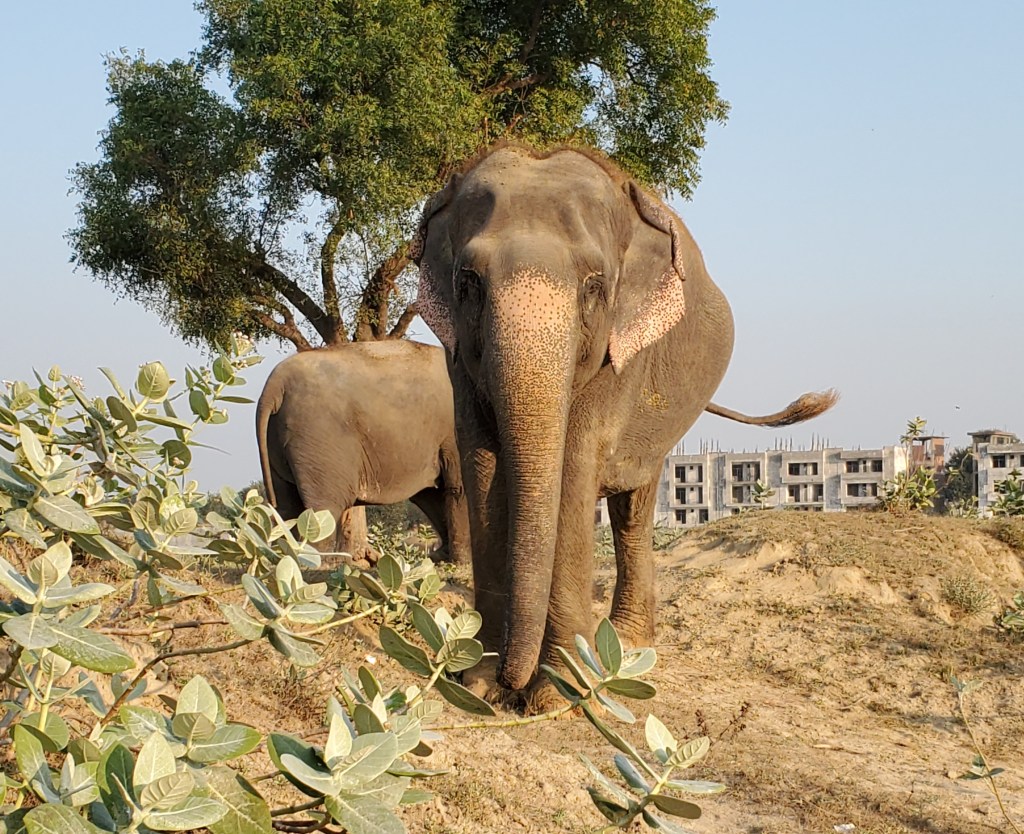
This is Maya, and Phoolkali. Maya was a circus elephant in Agra, she’s one of the first elephants they saved. A normal sight in a circus is an elephant balancing on one or two legs. What I’d never thought about was the weight that one leg has to carry in order to do that and the toll it takes on those limbs. We saw a few elephants with cracked nails on their feet (which never heal on an elephant apparently, because of there very low metabolism rate) or limping with leg injuries as a result of their time with the circus. The video below shows how Maya doesn’t place much weight on her front leg. She moves it to help ease the cracked nails she has on it. I tried to capture the sound she kept making, she was groaning in pain, the poor girl.
Elephants love baths–they will clean themselves often. Phoolkali, behind Maya there, was a riding elephant. She never had the opportunity to bathe herself–her owners would hose her off once a week or so. When she was first rescused, she sat in the water and bathed for 6 hours! Then, she went on a 14 mile run down the road.
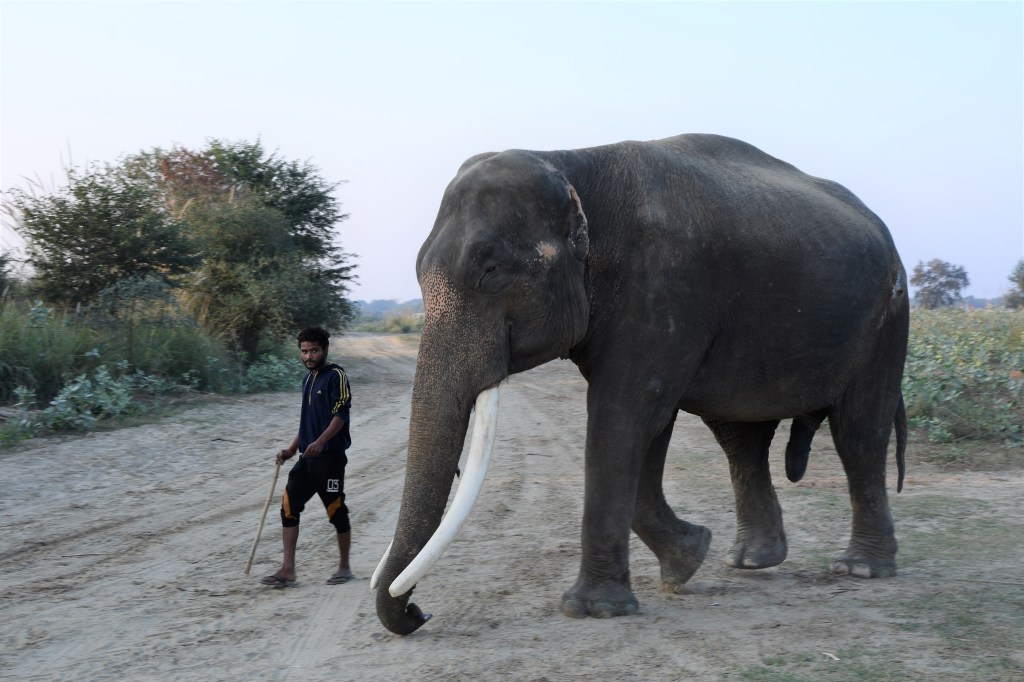
This majestic guy is Suraj. He was a temple elephant they rescued in 2015. He’s missing his entire left ear; they believe it was cut off when he was poached as a young calf. You can also see an abscess on his left hip that still has yet to heal 4 years later.
Our guide, Vijay, described how elephants are trained for circus tricks or to allow riders. It was very sad to hear, and I’m glad this organization works to help these animals. They do a lot of education for the public in hopes that if people know what is done to the animals to get the end result, they will not support the practices.
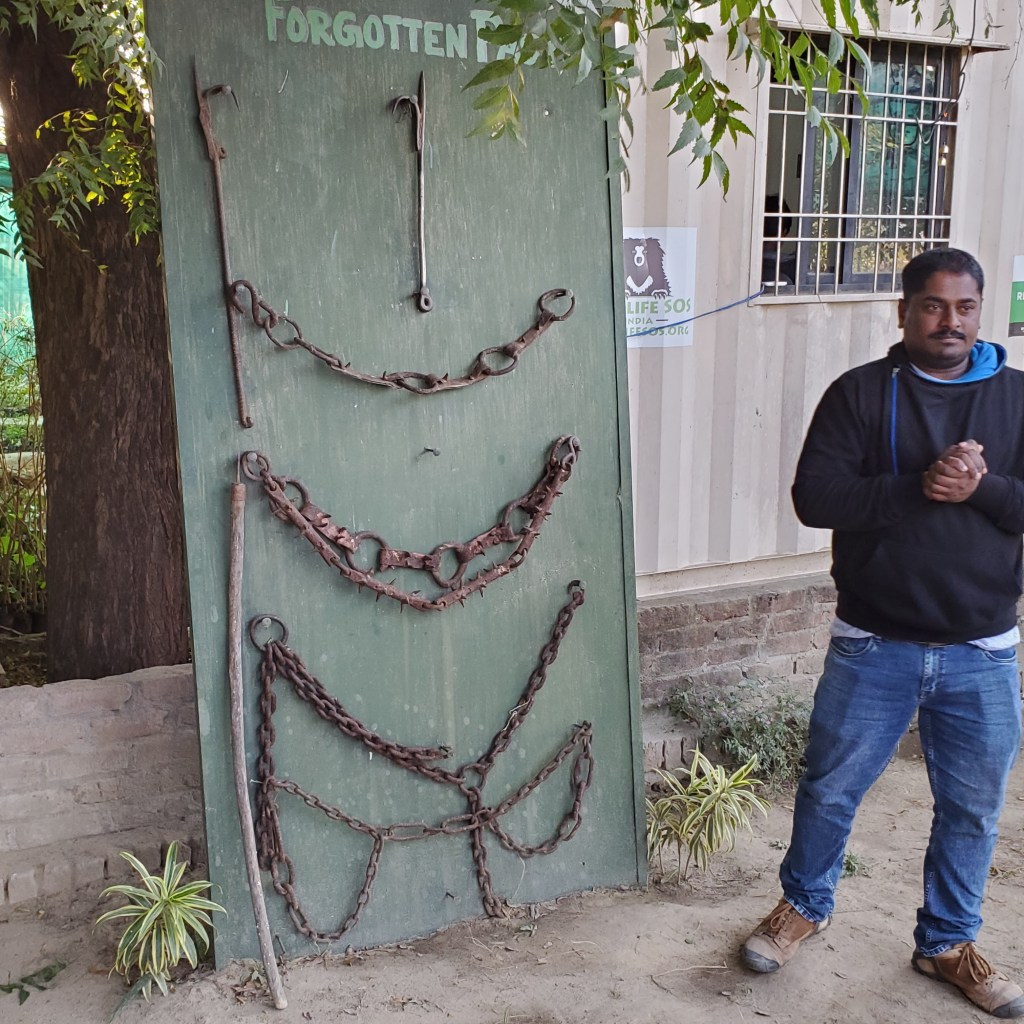
Wildlife SOS had a great success in stopping the dancing bears trade in India. Sloth bears were captured and “trained” to jump so it looked like they were dancing. Not only did Wildlife SOS work with local governments for legislation and to legally acquire bears that were abused (they have a sloth bear sanctuary as well), they spent a lot of time and money in the communities whose livelihoods were tied to this trade. They provided funds for schooling and other skills training, so the families had options; they don’t feel they have to continue abusing the bears in order to feed their loved ones. They are attempting the same with owners of elephants, but they are finding it much more difficult. An elephant can cost $150,000 USD, so those that purchase elephants also usually have power or sway in the political arena.
 Ben and Megan Travel the World