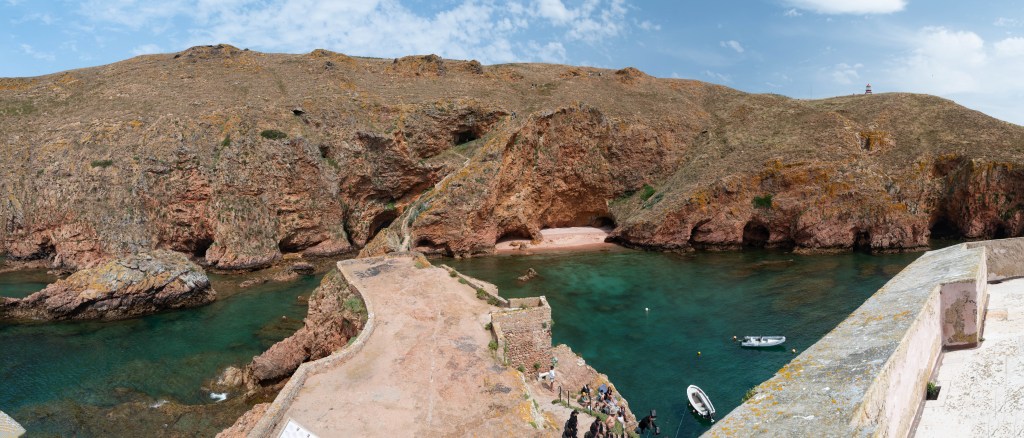
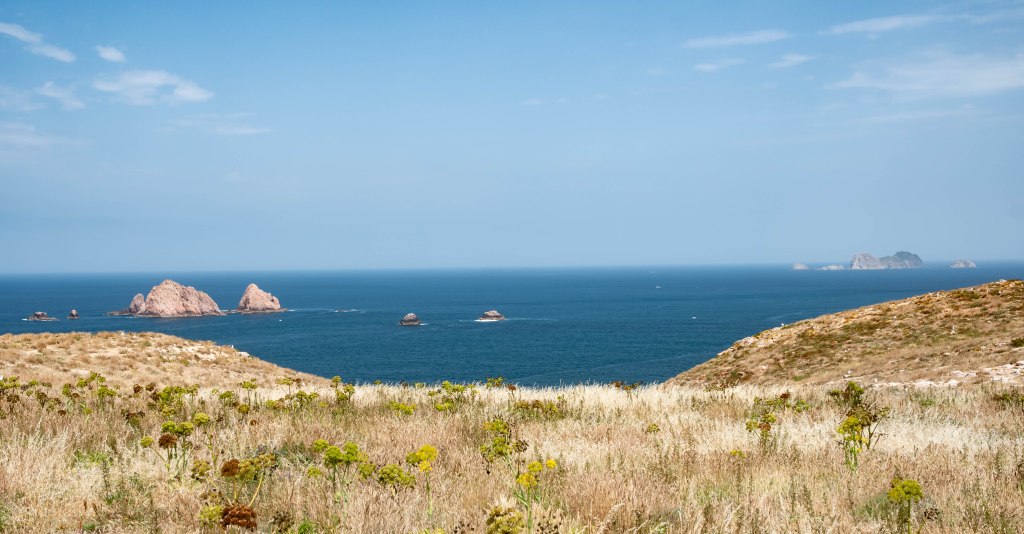
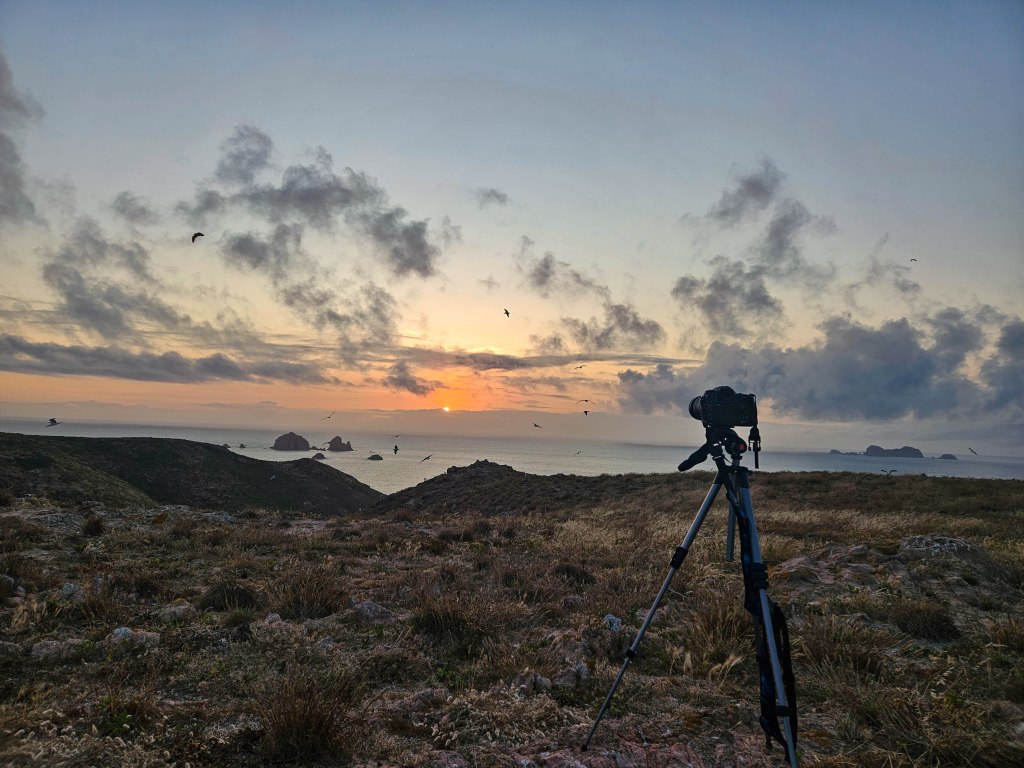
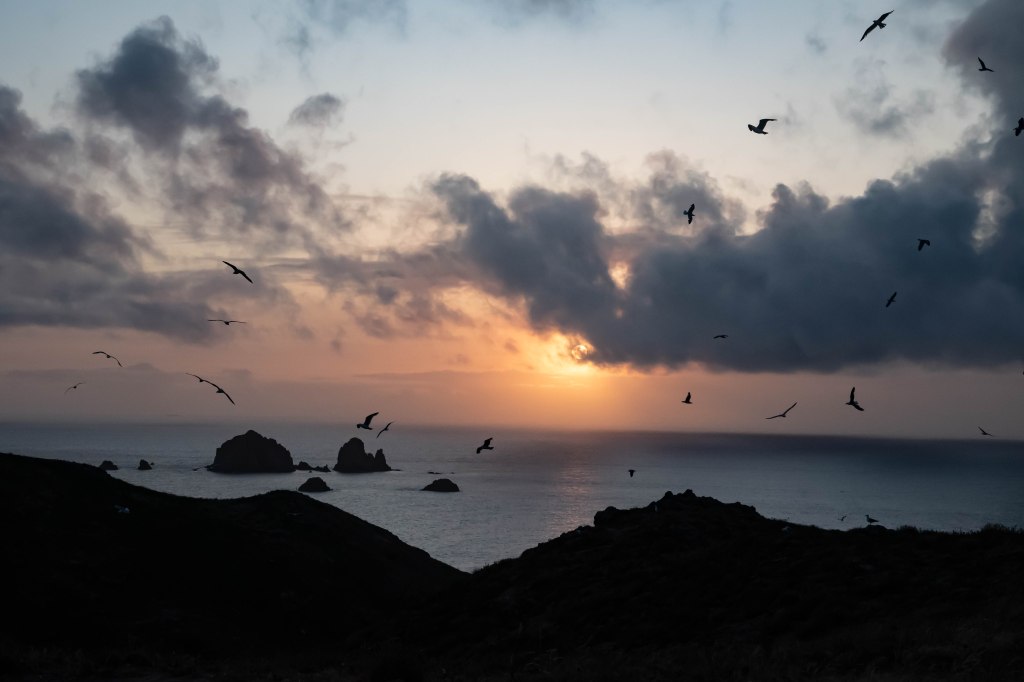
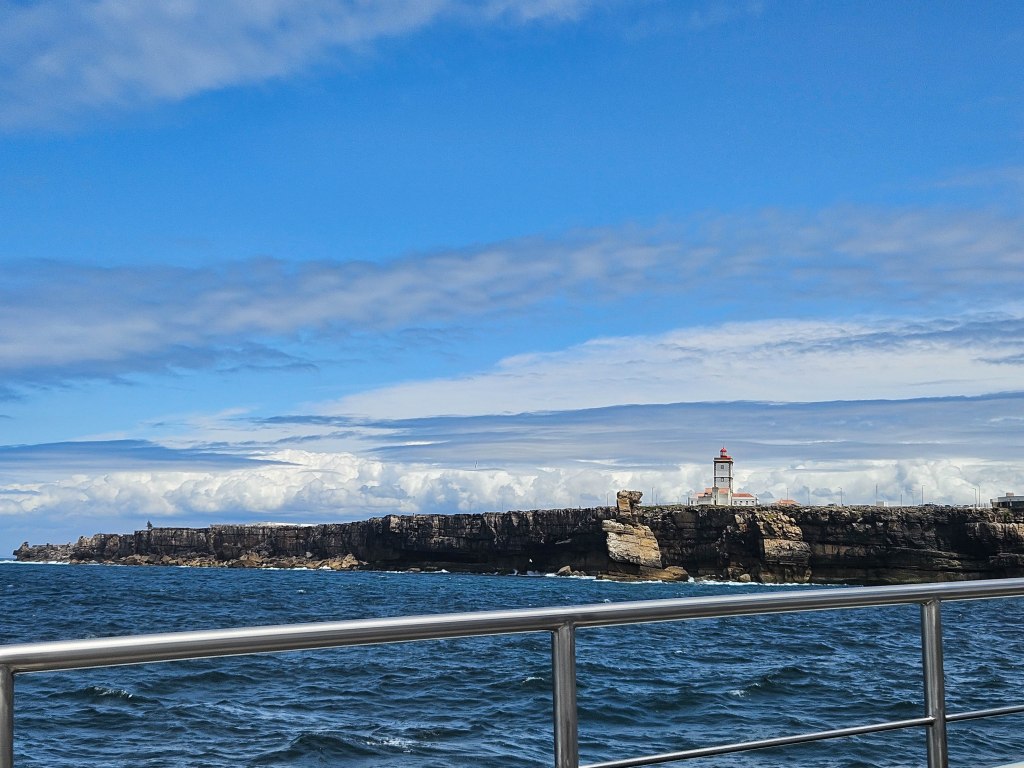
The Berlengas islands are a nature preserve on the Atlanic coast in central Portugal. They are half an hour west of Peniche by boat. You can stay on Berlenga Grande inside the fort, at a small B&B with 5 rooms, or on primitive campsites. I believe that is the only island open to the public. This preserve has been protected since 1465!
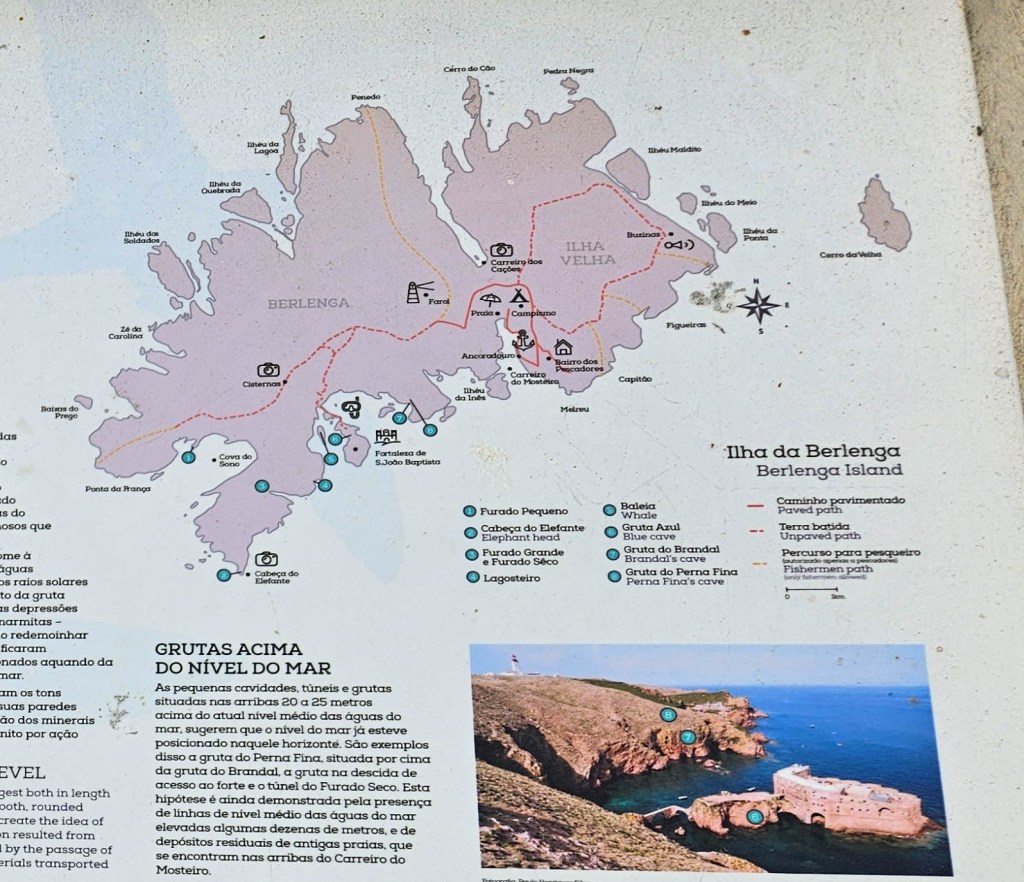
This is a map of the main island. We walked all the trails that were open to the public.
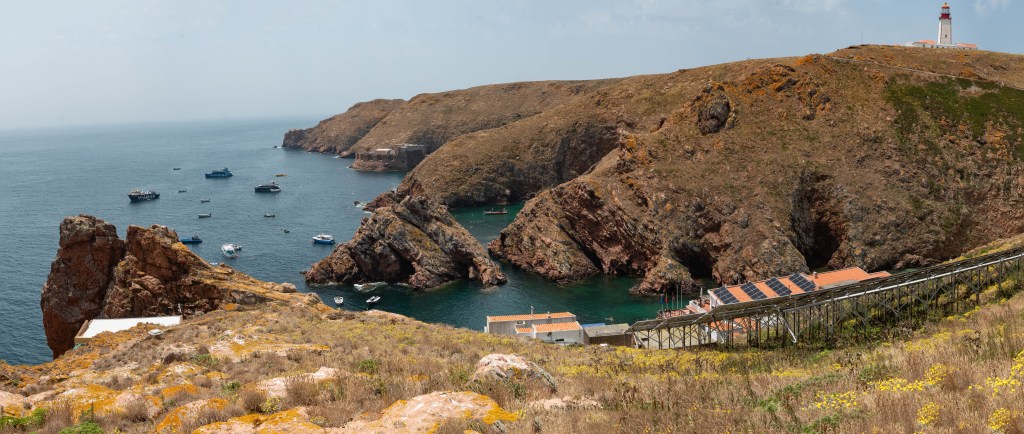
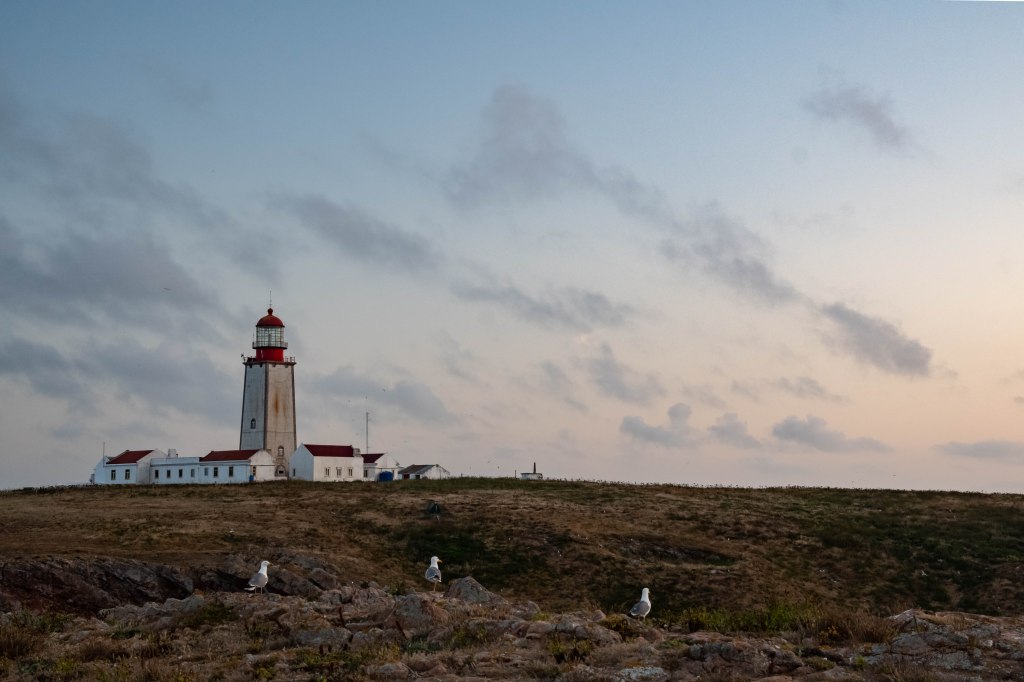
The photo above is a shot of Berlenga Grande. You can see the solar array for the main habitation area, where the B&B and restaurant are. There are also several rooms which can house researchers, fishermen, or workers that stay on the island. The Duque de Brangança lighthouse at the top right is still active. It was built in 1841 and is solely powered by solar panels.
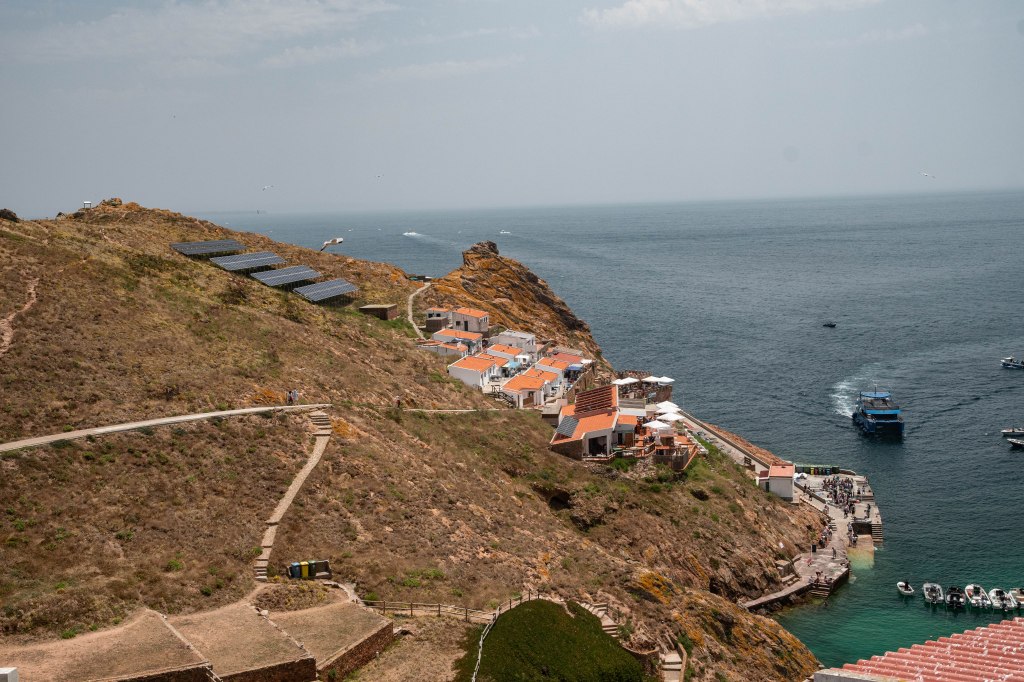
Ben and I went here in June for our anniversary. We stayed at the B&B. The larger building further down the hill is the restuarant. The rooms were below that. It was nice to have a little privacy from that design from visitors coming into the dock below.
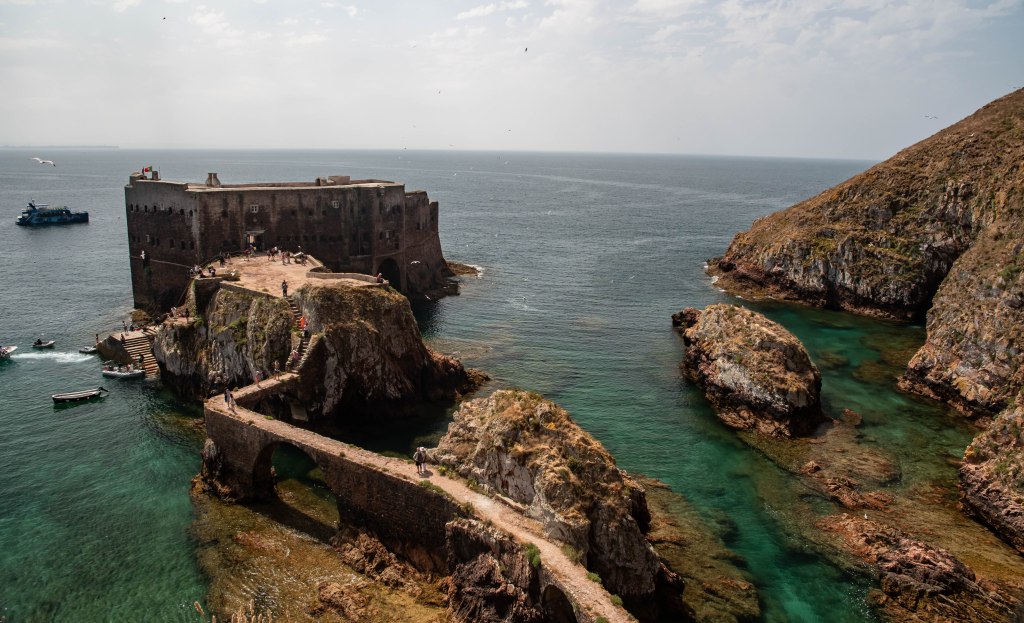
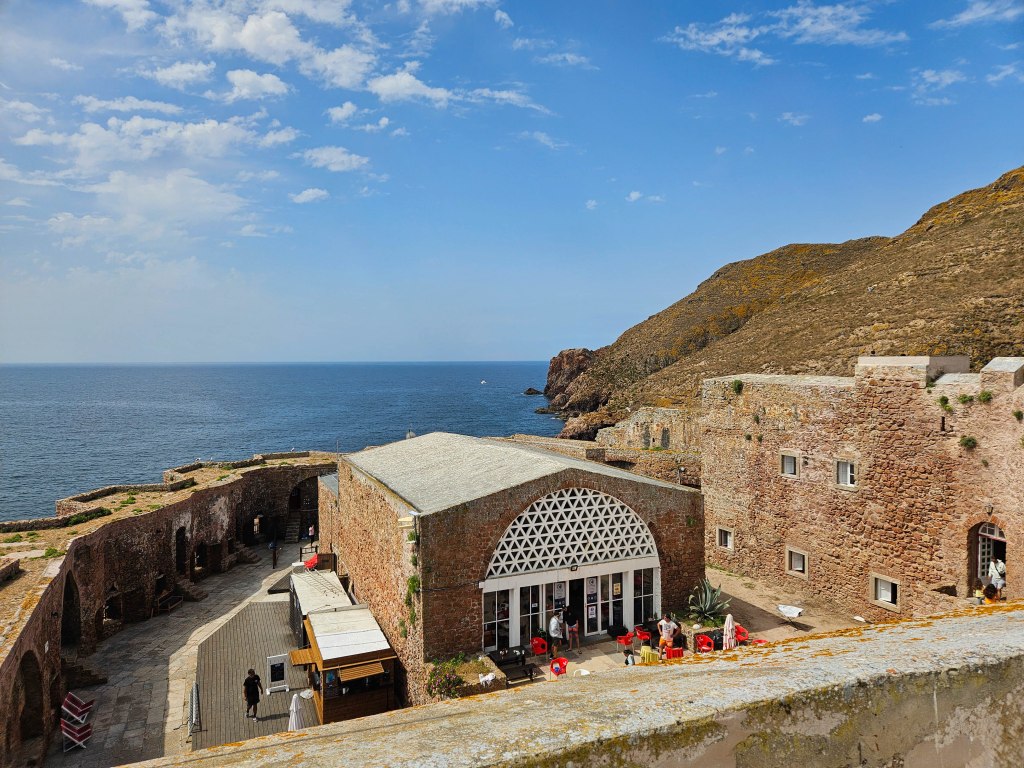
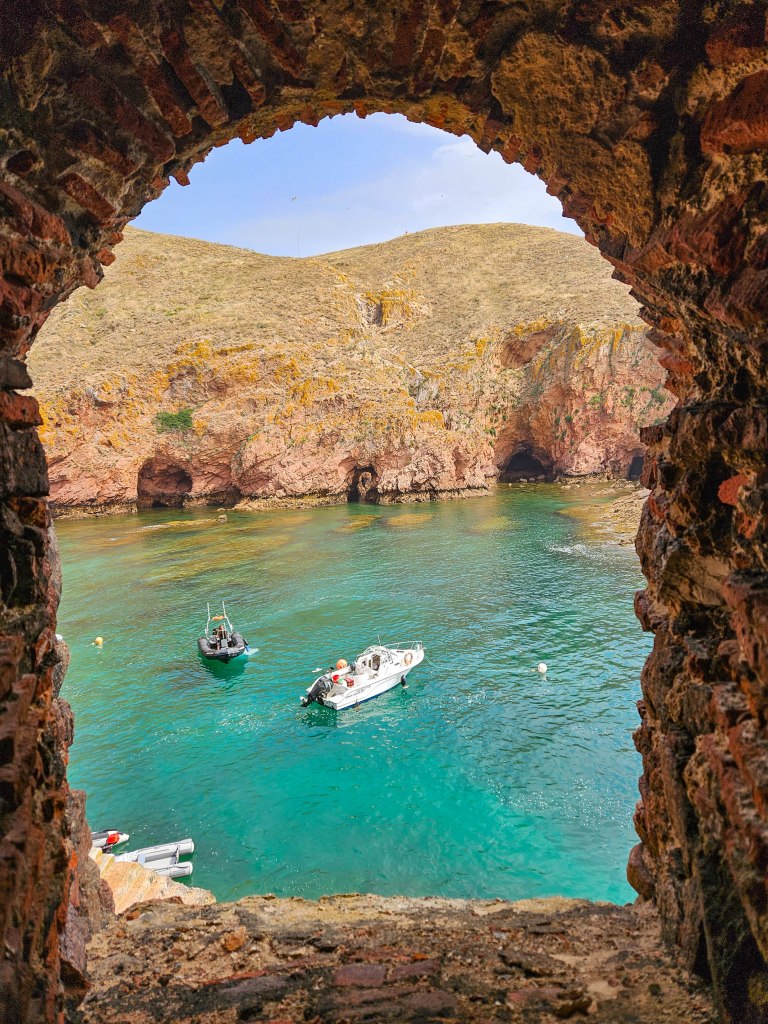
The above photo is of the Fort of São João Baptista. It was built in the early 1600’s, and withstood an attack by 3 Ottoman ships in 1655. It’s a small and basic fort, with much of the interior converted to rooms for people to stay overnight. There is a brief history in one room, and you can walk around the top of it for gorgeous views of the cove.
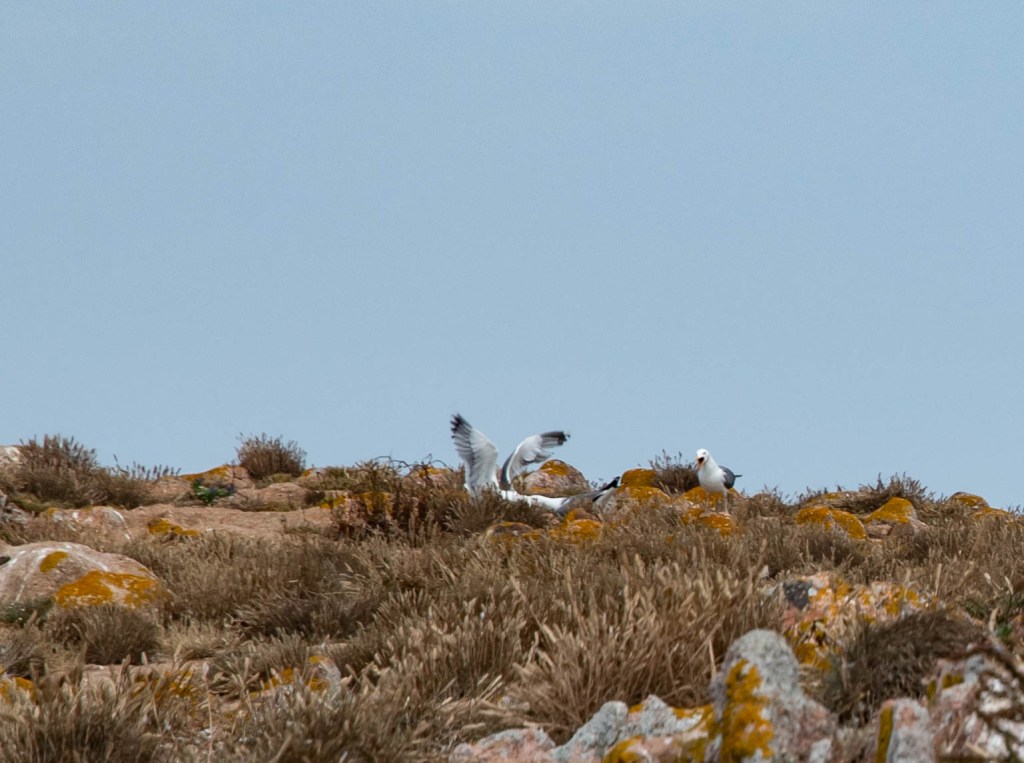
The archipelago is home to several species of birds. I had hoped to see a peregrine falcon, but all we saw were lots and lots of gulls. And for those that know Ben’s and my history with birds…yes, we stumbled across another nesting area. I got pecked in the head again, but we managed to get through it on the trail without injury. =)
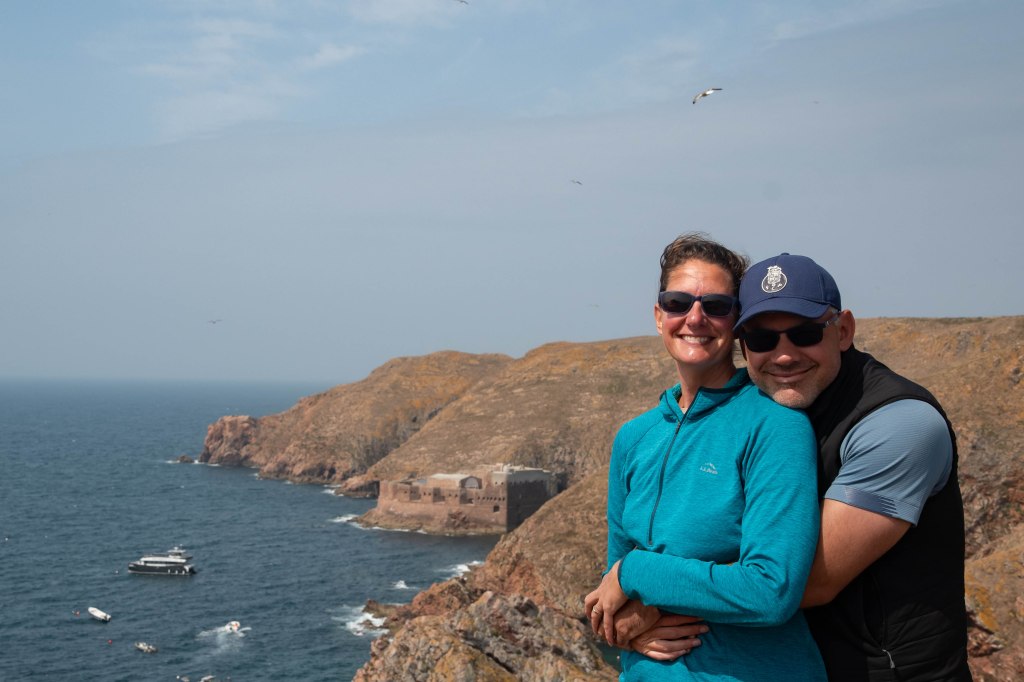
Us with the fort in the background…
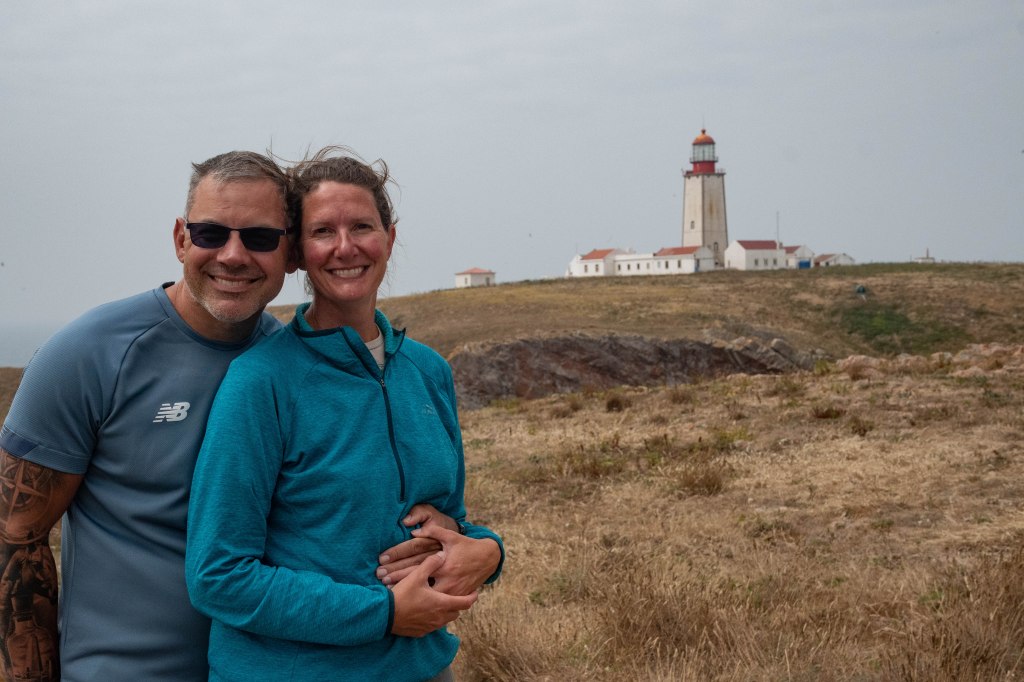
…and the lighthouse.
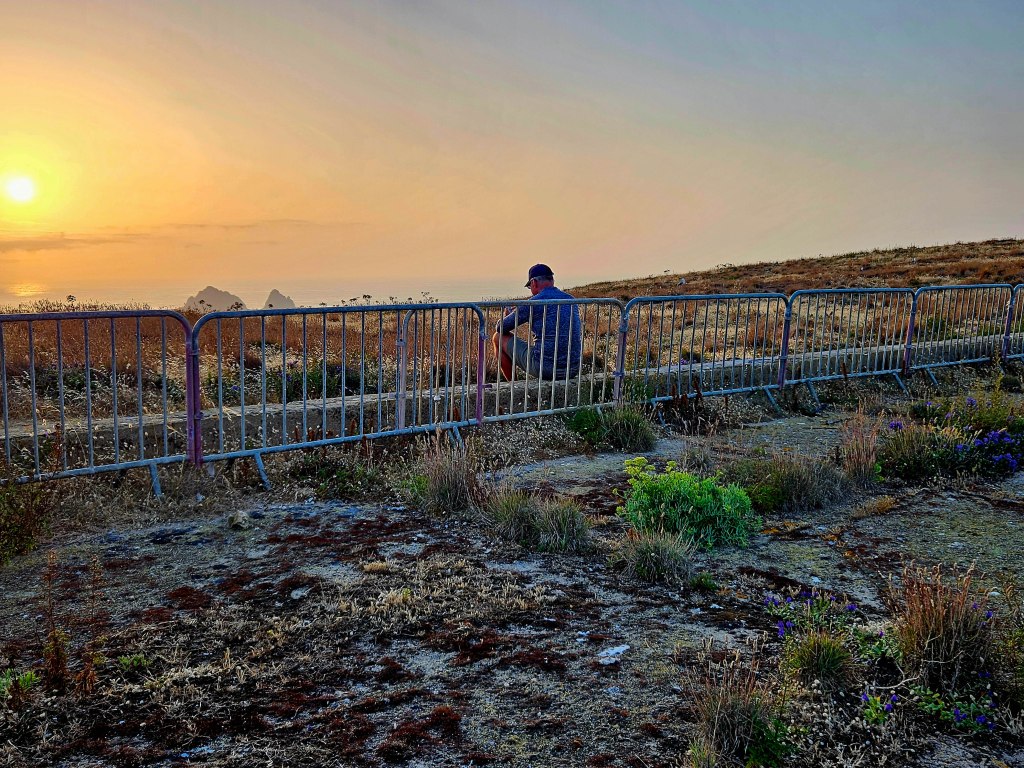
This was a good spot to catch the sunset and get cell service.
On the way back to Peniche
We enjoyed our stay, and we’ll come back. We didn’t get to kayak around the island, the seas were pretty high while we were there. Maybe next time.
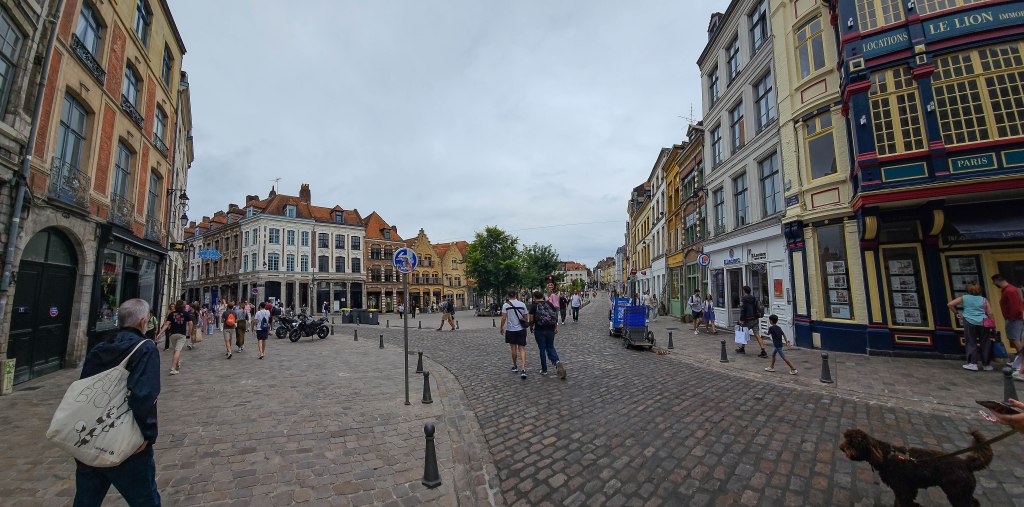
The next day we took the train north to Lille. This is where most of the basketball tournament was held. They moved to Paris for playoffs/medal games. We had a lot of down time since we booked 3 nights in Lille and were only seeing one basketball game. A nice change of pace from our days in Paris. =)
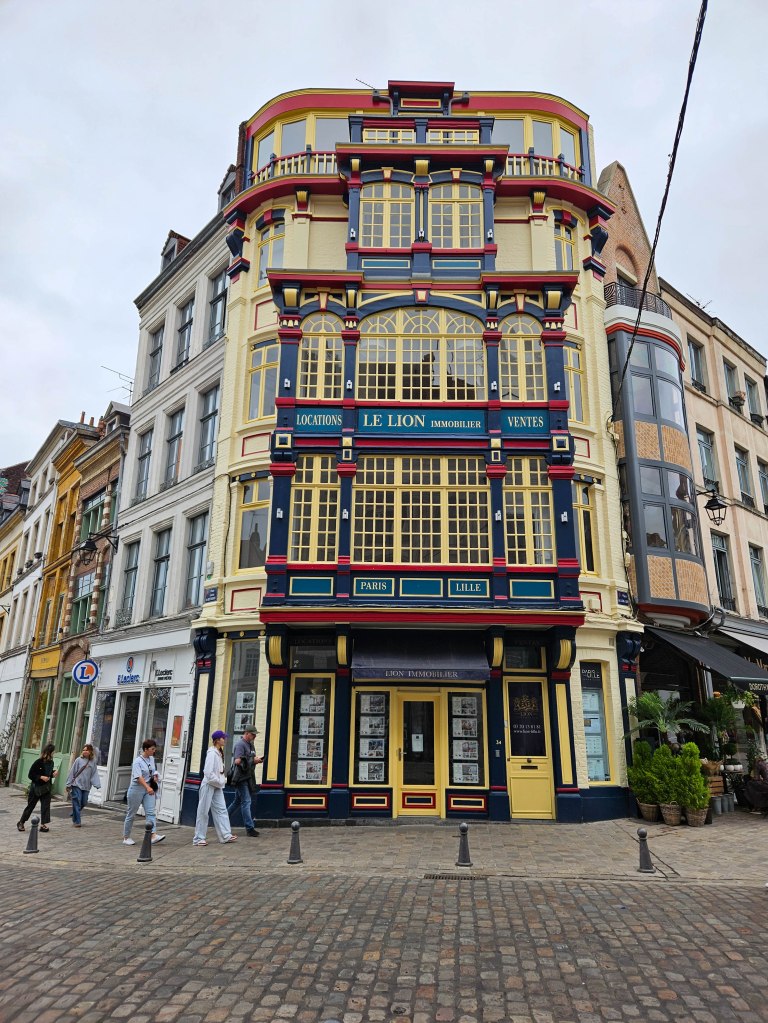
The town of Lille is beautiful, lots of great architecture and expansive parks. It was busy because of the Olympics, even more so since the US women’s team was playing Germany. From Lille, you can drive to the entire country of Germany within 3 to 8 hours. (You can tell I’m American as I relate it to driving rather than taking a train. See, in America, an 8 hour train ride can take up to 15 hours. Sorry Amtrak, it’s true.)
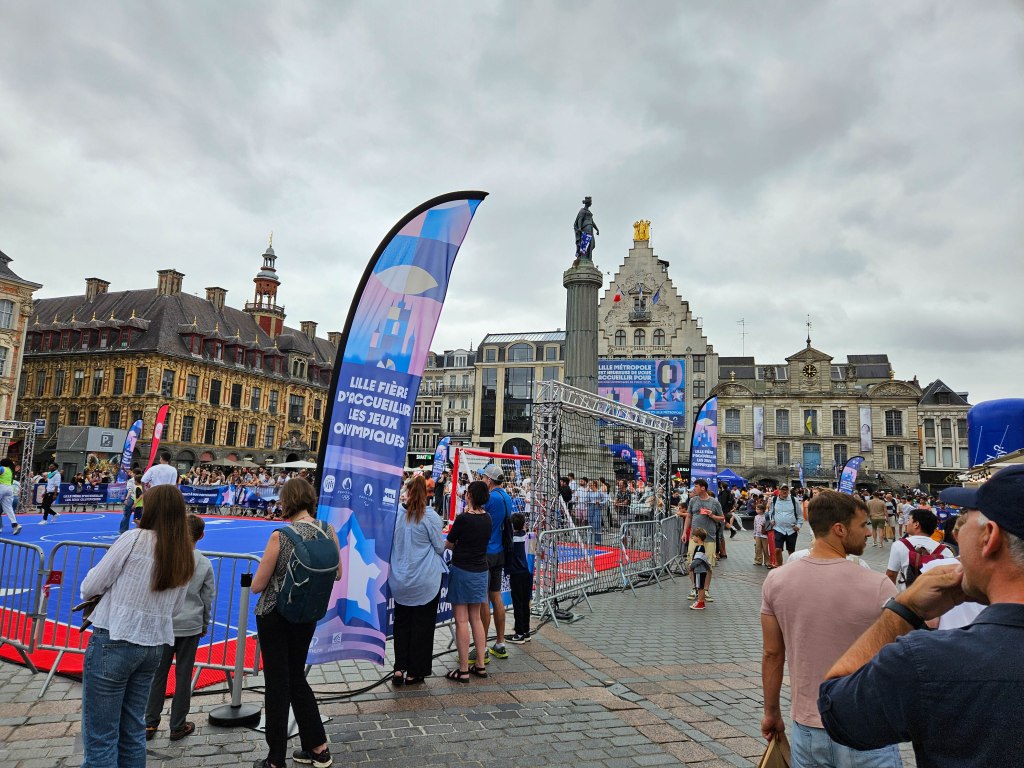
There was a large setup for games and kids’ activites in the Grand Place, a large town square surrounded by beautiful buildings. They had a basketball court, a rock climbing wall (that was inflatable! genius), and of course football/soccer.
The yellow building to the back left is the La Vielle Bourse, the Old Stock Exchange. It housed the Lille Chamber of Commerce and Industry. It was built in 1653 and served as the stock exchange until 1920’s, when the new building opened and this one was closed. The Théâtre du Nord is the smaller building to the far right, with the clock tower. It was built as a garrison in 1717, later used as a covered market, and renovated to house a theater in 1989. The larger building with the gold top contains shops and offices.
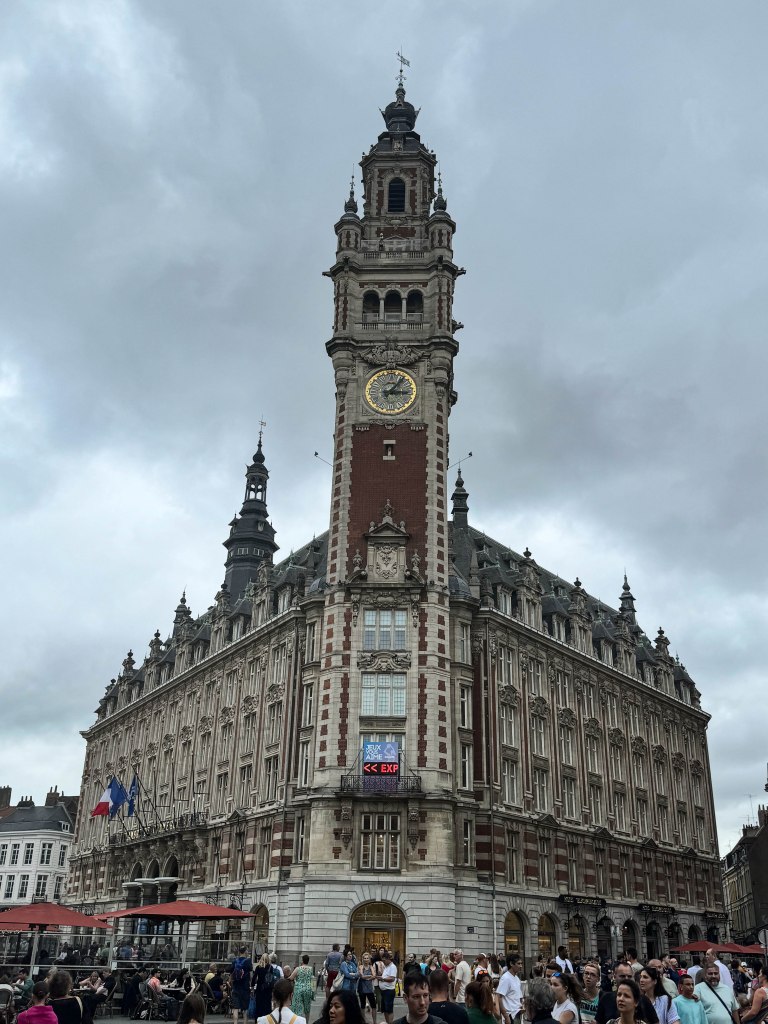
The building above is the new Chamber of Commerce. It is behind the old stock exchange building, just across another town square, the Place du Théâtre.
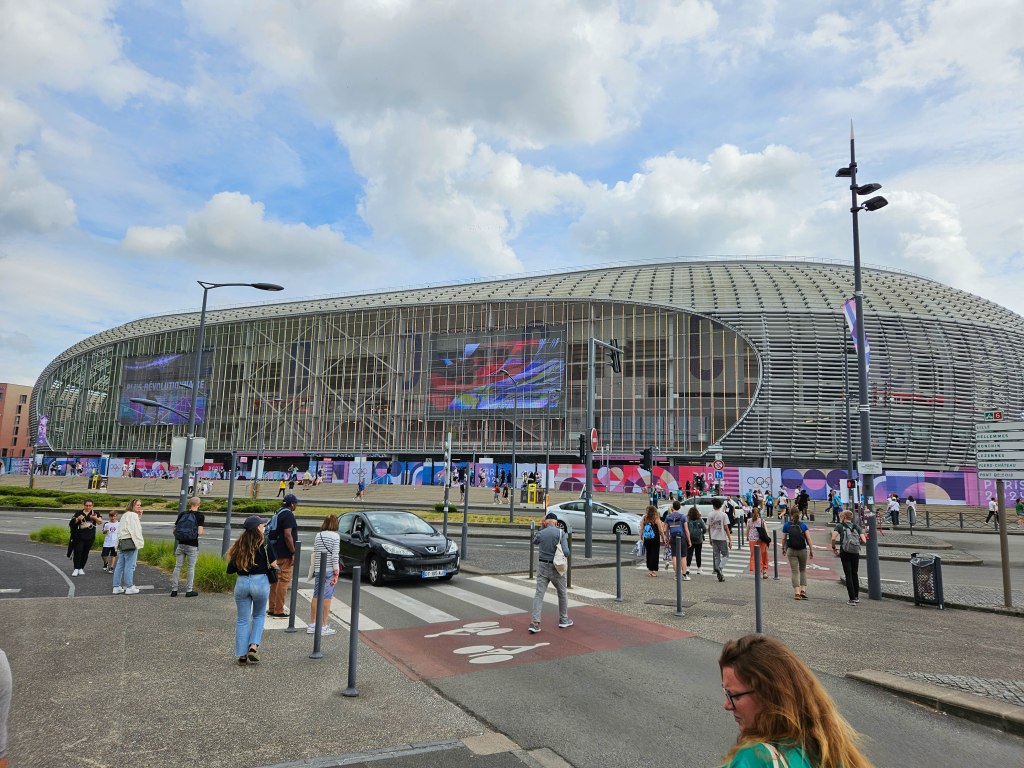
We saw the women’s basketball team play Germany. The venue was a bit outside Lille but fairly easy from the train and a bit of a walk, like the rest of the venues we visited.
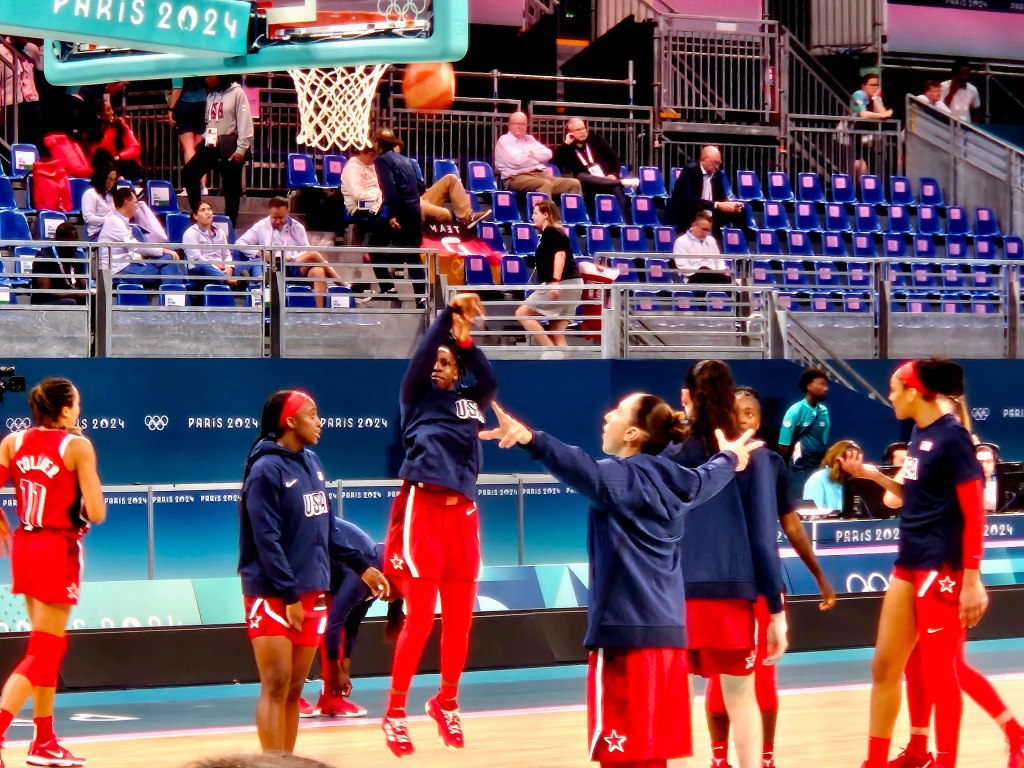
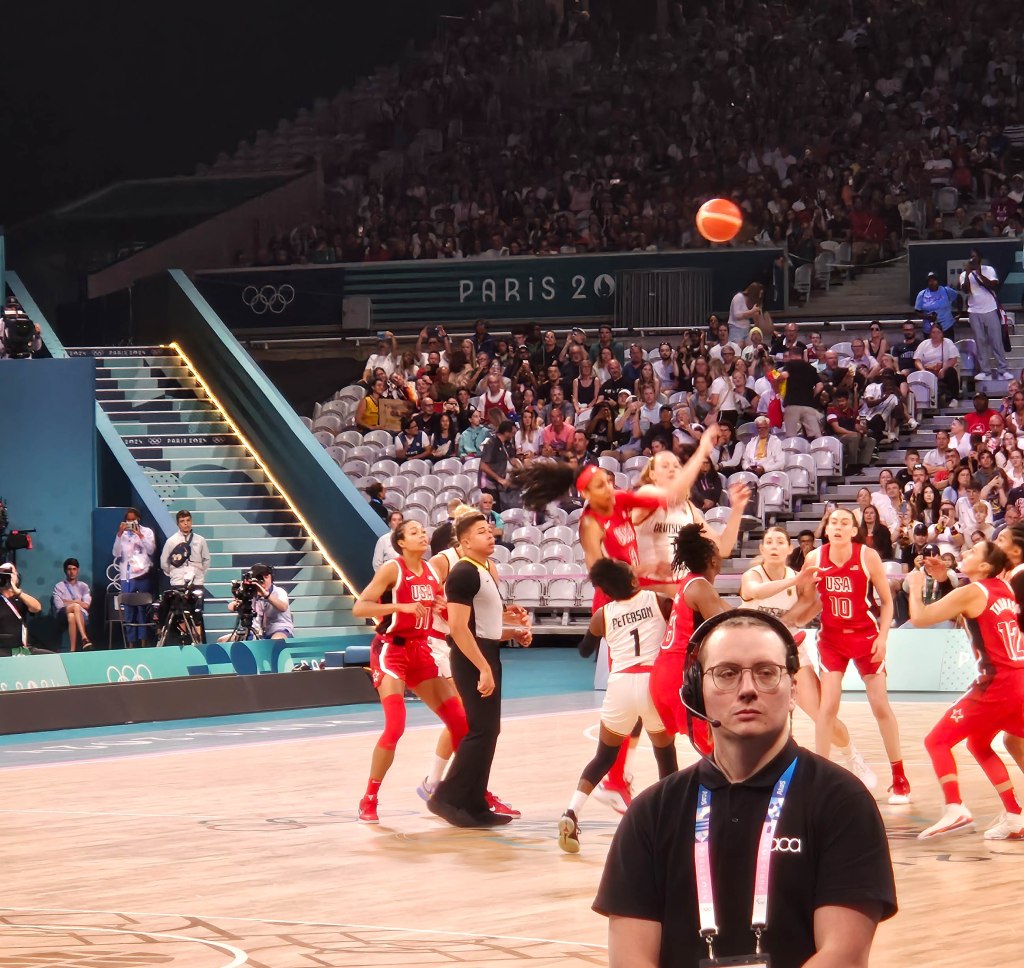
We’ve been following women’s basketball more in the last 3 or 4 years; it’s gotten very strong – both college and professional. It’s changed a bit since we saw the NCAA tournament first round in 2012. This was great to see so many amazing players on the same team. I’m really glad we got to see Diana Turasi play before she retired.
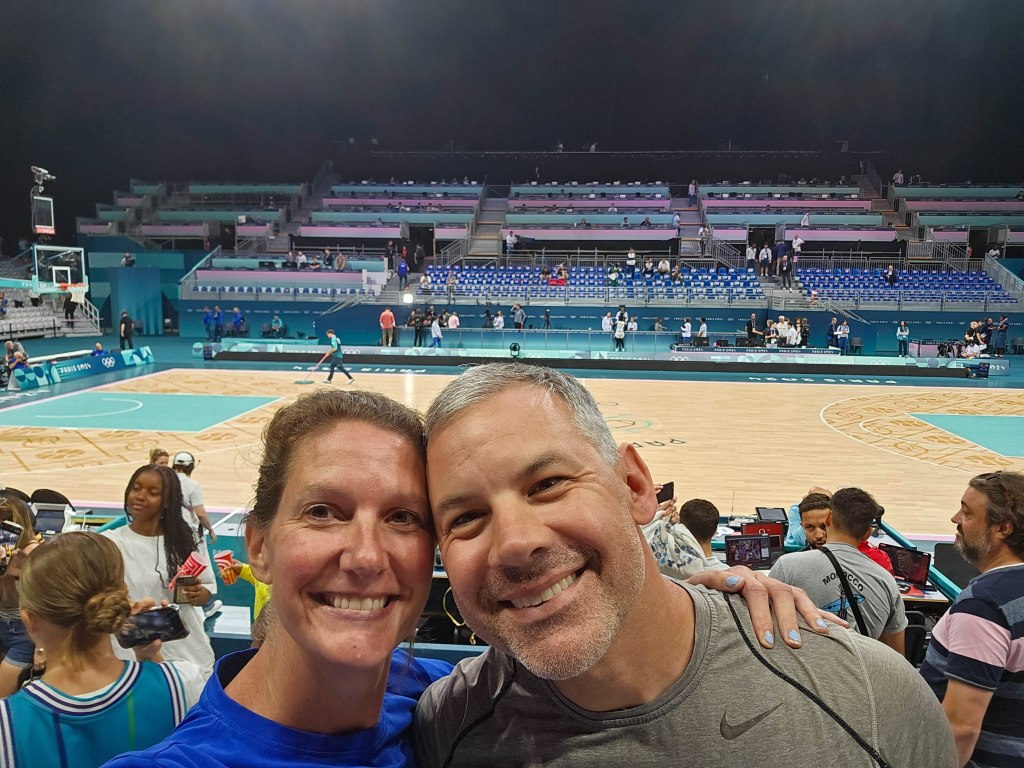
The women were solid the entire game and beat Germany 87-68. There were a lot of German fans there – Lille is pretty close to the Belgian border and not far from Germany. It was a great game to wrap up our Olympic experience.
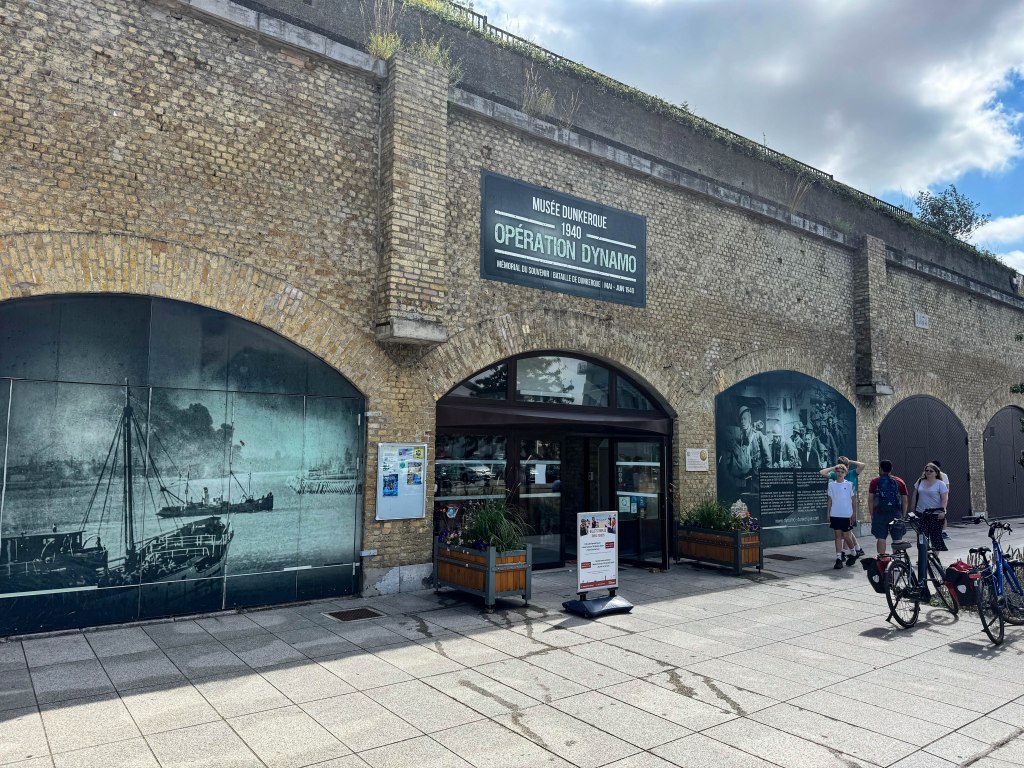
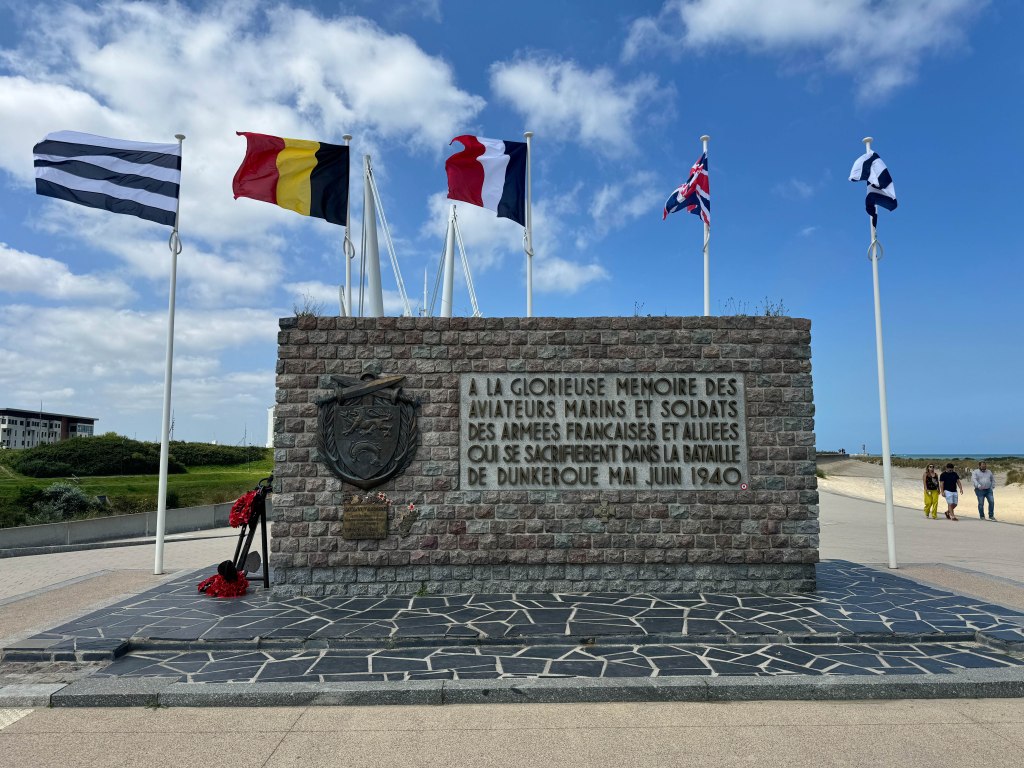
We had an extra day to relax before our flights out, so we decided to visit Dunkirk. This is where Allie forces evacuated France in WWII, known as Operation Dynamo. Troops were surrounded by Germans for 6 weeks during the Battle of France between May and June of 1940. This began the occupation of France.
The bridge below is Passerelle du Grand Large (that actually means the Grand Large Bridge – very creative). It was built in 2015 and spans a canal leading into Dunkirk and south.
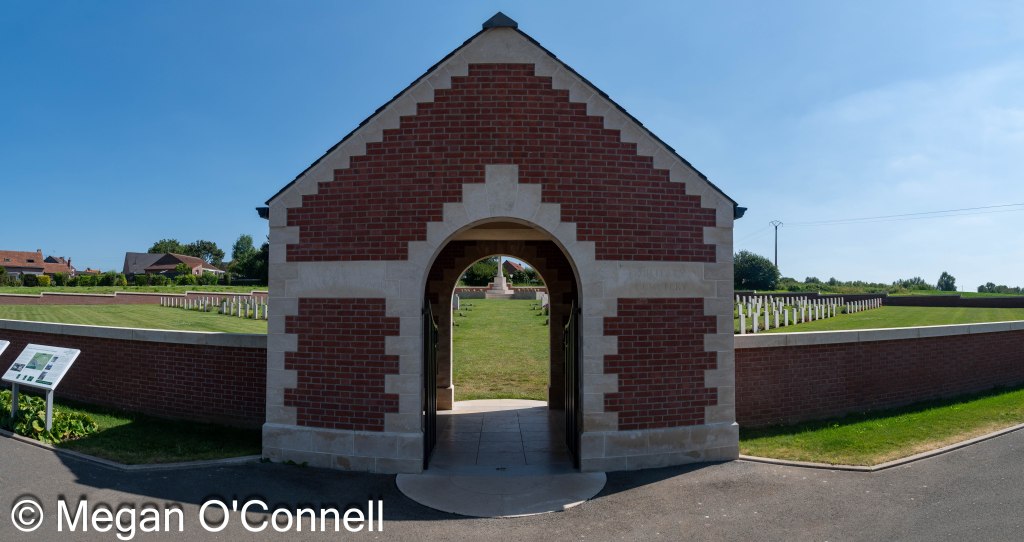
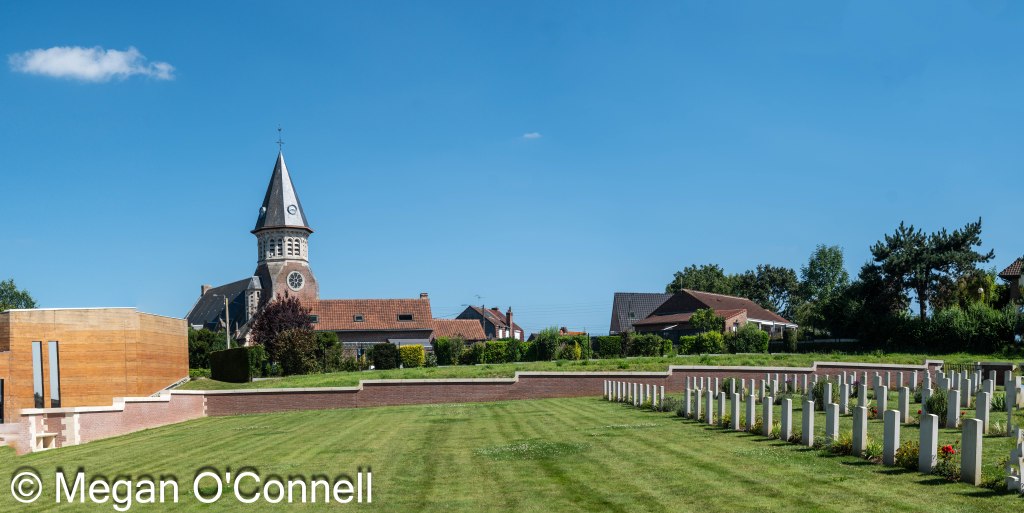
On the way back, we stopped in Fromelles. A mass grave was discovered in 2008 there. 250 Australian and British soldiers who died in WWI are buried in 6 mass graves in the area. There’s been an extensive effort done to identify as many soldiers as they can. They compared DNA samples to those given by families of soldiers who were believed to have gone missing in this region. They have been able to identify 149 of those soldiers. In 2009 and 2010, the Commonwealth War Graves commission excavated remains and buried each soldier in this cememtery with full military honors.
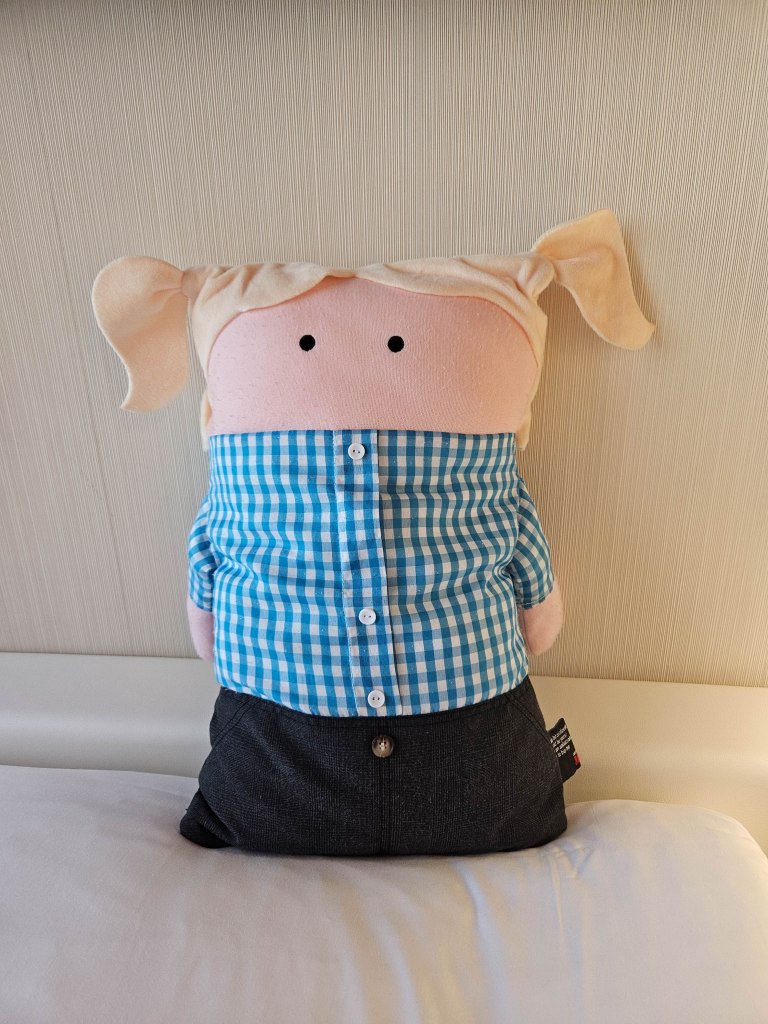
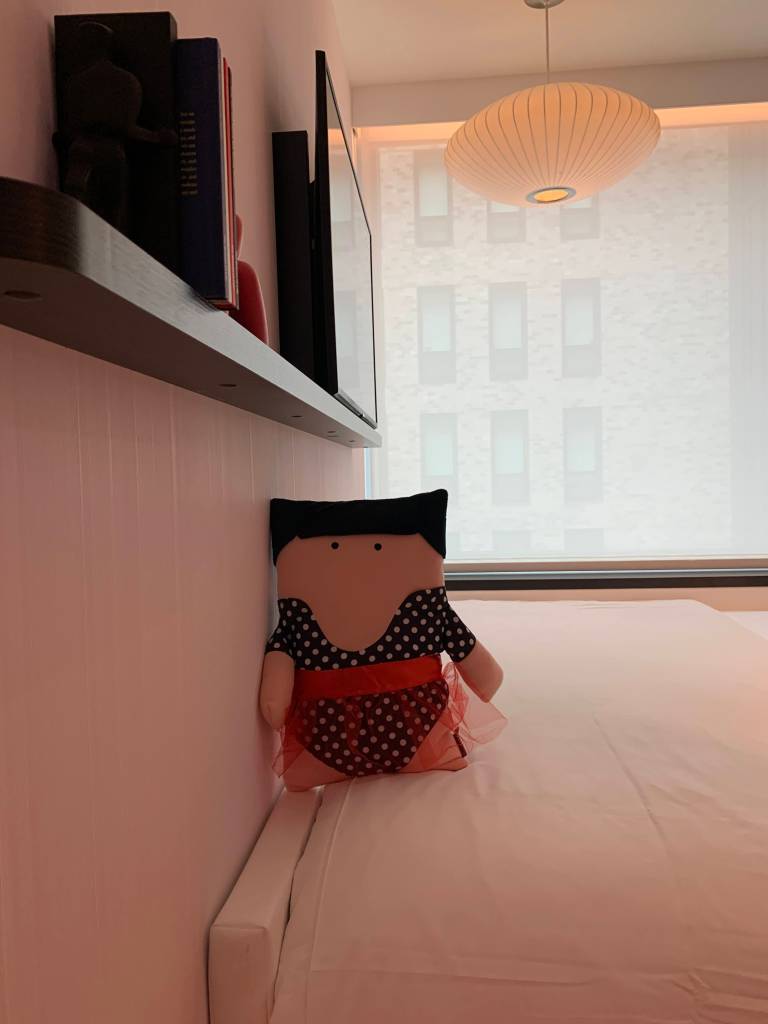
We spent our last night in France near the airport since we had morning flights the next day. We stayed at a Citizen M. These are unique hotels, they have some interesting quirks and eccletic decorations. This is our second time staying in one of these; we stayed at one in DC while I went to a conference. So apparently a standard feature at these hotels is a creepy pillow doll they put in your room. I’ll leave you with this:
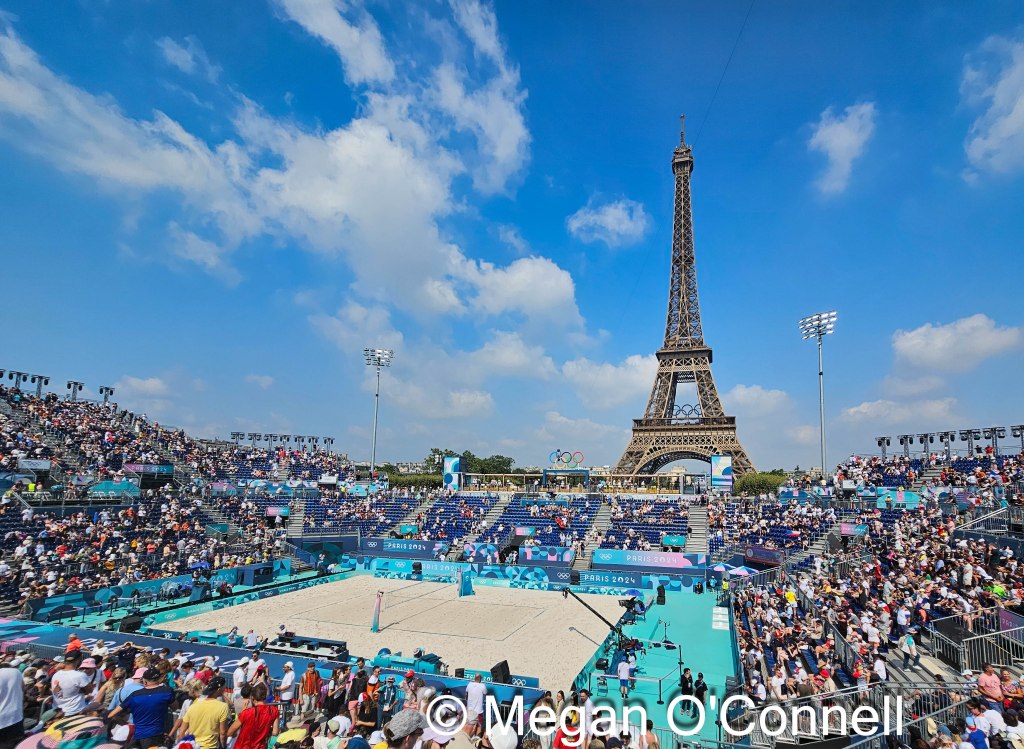
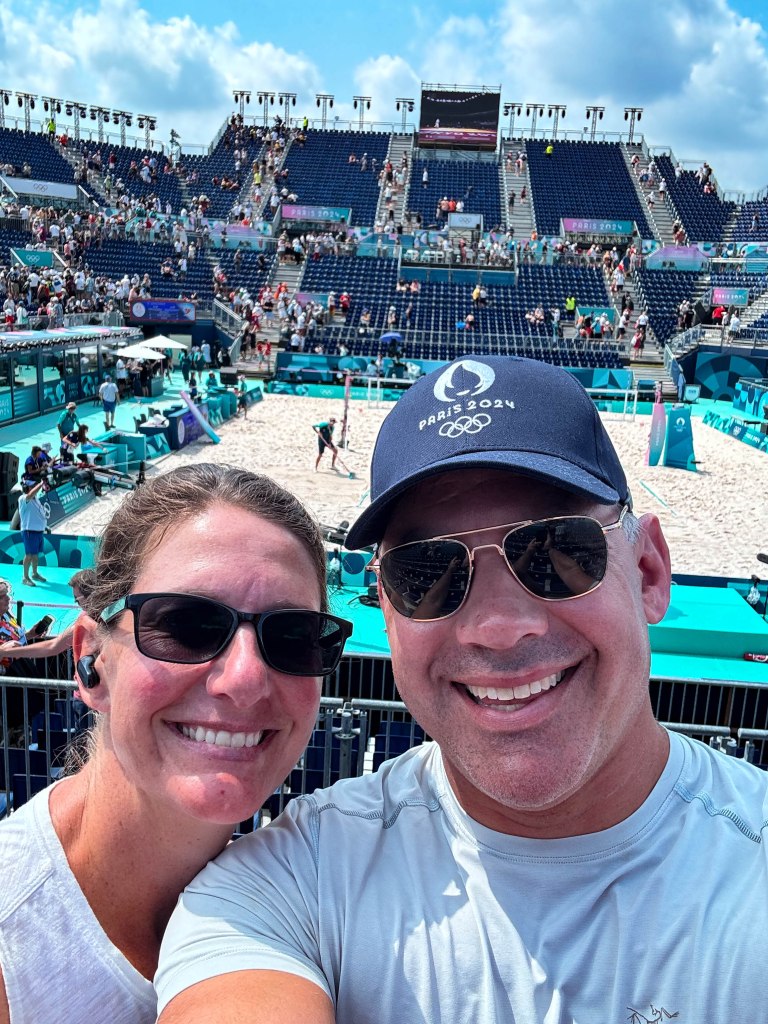
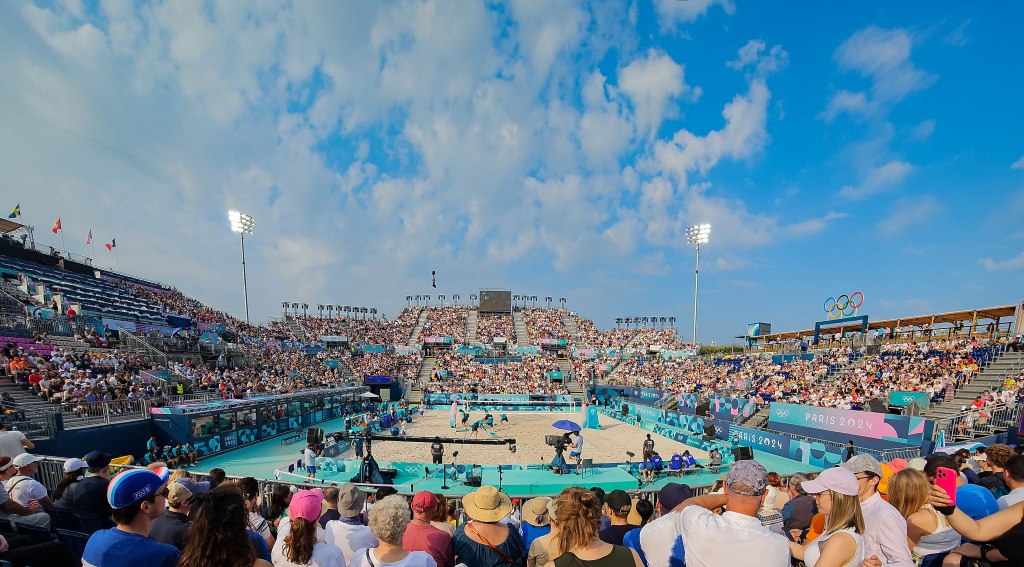
On our 4th day in Paris, we saw the event I was waiting for–beach volleyball with the Eiffel Tower in the background! Not surprising to me, these tickets were more expensive and harder to come by than those for other sports.
The day we went were pool 3rd place teams playing for the chance to play another match as the “lucky loser”. Or what we call Best of the Rest. Nevertheless, we saw some great volleyball. I mean, most of them are still professionals!
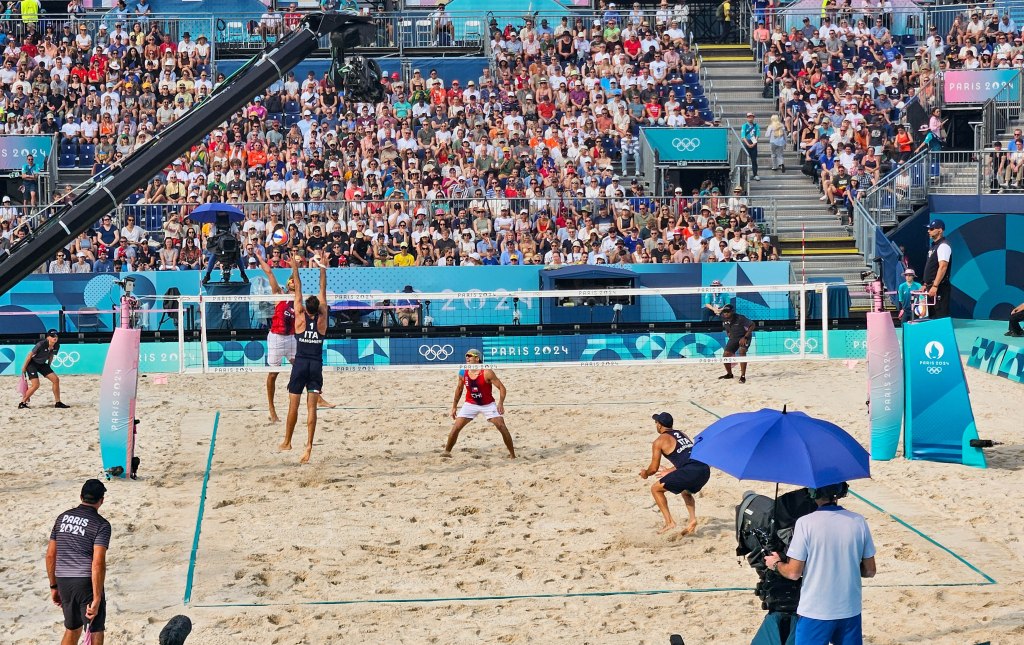
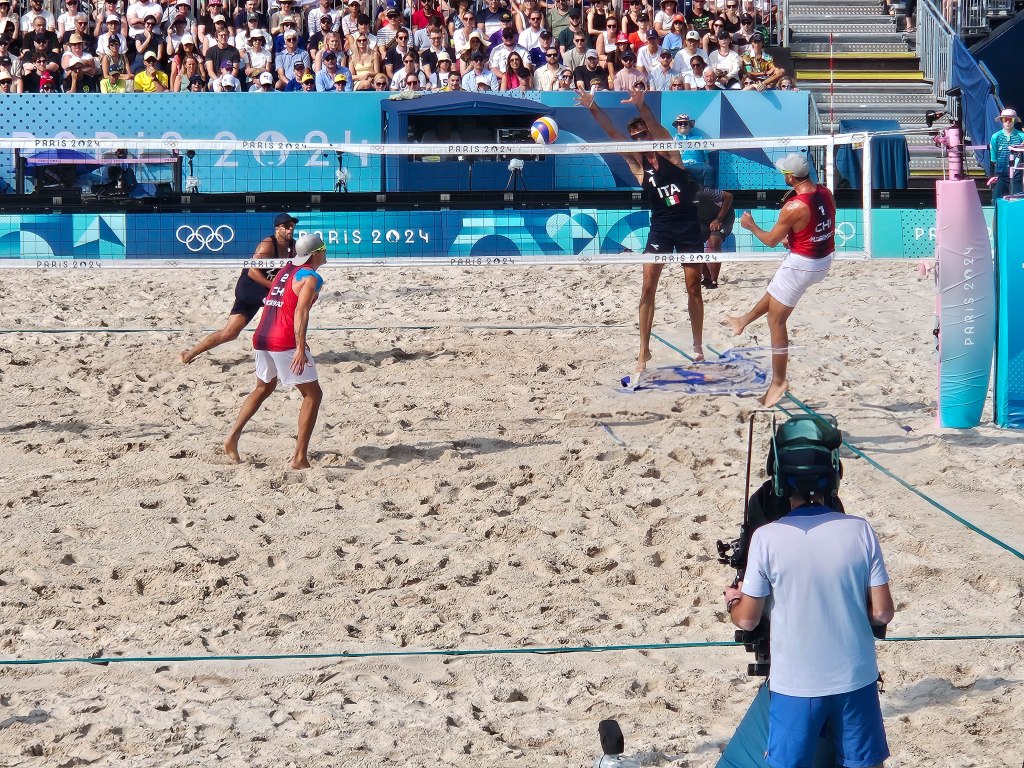
No suprise, volleyball is my favorite sport to shoot photos for. It’s easier since I know the game well. It was a challenge to get great action shots from our seats because we were behind the media. Almost EVERY TIME I was in close for a good dig, block, or attack, the darn blue umbrella came out of nowhere. Boo! I did manage a few.
See the blue puddle at the blocker’s feet? That’s the umbrella I removed, best it would get.
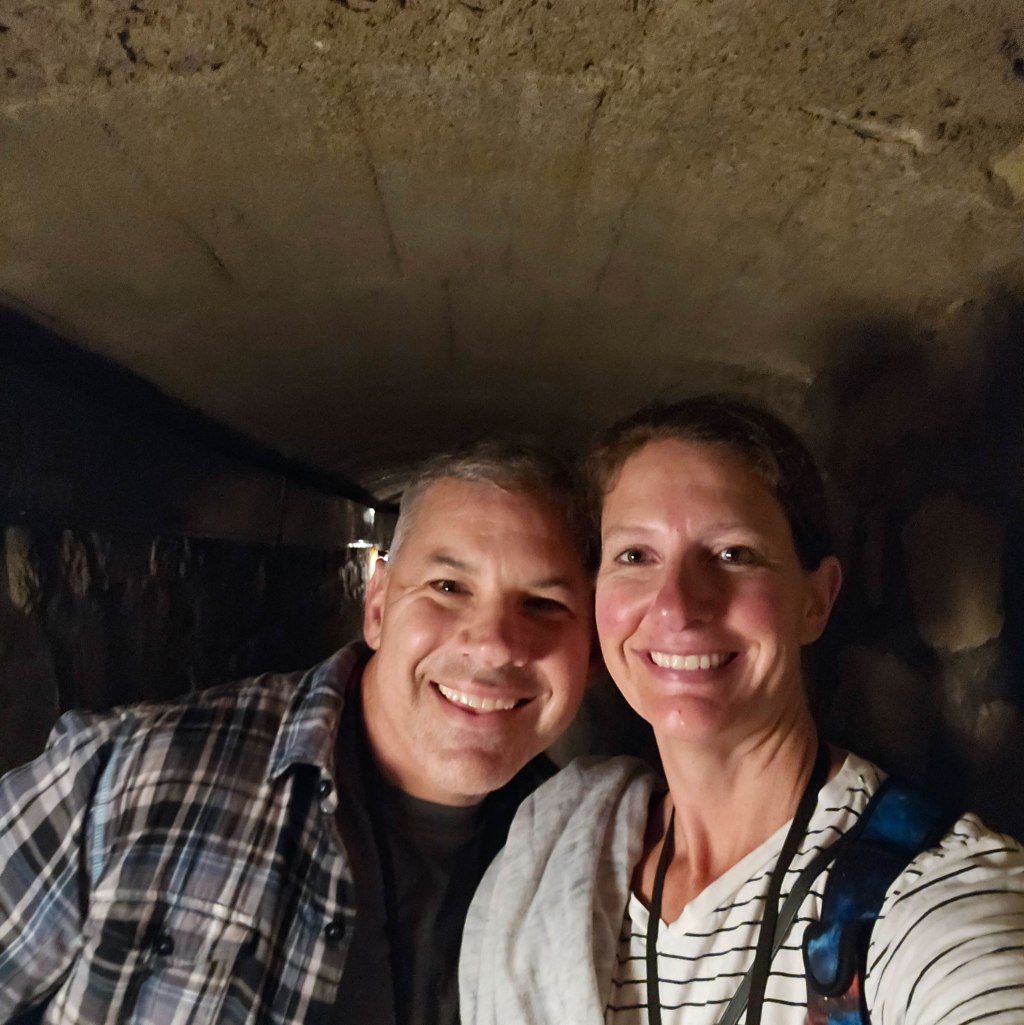
We saw the catacombs that evening. In the 18th century, Paris began having major health problems related to the city’s cemeteries. The government decided to move burials to an underground site. They chose an abandoned quarry site that was outside the city at that time (it’s now well inside city limits in the 14th arrondissement). Yes: they literally (used correctly) excavated graves and moved bones. This, I did not know. I knew of the catacombs but didn’t really know what they were. I was fascinated with the extent of the catacombs and couldn’t help thinking many cemeteries there are in US cities.
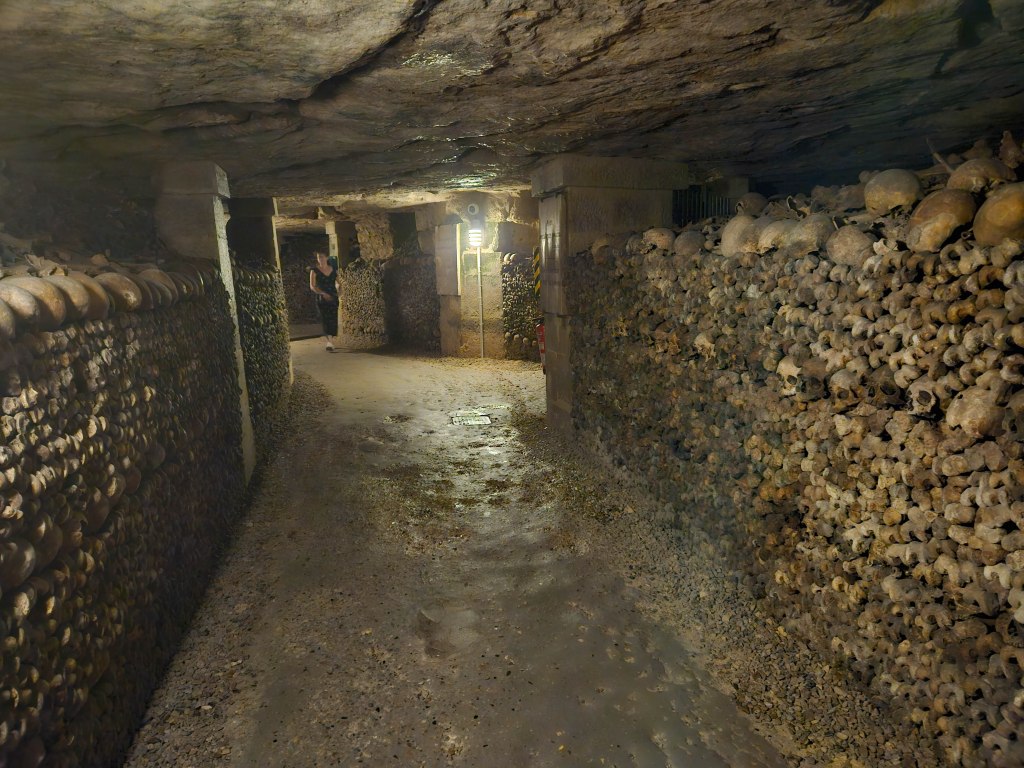
It took 27 years to transfer bones from cemeteries to the ossuary underground. Before they opened the ossuary to the public, they lined corridors with neatly stacked bones, like below. Apparently behind them are just piles of more bones.
I didn’t take many photos down here because…you know: it’s just bones. Plus, it’s dark (I know, duh) but they don’t allow flash photography. However, as you walk along the path, the size of the ossuary and the number of bones here are astounding.
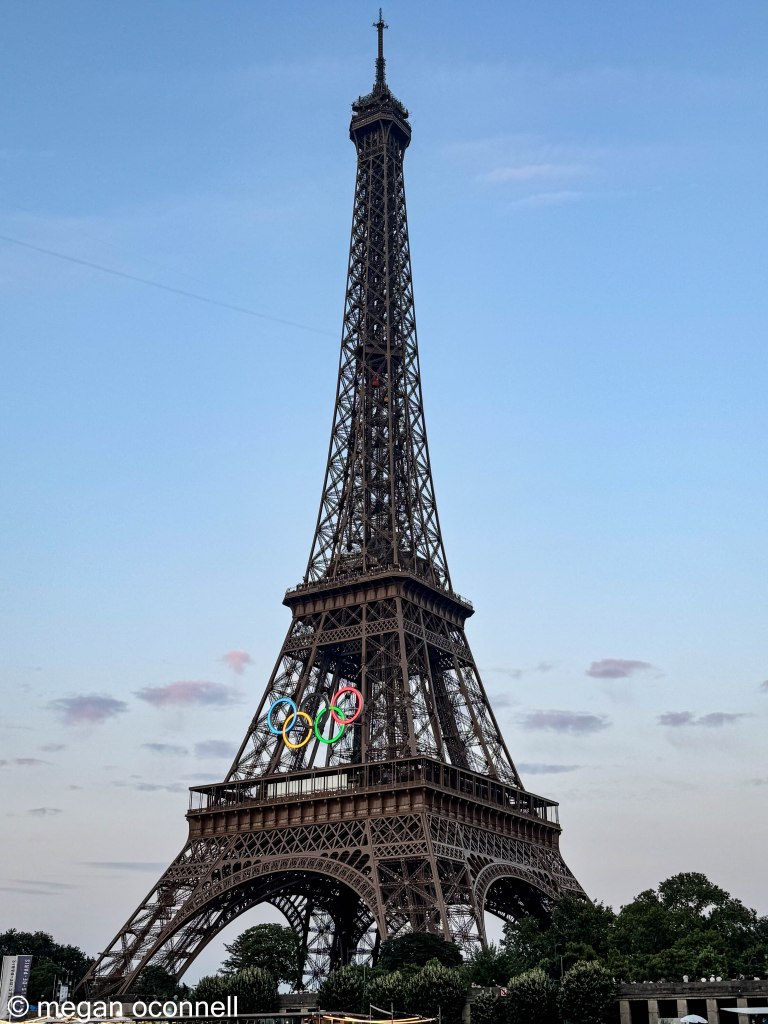
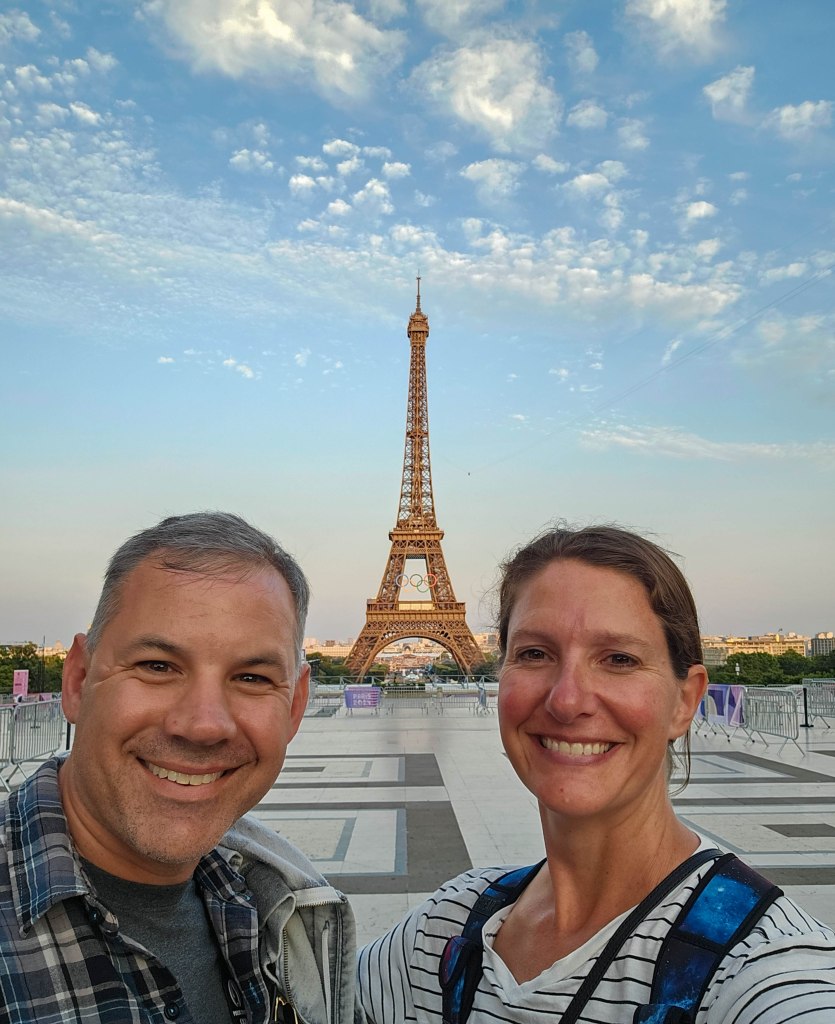
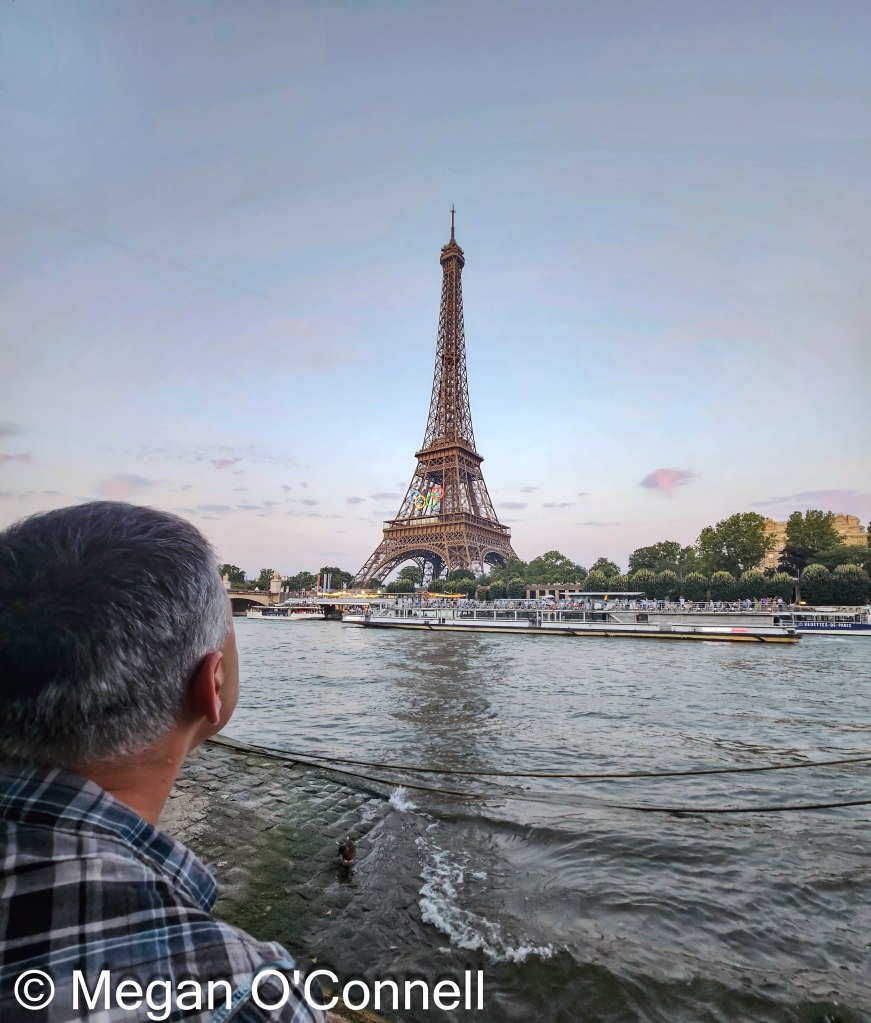
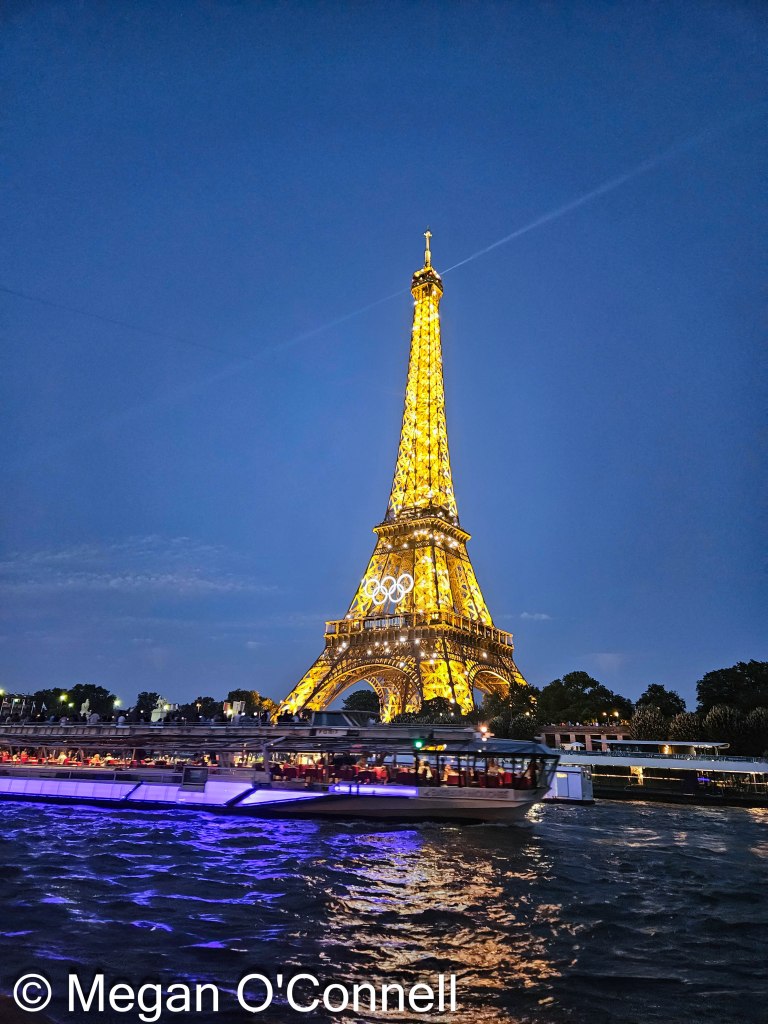
After the catacombs, we walked back towards the Eiffel Tower to see it at night again. We sat along the river to enjoy the view. It’s the most “selfie” photo shoot we did of the trip. 😉
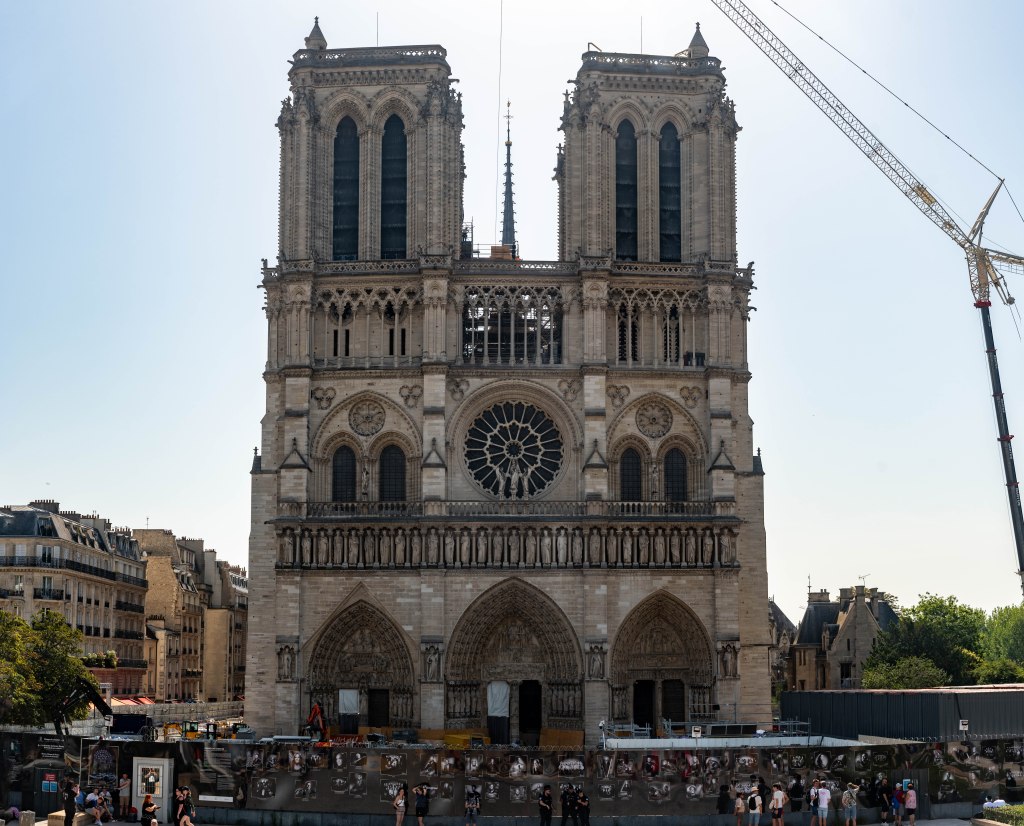
We visited Paris in 2019 to see the city and watch the US in the Women’s World Cup. In April that year, just months before our trip, the roof of the Notre Dame Cathedral caught fire. Since we could only see the cathedral from afar then, we were hoping it would be open this visit. We did get closer, but it was still closed to the public.
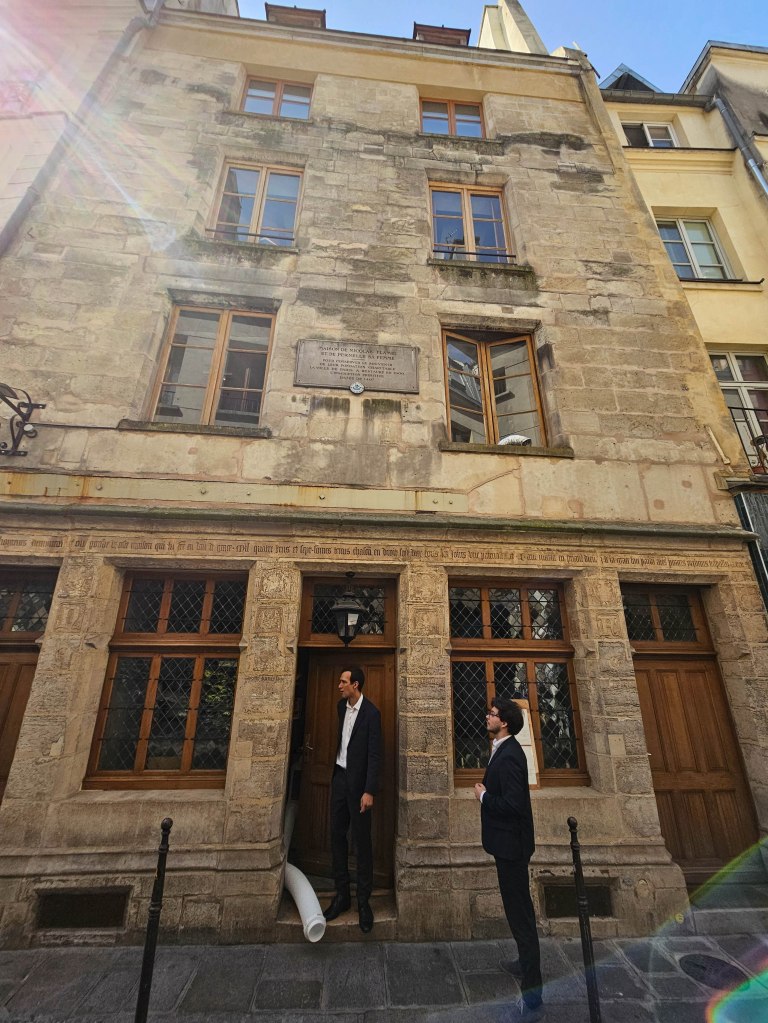
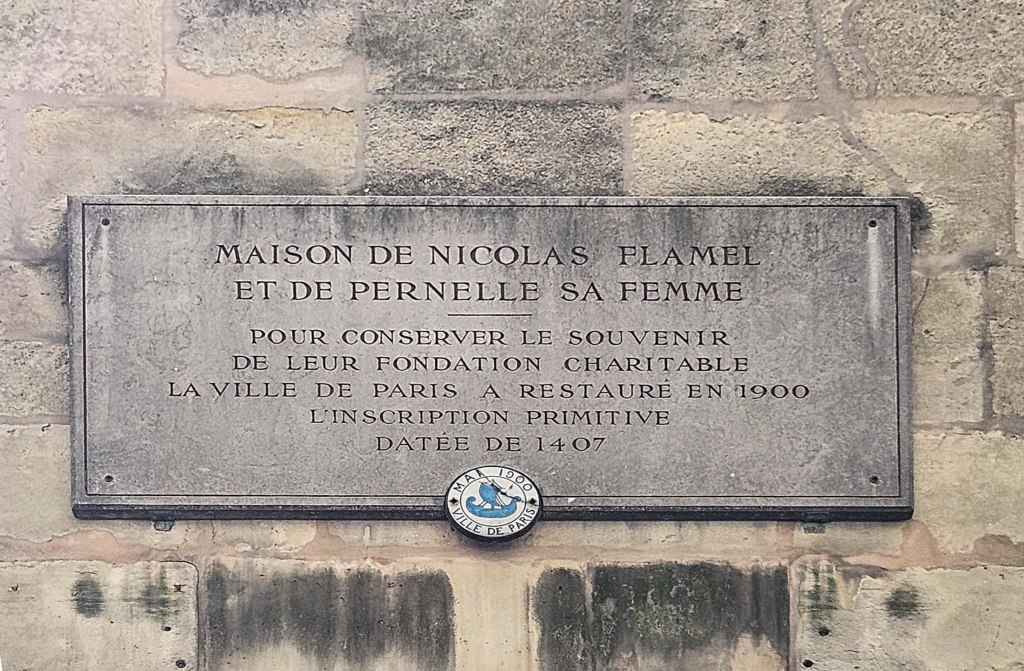
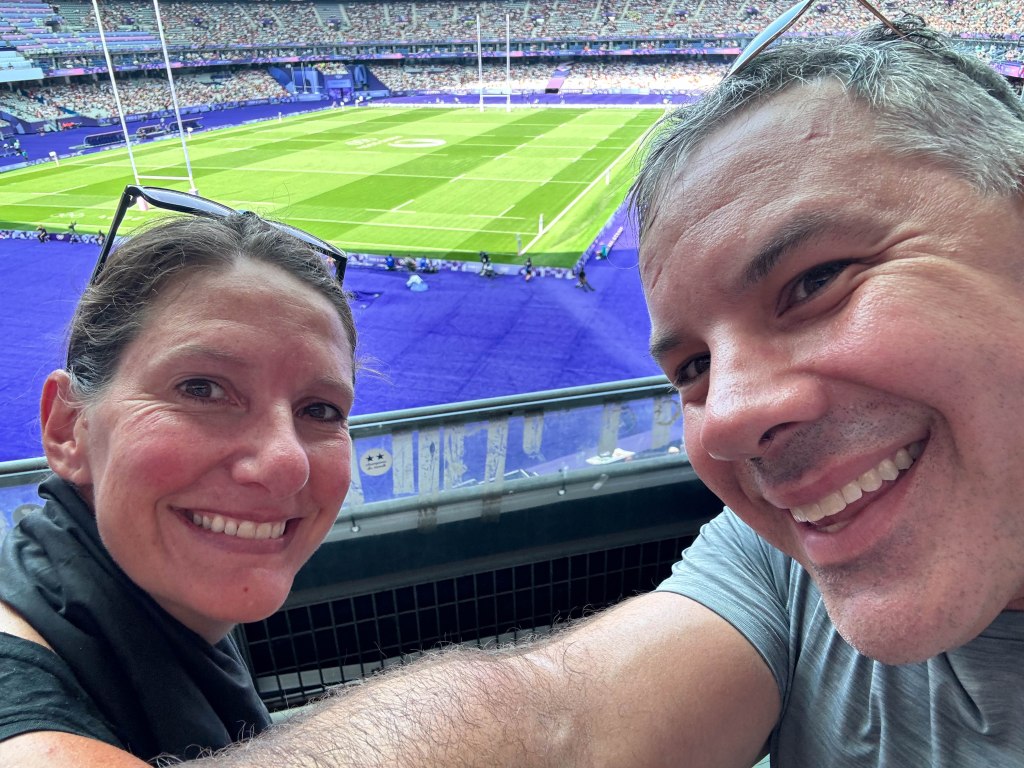
Women’s rugby was the first event we saw in Paris. We made a few stops on our way to the rugby matches. We saw the house of Nicolas Flamel, now a restaurant.
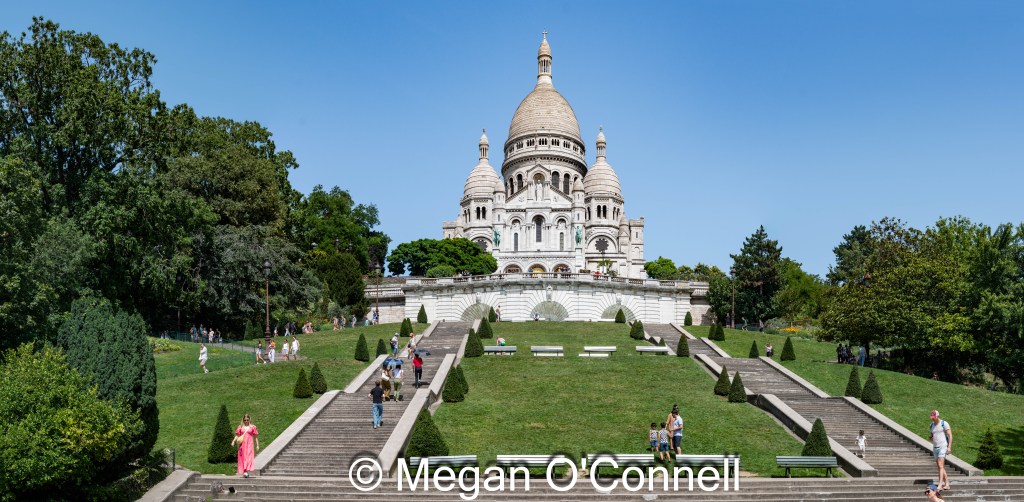
We also stopped at the Basilique du Sacré-Cœur de Montmartre. It sits at the top of the hill of Montmartre, and has a beautiful view of the city. It’s a hike to walk to it, especially on a warm day.
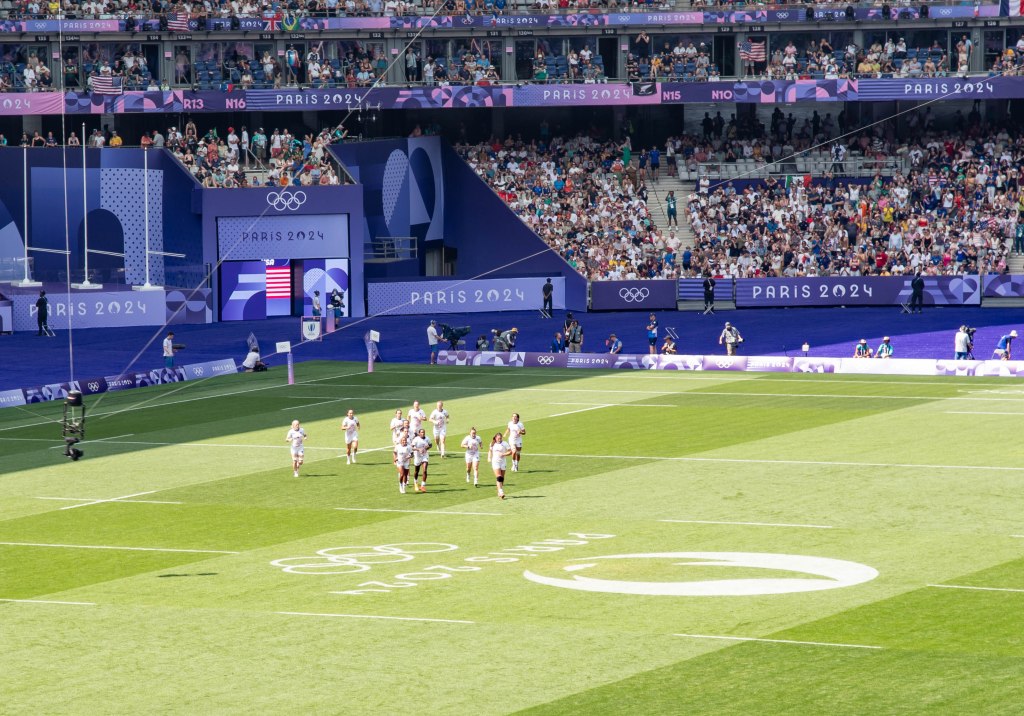
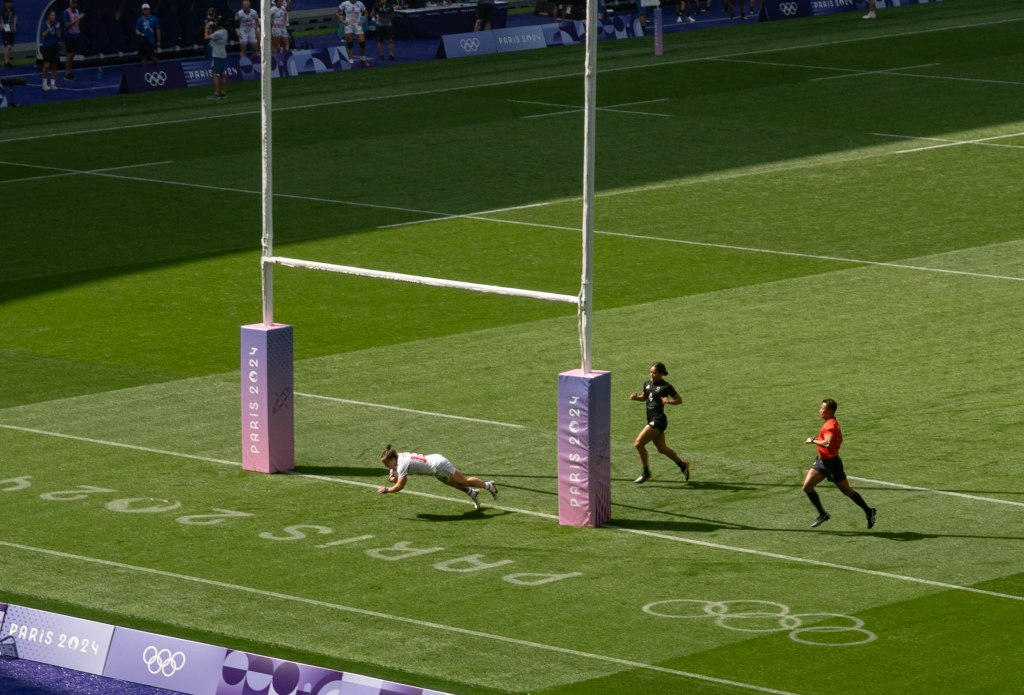
Watching rugby is a lot of fun. I knew a lot of the players on our college teams, and I liked watching their matches. The setup for the Olympics was perfect for me – 7 minute halves and only about 5 minutes between matches. It moved at a fast pace. The US women’s team won the match we saw that day.
We headed over to Olympic village after we left rubgy. It was crowded, and we were tired of walking, so we didn’t get close.
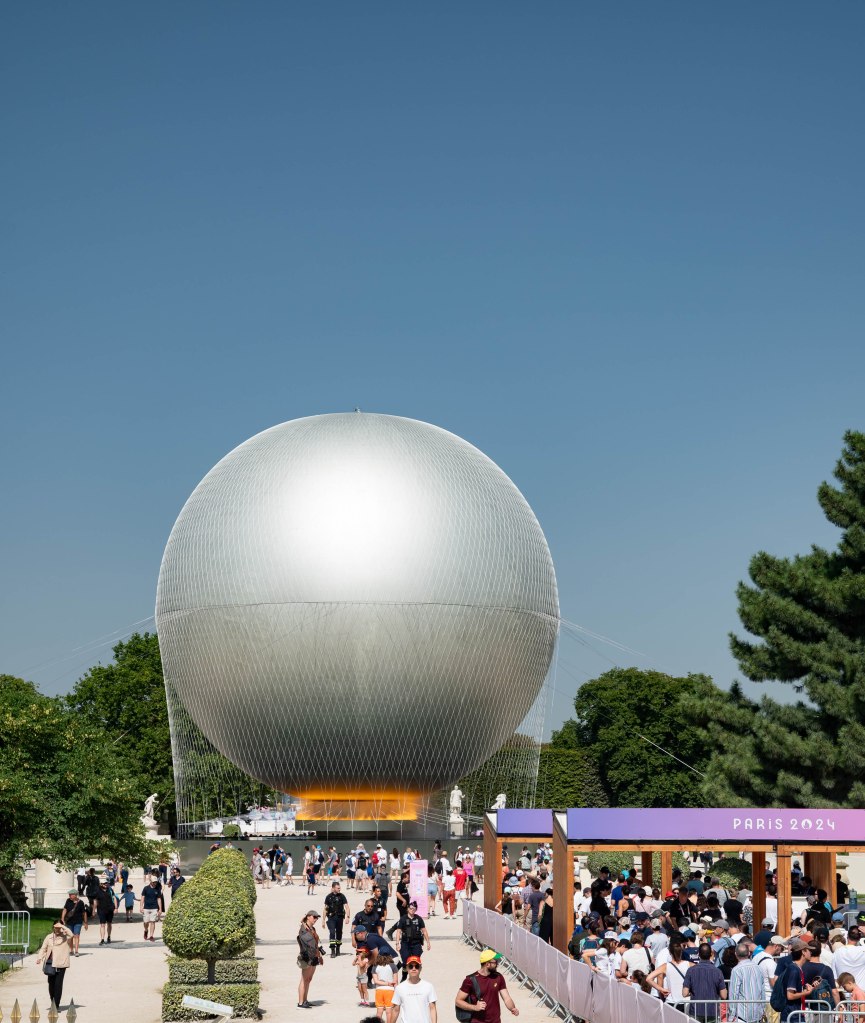
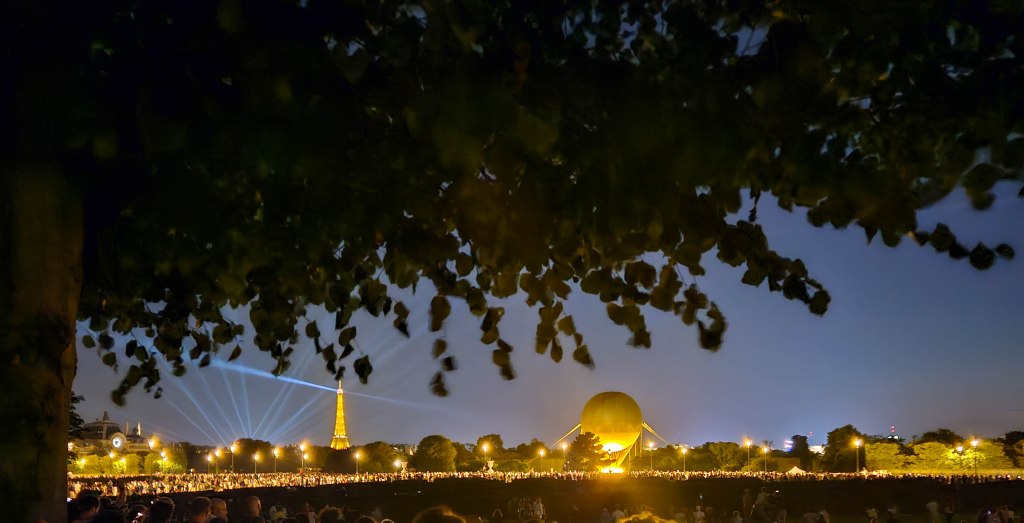
We also saw the torch in the balloon, but didn’t realize you had to book a time in advance to go up to it. It was all sold out for the week once we realized that. So, we got a view from afar. And it didn’t raise up the night we were there in the park – too windy.
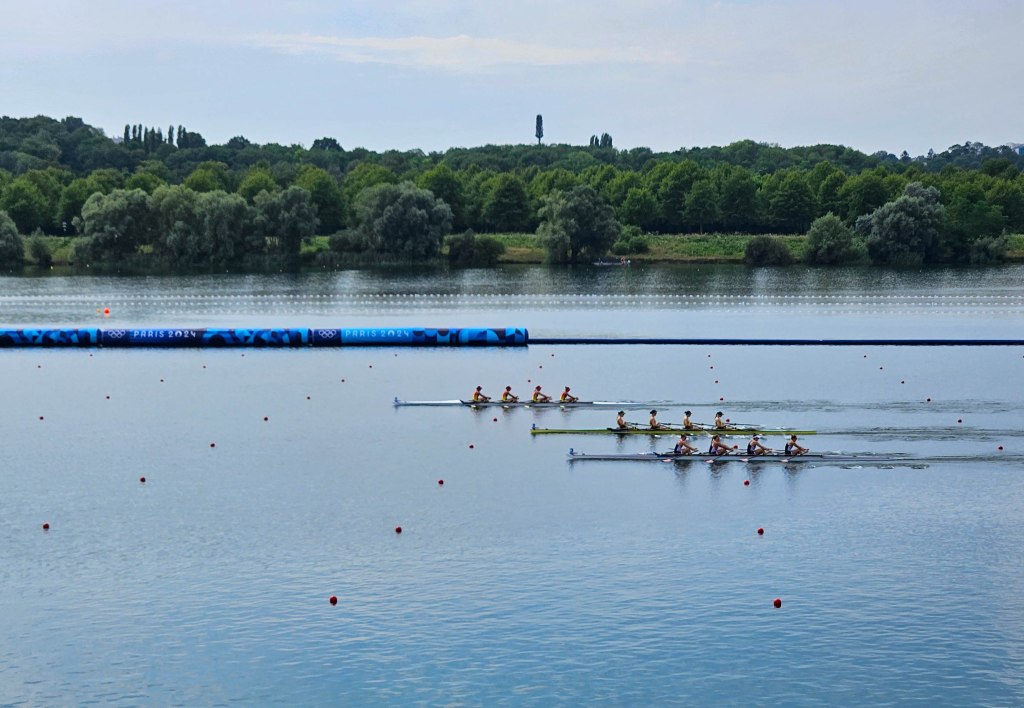
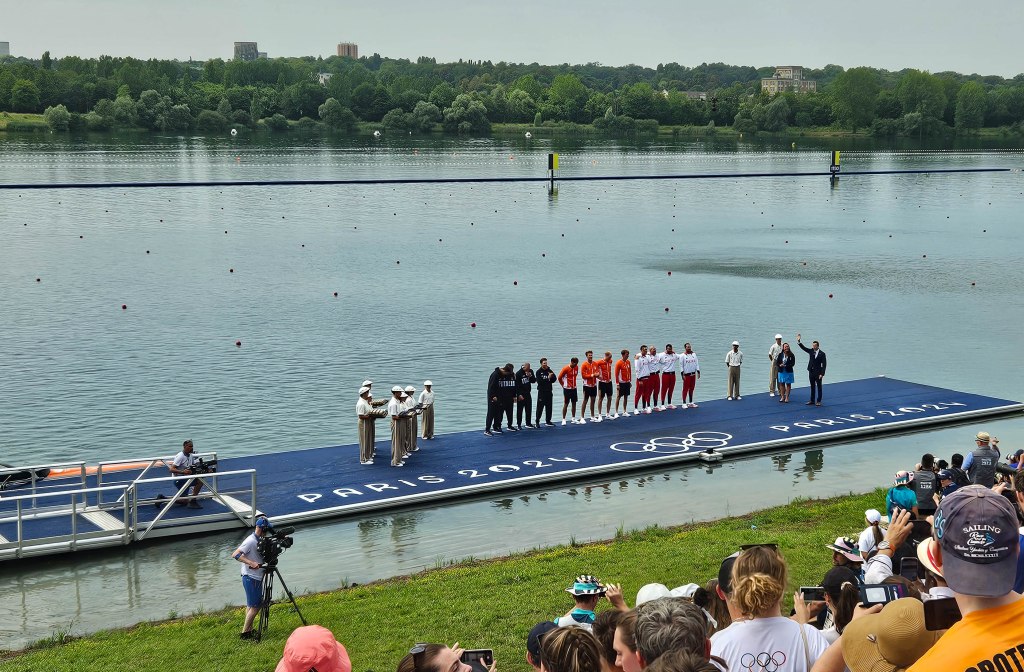
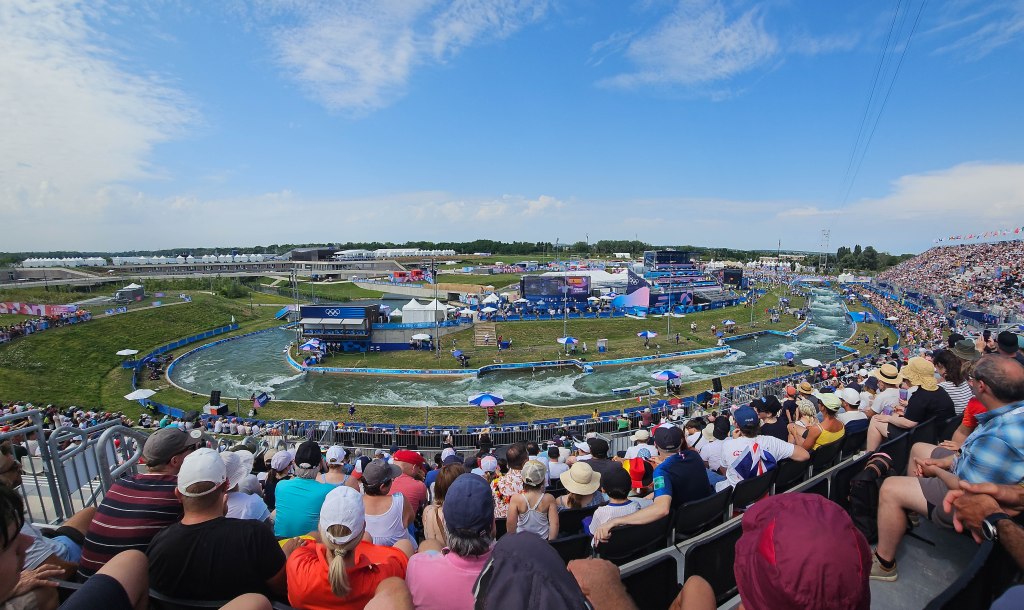
Our second day was rowing and kayaking. I’ve never been to an event for either, so I was excited to check them out. It was entertaining to see how energetic the fans would get. Everyone was pretty respectful though, no negative yelling or going at other fans. We saw our one and only medal ceremony for one of the men’s rowing races.
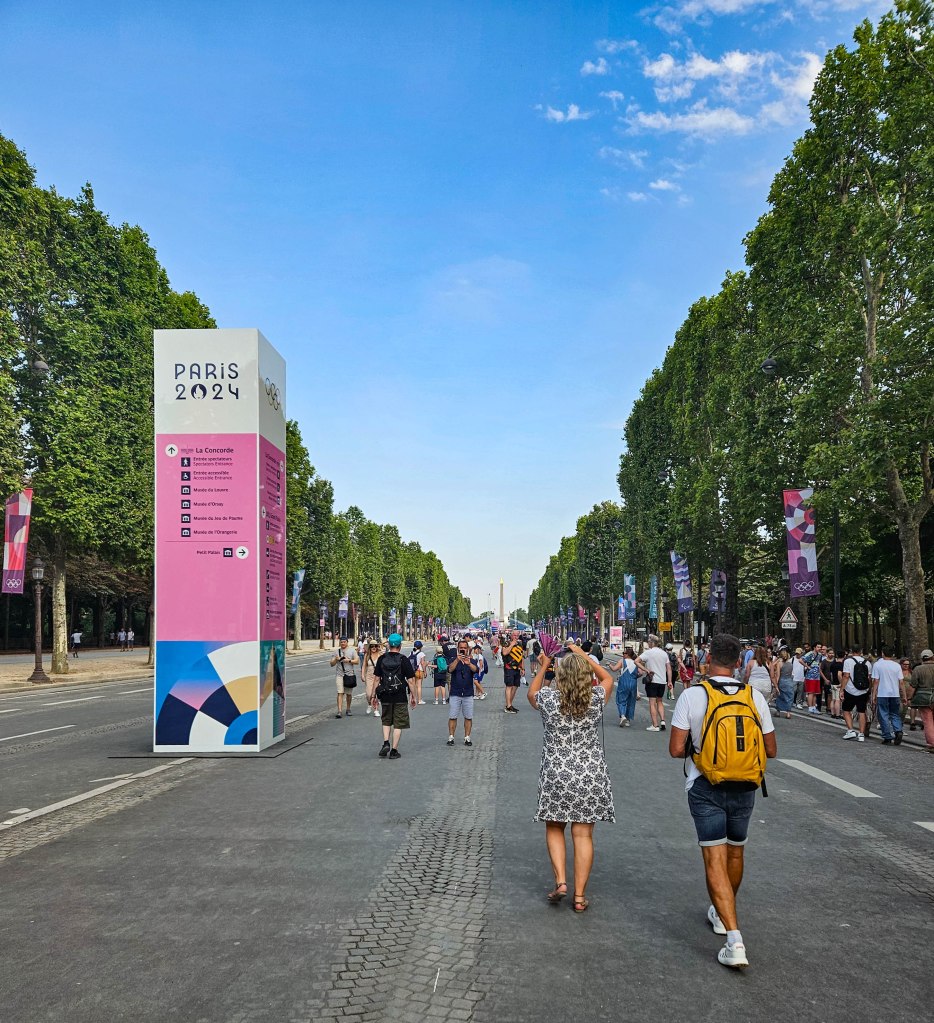
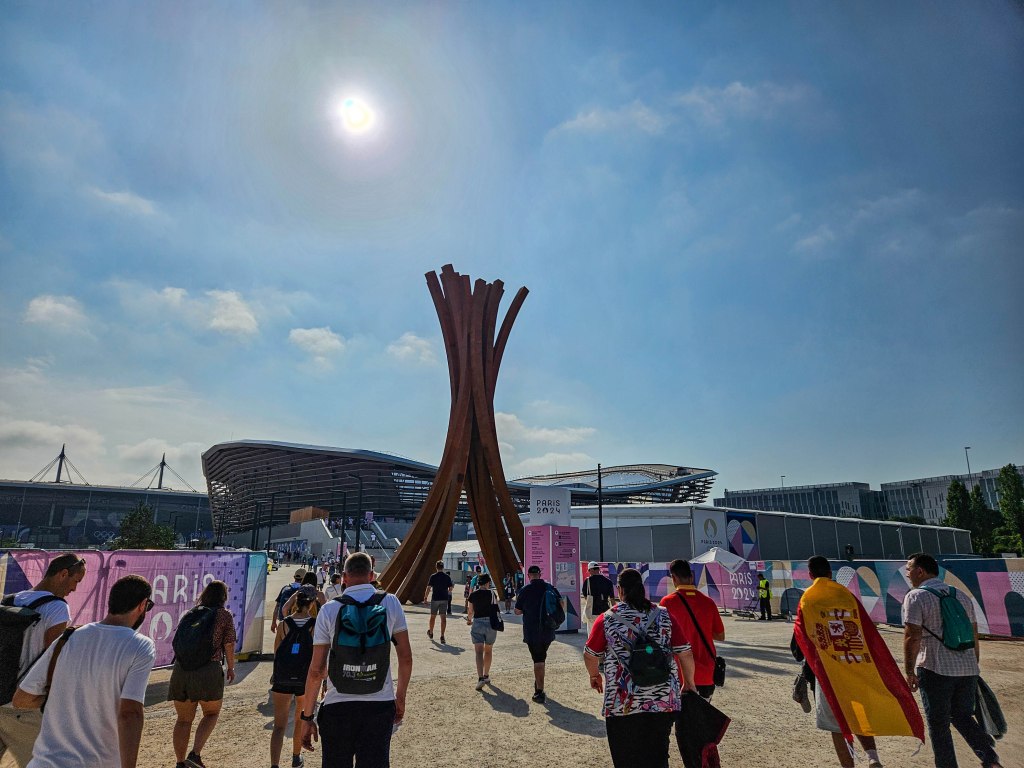
I think France did a great job of locating venues and having public transportation available. However, almost every venue was a hike from the metro – 30 minutes or so of walking…and it was very hot while we were there. We definitely got our steps in each day. Sitting in the stands was pretty uncomfortable – sweating next to sweaty strangers. We had a fan and a neck cooling cloth to make it bearable. Each venue had free water stations. There was a size limit for water bottles, so I couldn’t bring in my large hydroflask. We’d fill bottles several times at the outdoor events.
The kayaking course was cool to see. I bet it’s fun to be part of the team that plans and builds these venues. But I also have to wonder how many resources are expended for something so temporary.
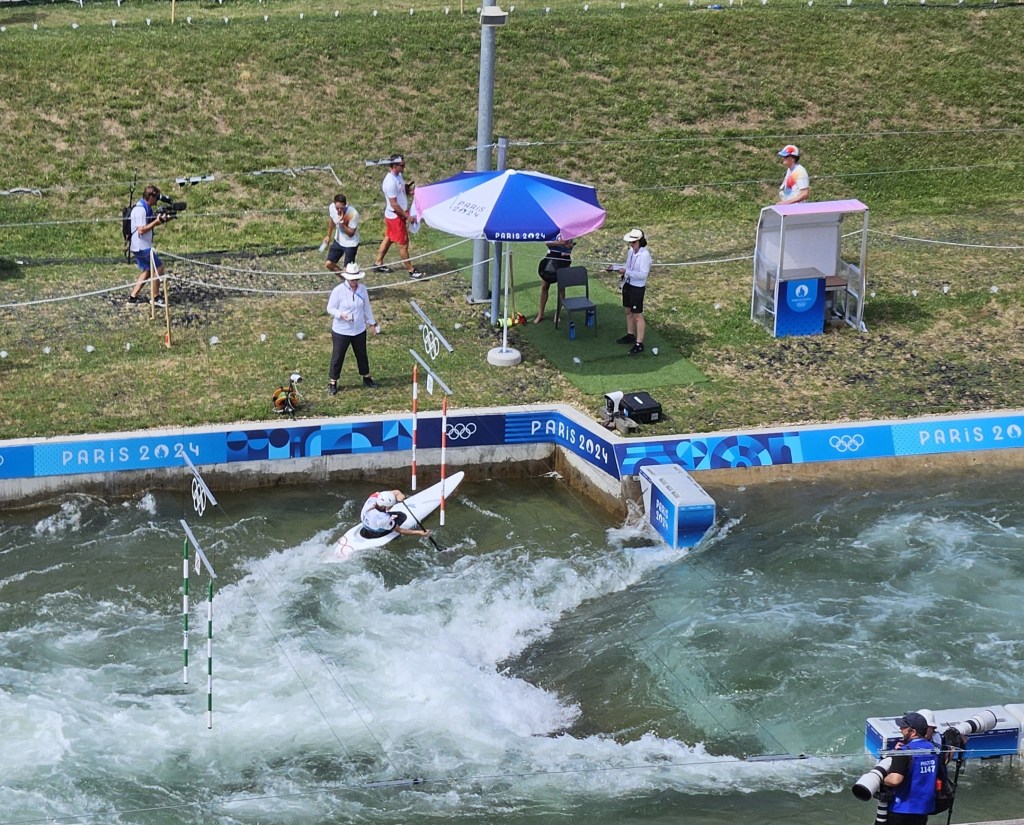
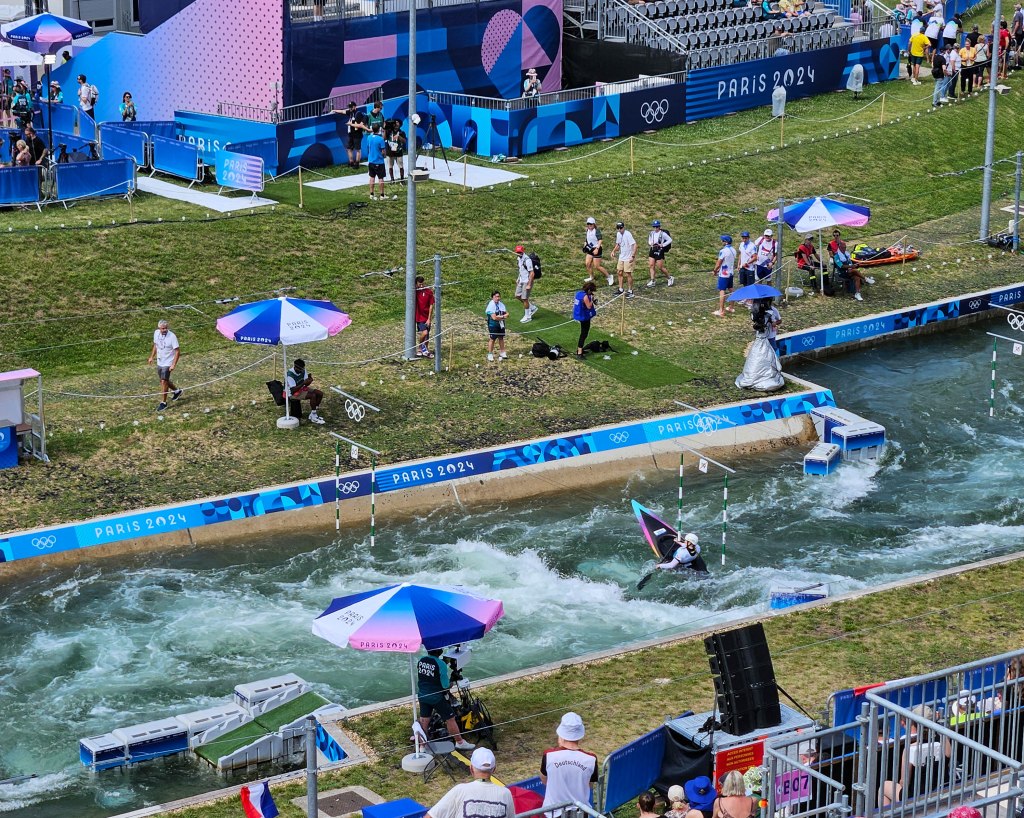
In the event we saw, athletes had to kayak around each gate as they went down the course. Most gates were green, which meant you were to go through them moving down stream. Red gates had to be cleared going up stream. This meant the kayaker had to go past the gate, turn to go through it, and then continue down the course.
Gate 17 was a red gate that caught many of the athletes we saw. There seemed to have been a nasty swirling current right at the gate. If they didn’t hit it right, it was an uphill (upstream?) struggle to get through the gate. Lots of time was lost to gate 17. Again, the fans were so supportive, cheering for each participant. They were especially loud for anyone caught at a gate, and the crowd was very happy to see them clear it finally.
We saw one American competing. She made it to the semi-finals, but didn’t move on after that.
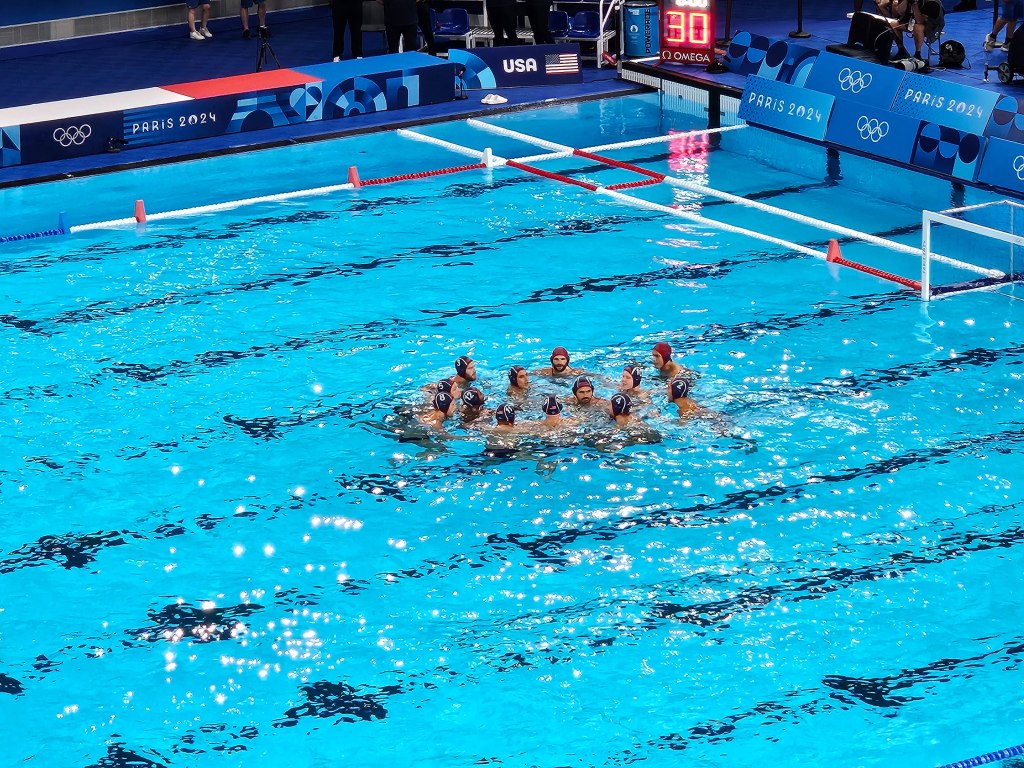
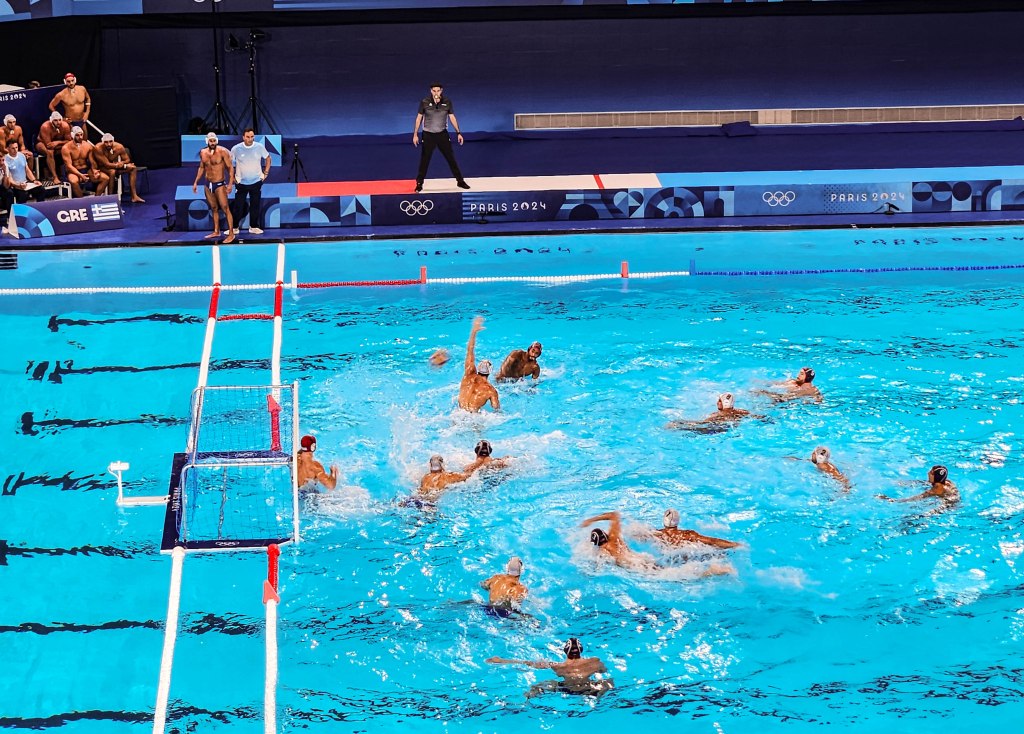
We watched water polo on our 3rd day in Paris. It was a nice break from the heat to be inside for once. The venue was beautiful, it housed the diving events as well.
We watched two men’s matches, one of them being US vs. Greece.
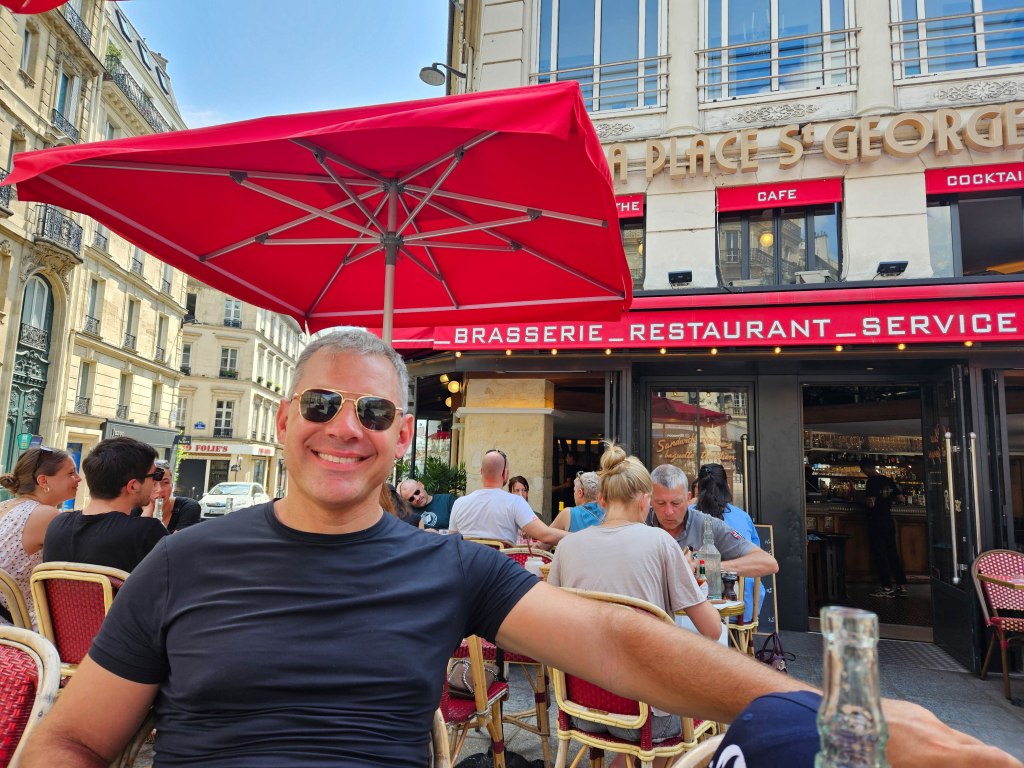
We stopped at a cafe that afternoon to eat and relax. This was a slower day for us, one we needed by this time! I’ll wrap up our time in Paris in the next post, along with our visit to Lille.
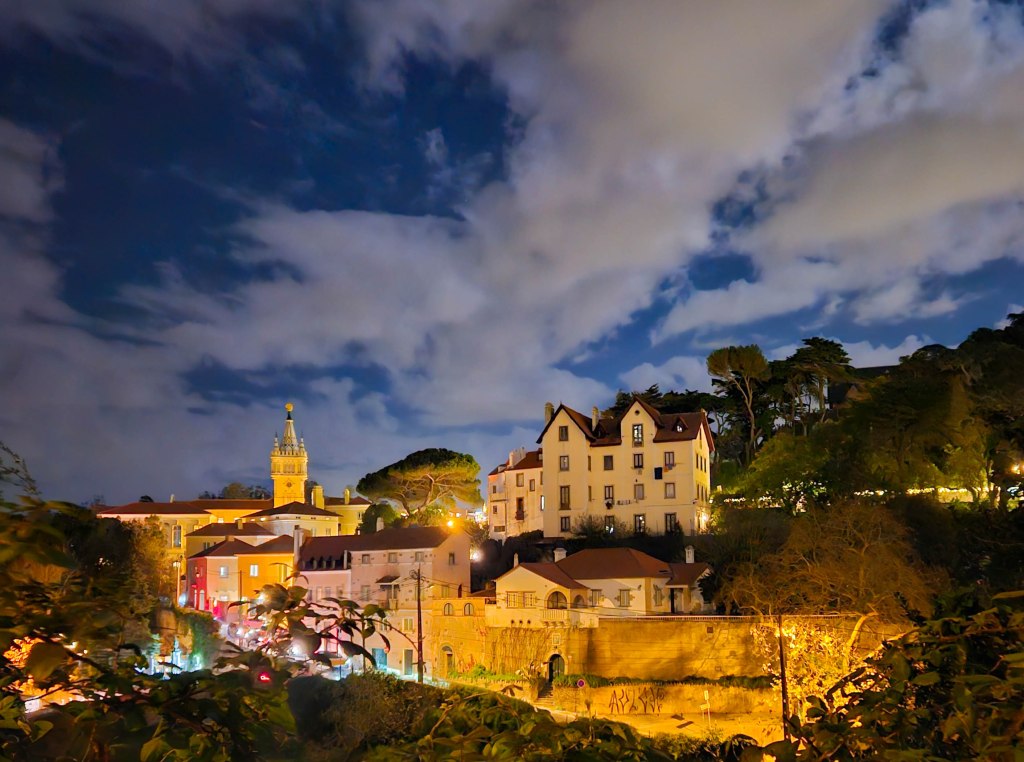
We spent a few days in Sintra to wrap up this year’s Christmas ventures. Sintra is about 25km (15 miles) west of Lisbon. It became a retreat for royal families in the 19th century. As one of our Uber drivers put it, it is “Lisbon’s air conditioning.” (Because it is closer to the sea, and not as urban, it is much cooler in Sintra than in Lisbon.)
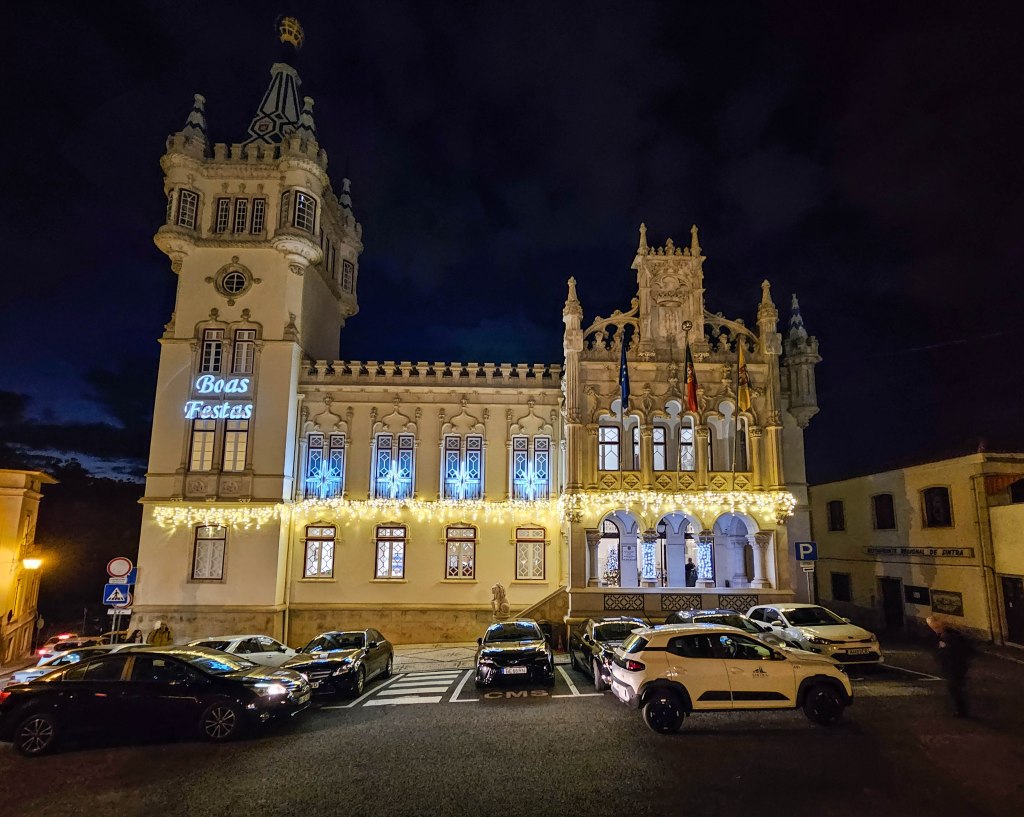
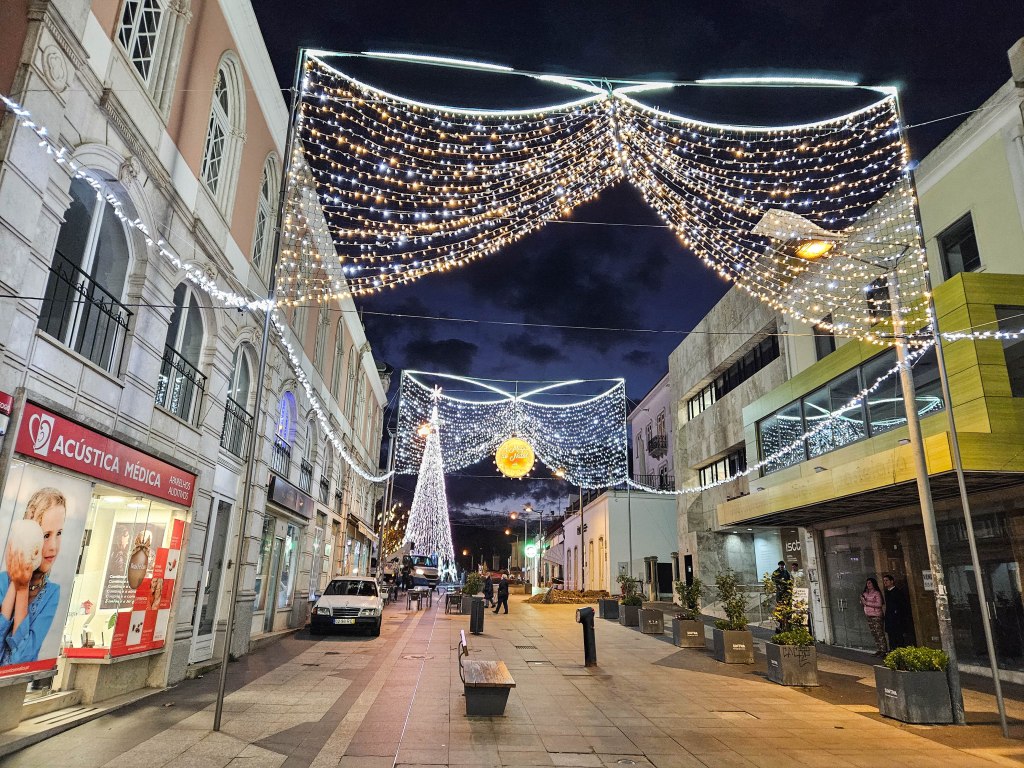
As with most of the towns and cities we’ve seen in Portugal in December, Sintra streets were lit beautifully. Unfortunately, the main Christmas event was only open on the weekends, so we didn’t get to see that.
The photo below shows the Moorish castle outlined in lights on top of the hill. We didn’t get to it on this trip.
We chose to see the National Palace of Pena and the Quinta da Regaleira on this trip. We’ll come back to see more. I’m looking forward to checking out the extensive gardens in the spring. Tourism in Sintra has picked up significantly over the years, as it has in many parts of the world. To protect the sites and improve safety and access, the town of Sintra has restricted vehicle access to several of the sites.
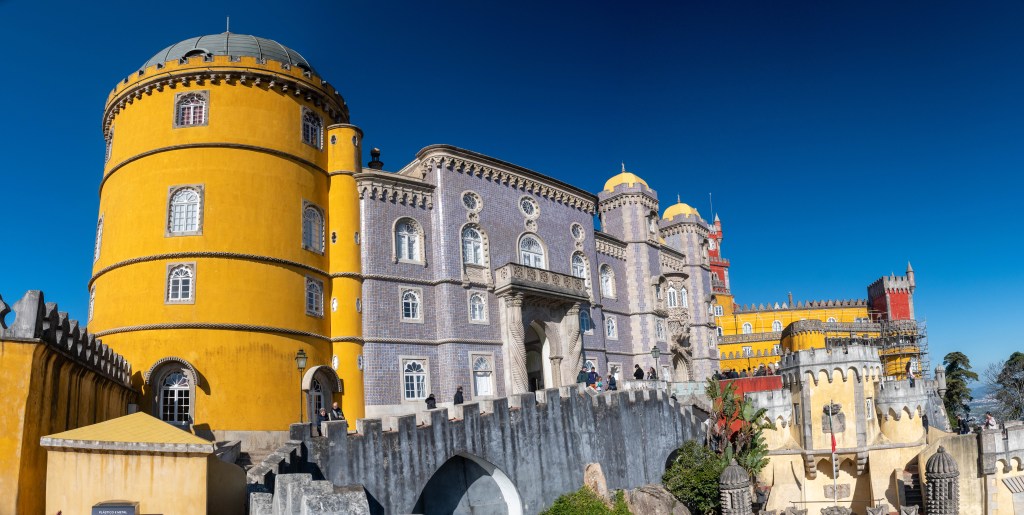
In 1840, King Ferdinand II renovated an abandoned monastery into a castle, the National Palace of Pena. The monastery was abandoned after the earthquake of 1755, which is known as the Great Lisbon Earthquake. The quake killed about 60,000 people in Lisbon alone, and the tsunami waves reached Algiers and Spain to the east and all the way to Martinique in the Caribbean to the west.
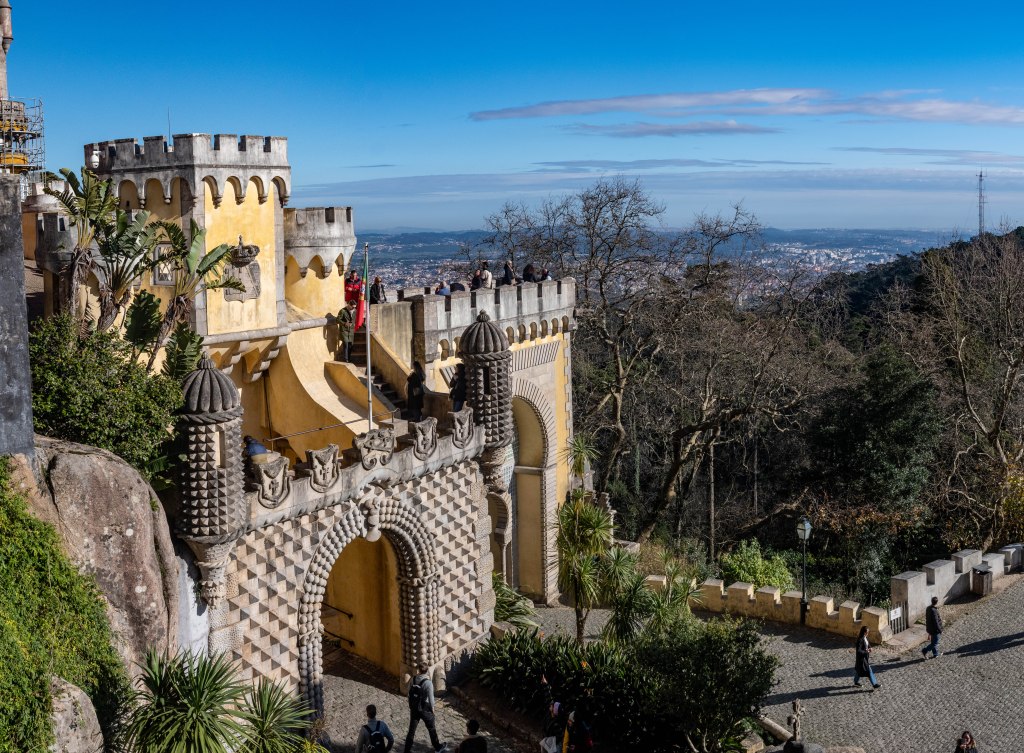
Palacio da PenaThe entrance and Sintra beyond
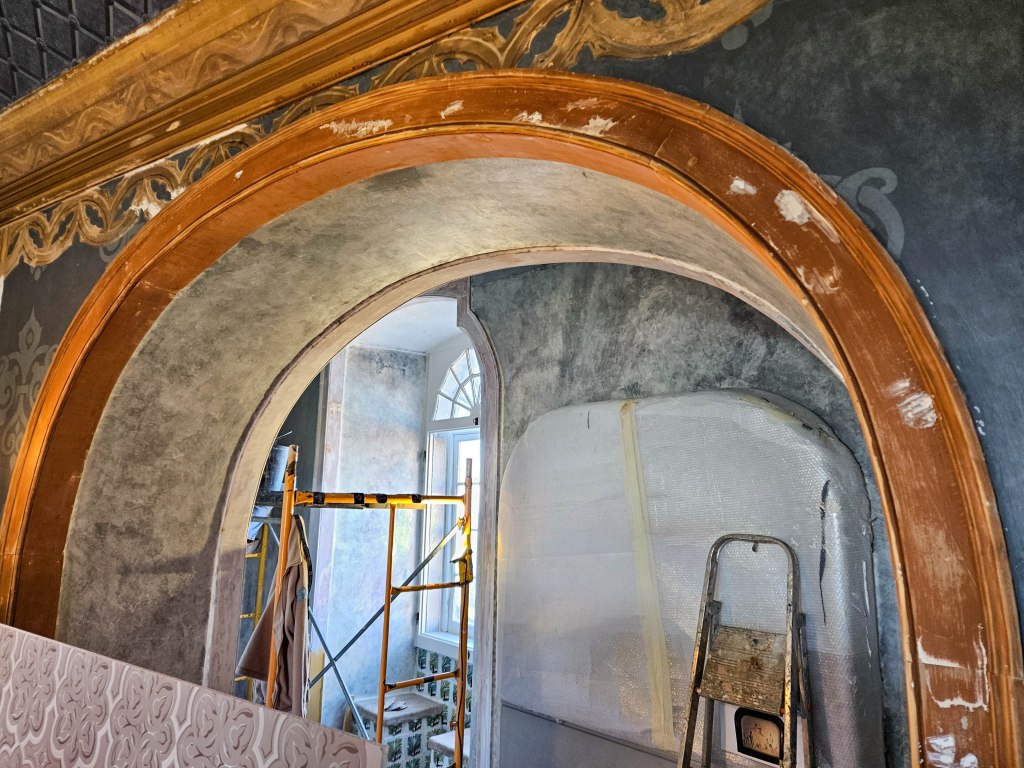
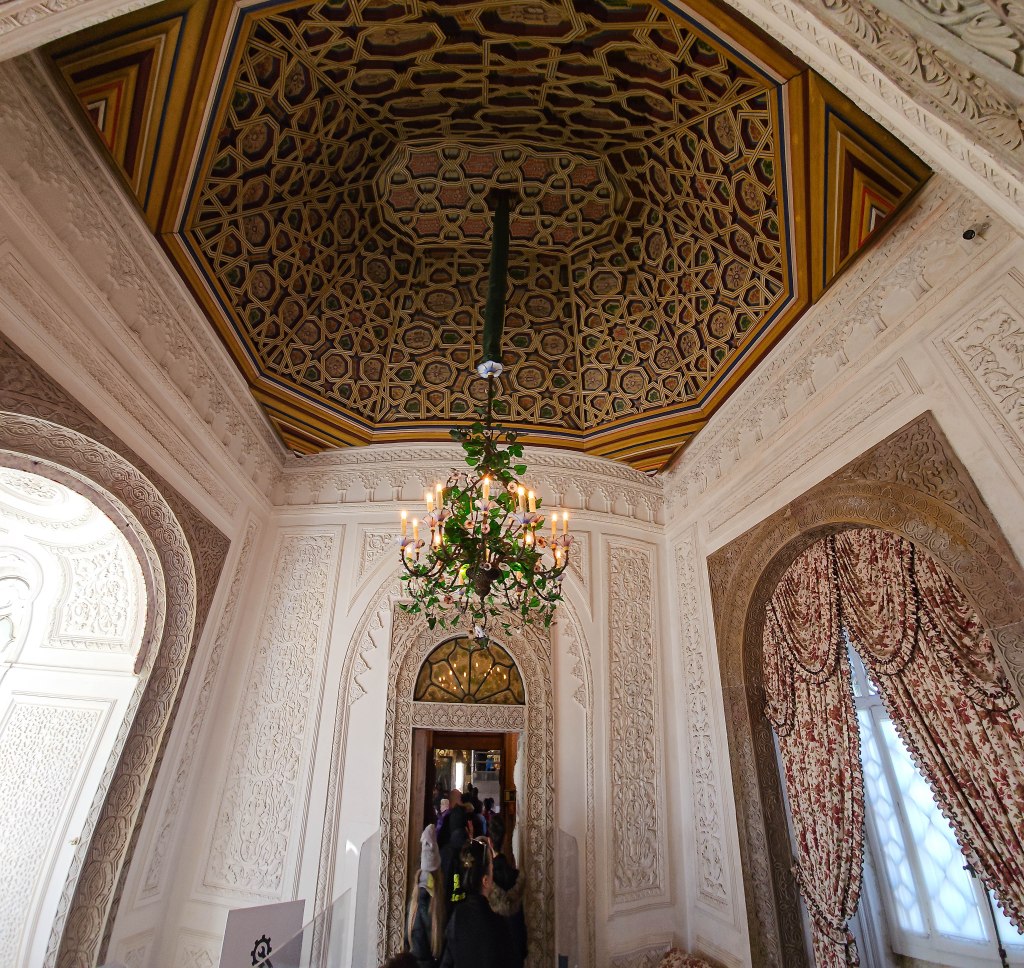
The palace is beautiful inside and out. We saw some restorations in progress; I’m sure it’s continuous work.
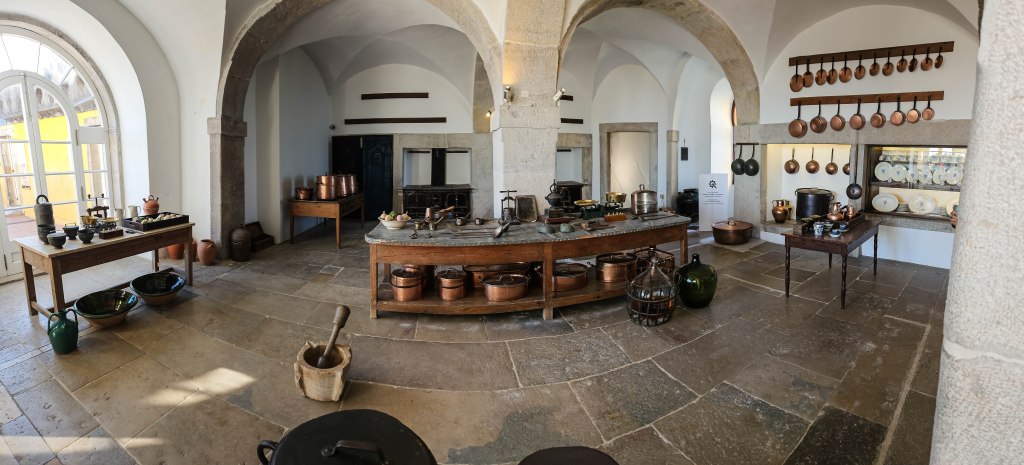
If only I had a kitchen half this size!
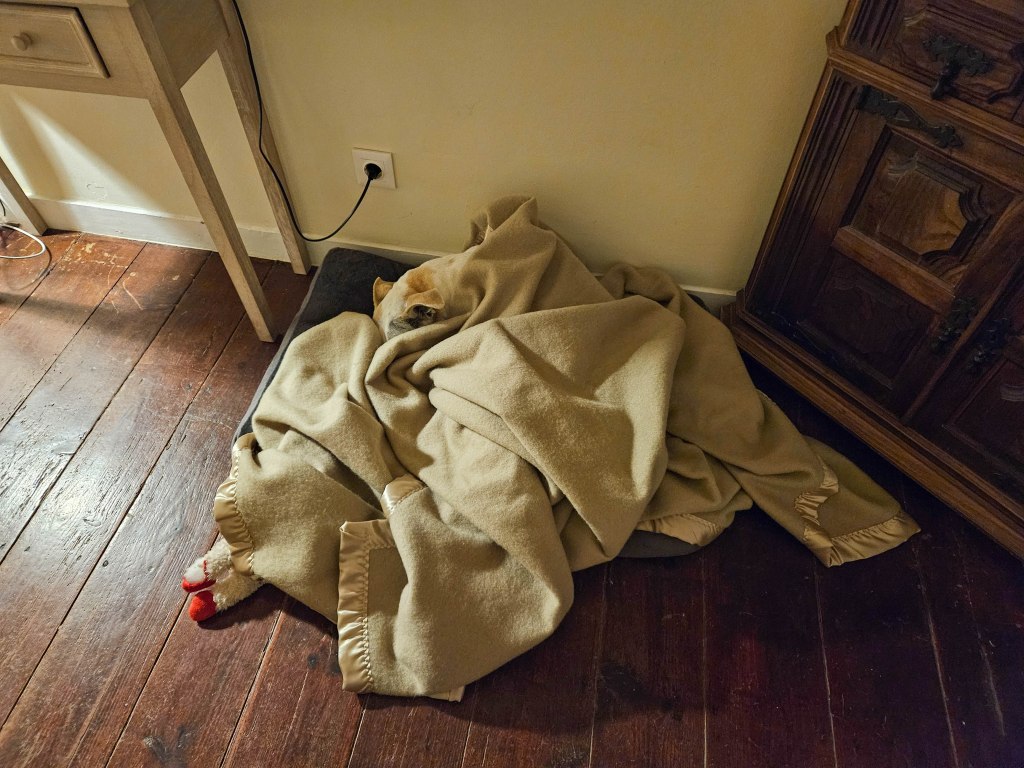
Our Airbnb wasn’t the greatest. It was a cold week, and there was only a small heater left for us that couldn’t keep the chill out of the air. A downside to traveling in the winter. Even Villa was happy to snuggle in a blanket.
She blends in nicely. =)
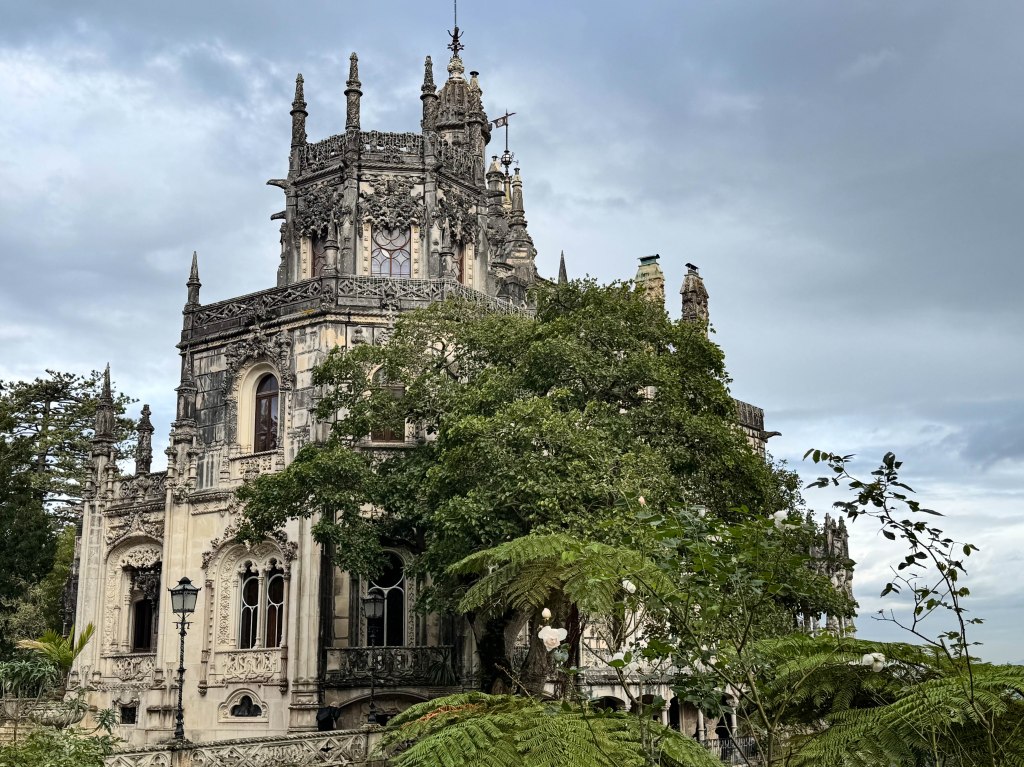
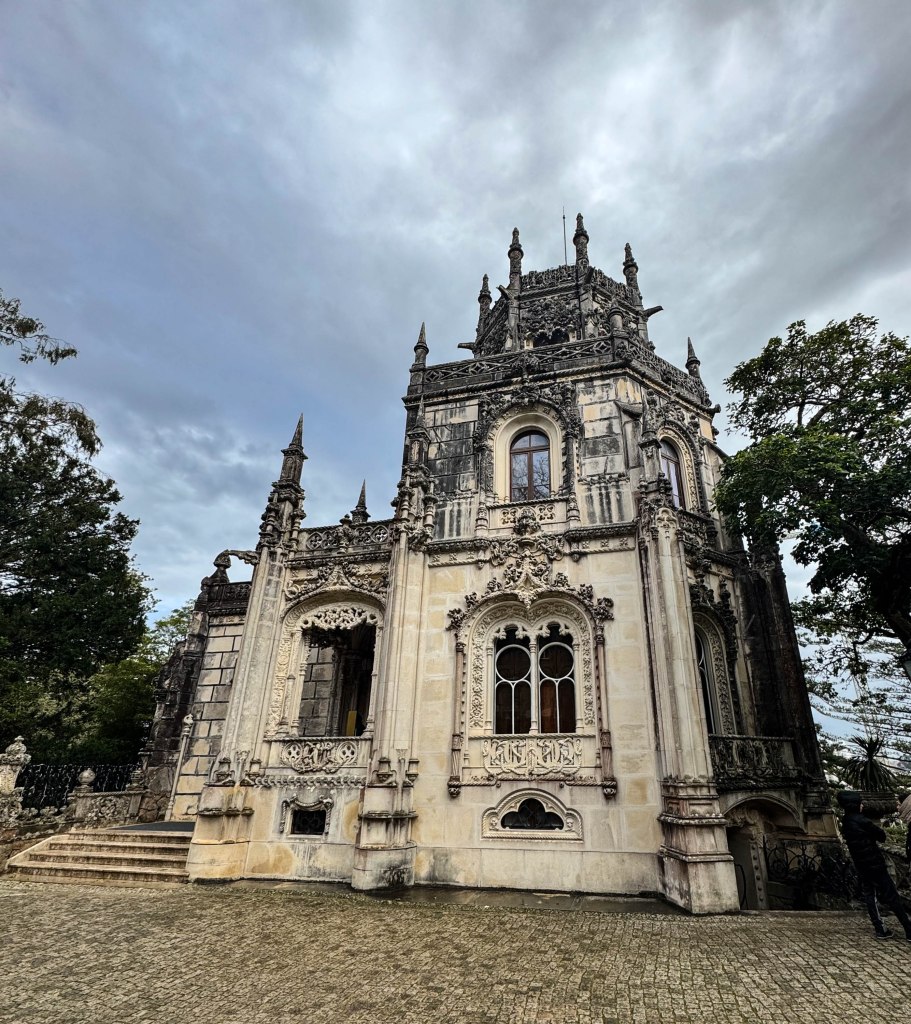
The Quinta da Regaleira is much smaller than the national palace, but the grounds are larger and more beautiful. We could spend a day in the spring or summer walking around the gardens and hiking the extended trails to various marked sites. It was a rainy day when we visited, so photos were a bit challenging.
A family of merchants who amassed their wealth in Port wine owned the land and sold it to Carvalho Monteiro in the late 1800’s. He built the castle, the chapel, and other features in the gardens. Neither Ben nor I got any photos in the castle. We were underwhelmed after seeing the national palace the day before. I was out of the castle before I realized the marked tour route was over! Maybe 3 minutes–most of the castle was off limits.
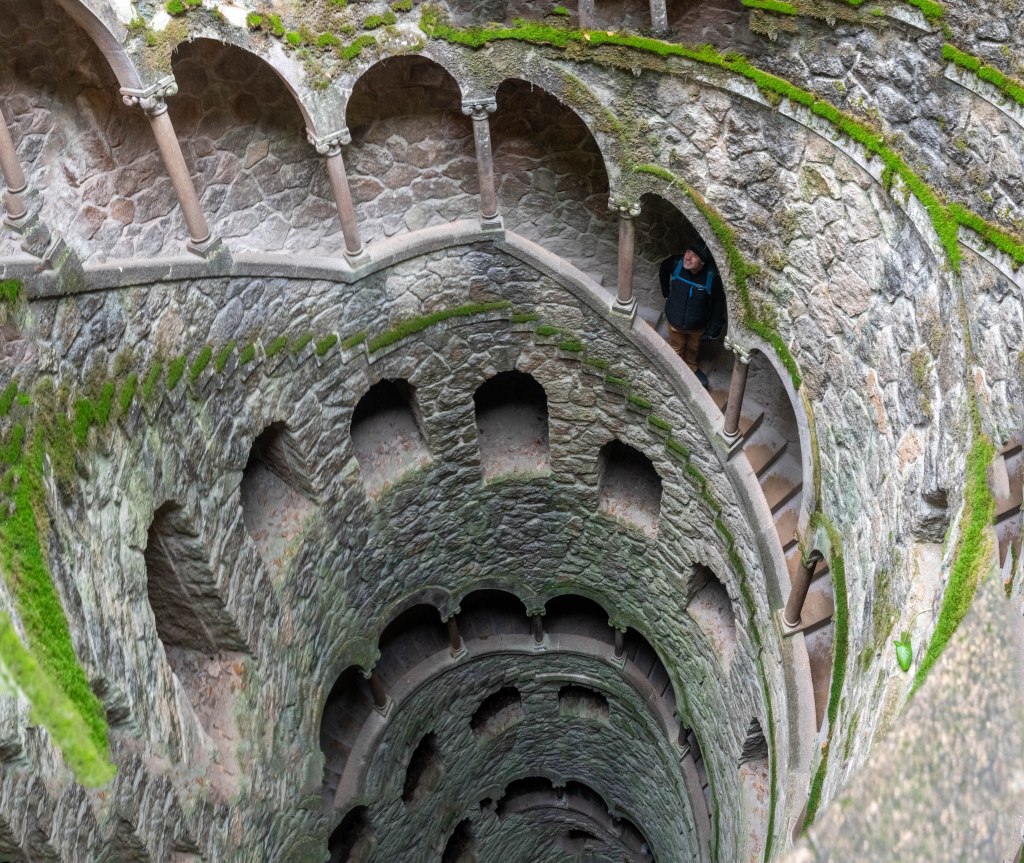
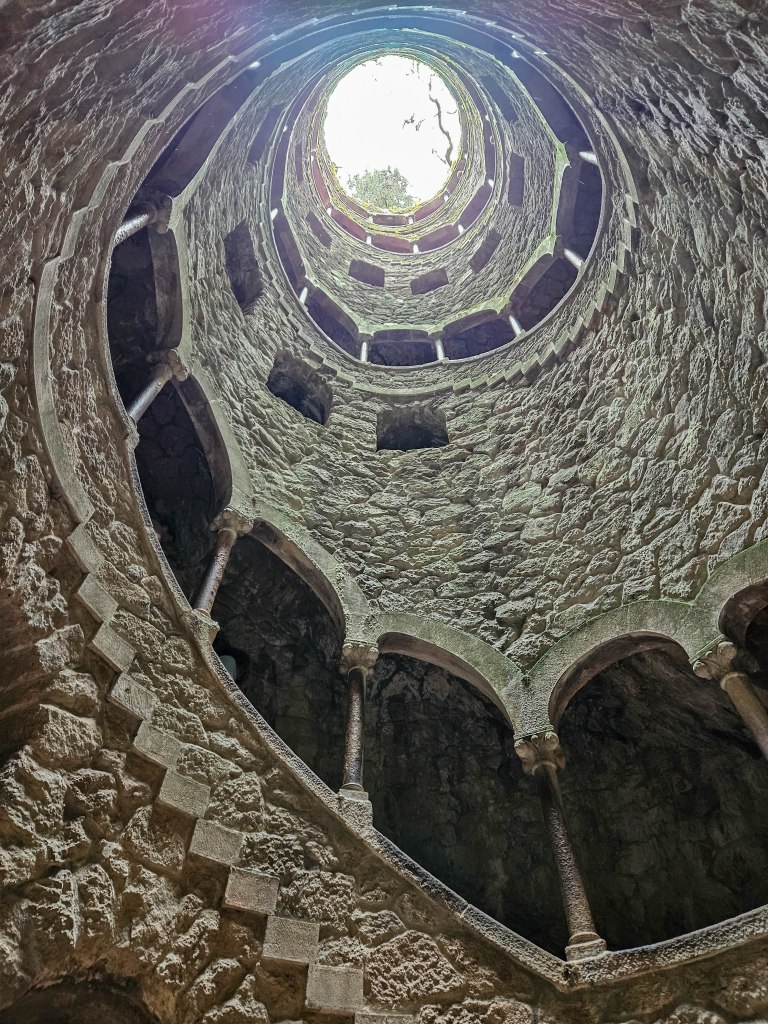
The Initiation Wells were our favorite sites at Regaleira. These wells did not provide water. It’s believed they were used for ceremonial purposes. I have no idea what that means. I did think of Dragnet movie the entire time I walked down the steps though!
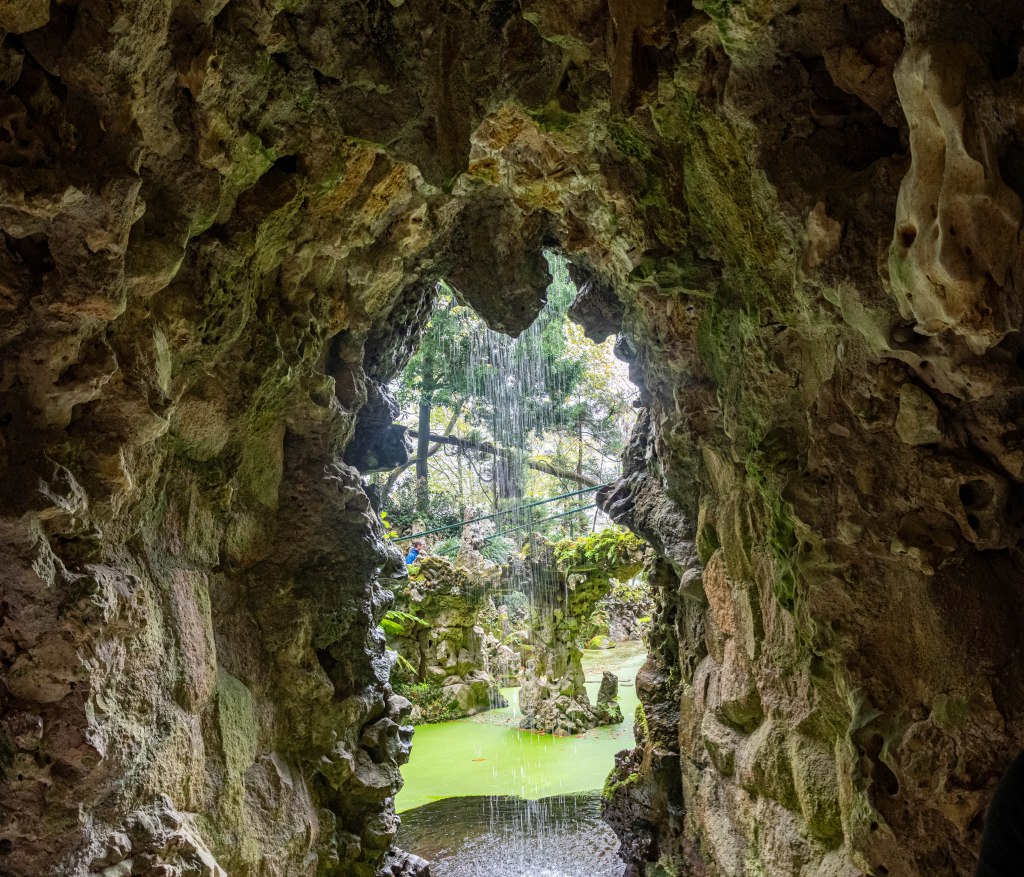
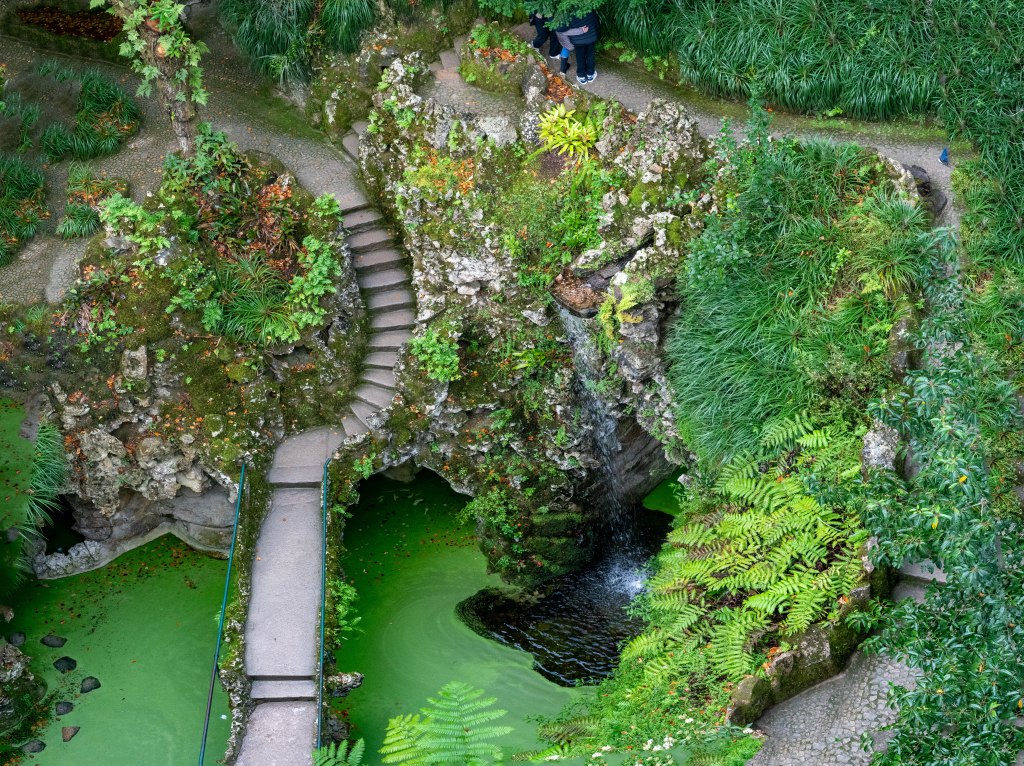
There were several tunnels at the bottom of the well, most roped off. The trail led to a small waterfall and out into the garden.
The waterfall is to the right. The tunnel led into the garden under those paths
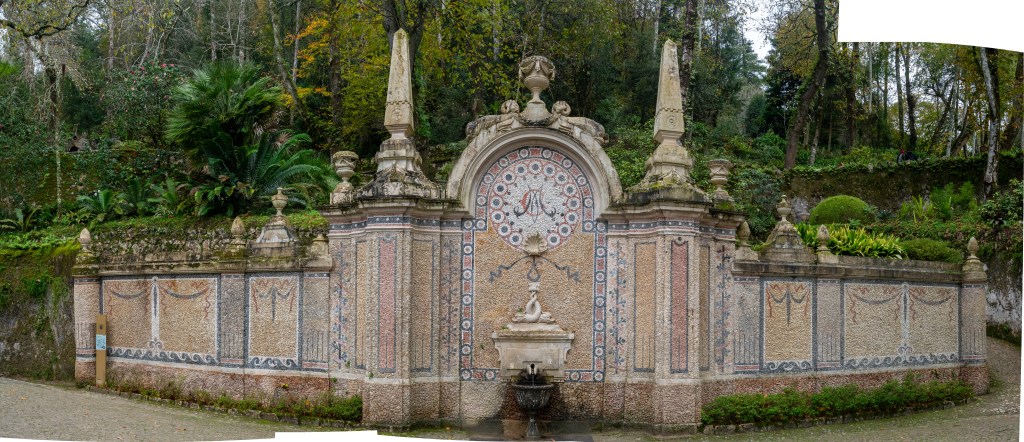
The photo below is of the Fount of Abundance. My panorama from my DSLR isn’t pefectly rectangular, but I didn’t want to crop any of the fountain away, and LR’s fill in tool didn’t look great. Makes me think of the maps of Mars we’d get from MRO’s flights. Like this: https://www.msss.com/msss_images/2007/07/19/index.html
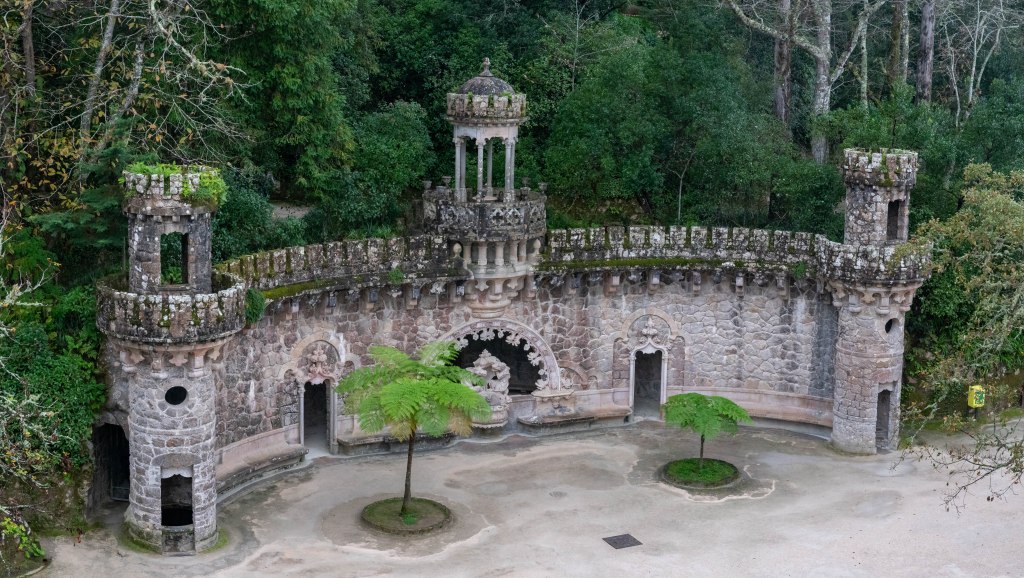
This is the Guardians Portal, taken from the Tower of Regaleira. Monteiro used this as an ampitheater. It also hides an entrance to the initiation well.
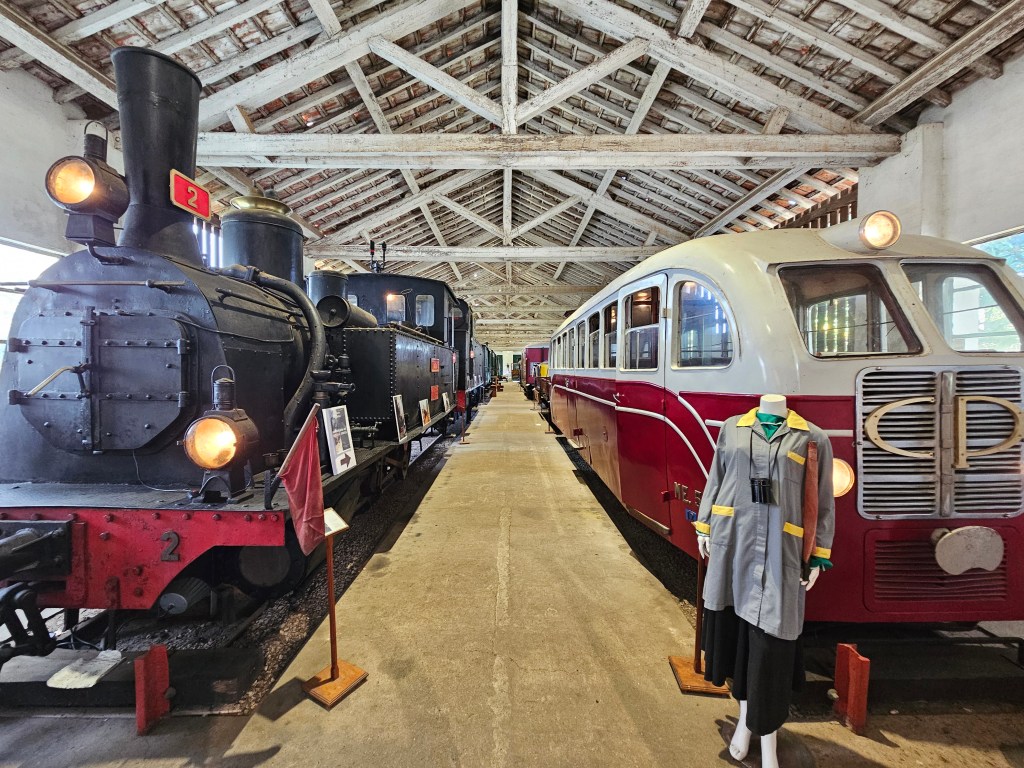
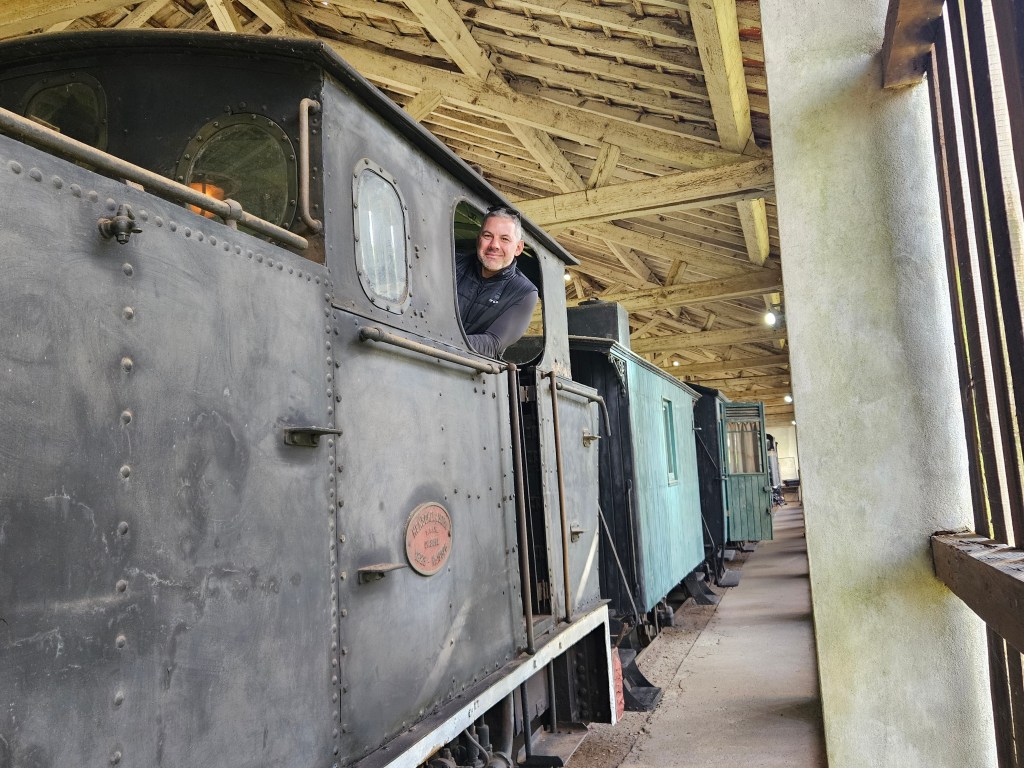
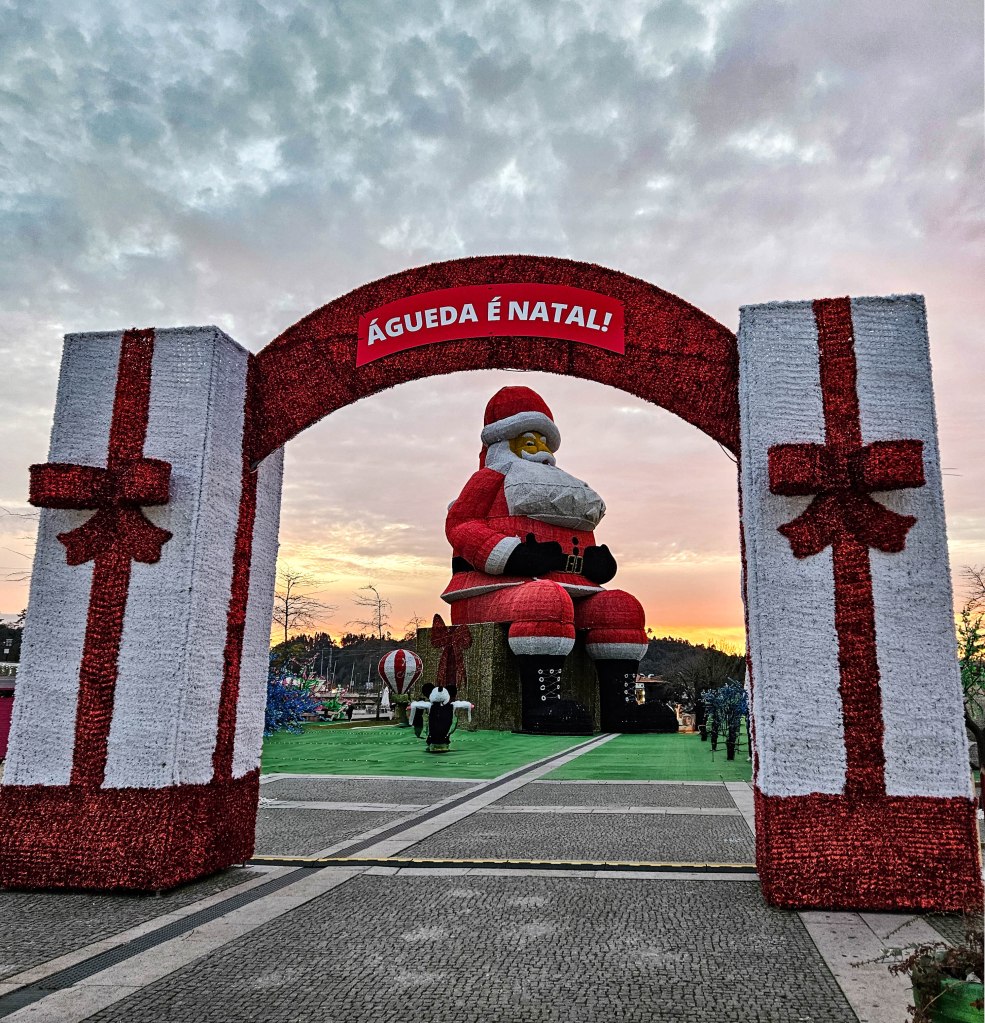
We made a side trip to Agueda on our way home from Porto. We’d heard the largest Santa Claus was in the city. We found a train museum and park along the way. The train museum was small but had some old engines and cars. I’m pretty sure we were the only visitors that day.
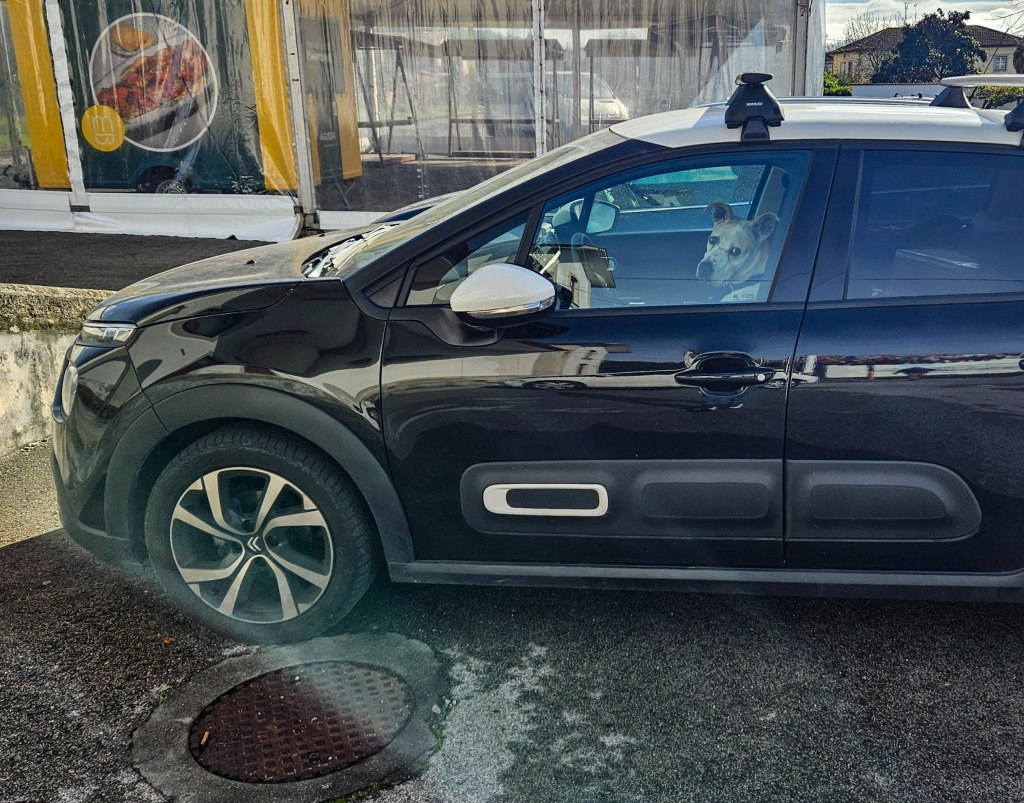
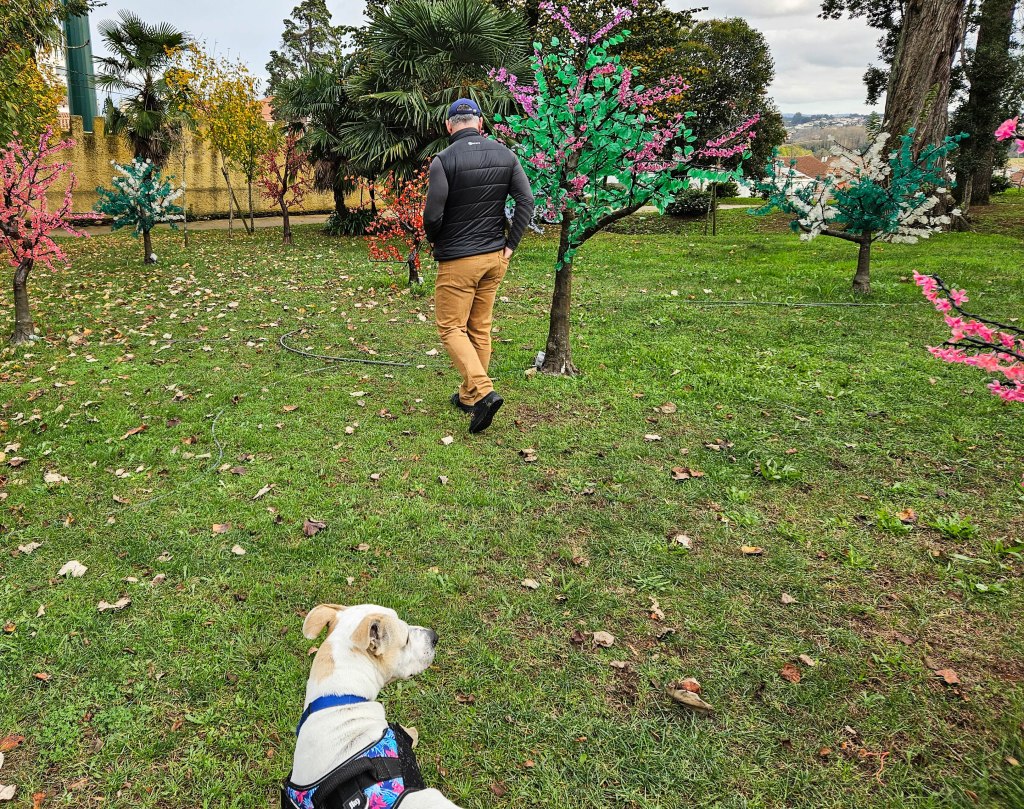
Villa must be feeling better, she’s starting to climb into the front. She doesn’t like to sit still if she’s bored. =)
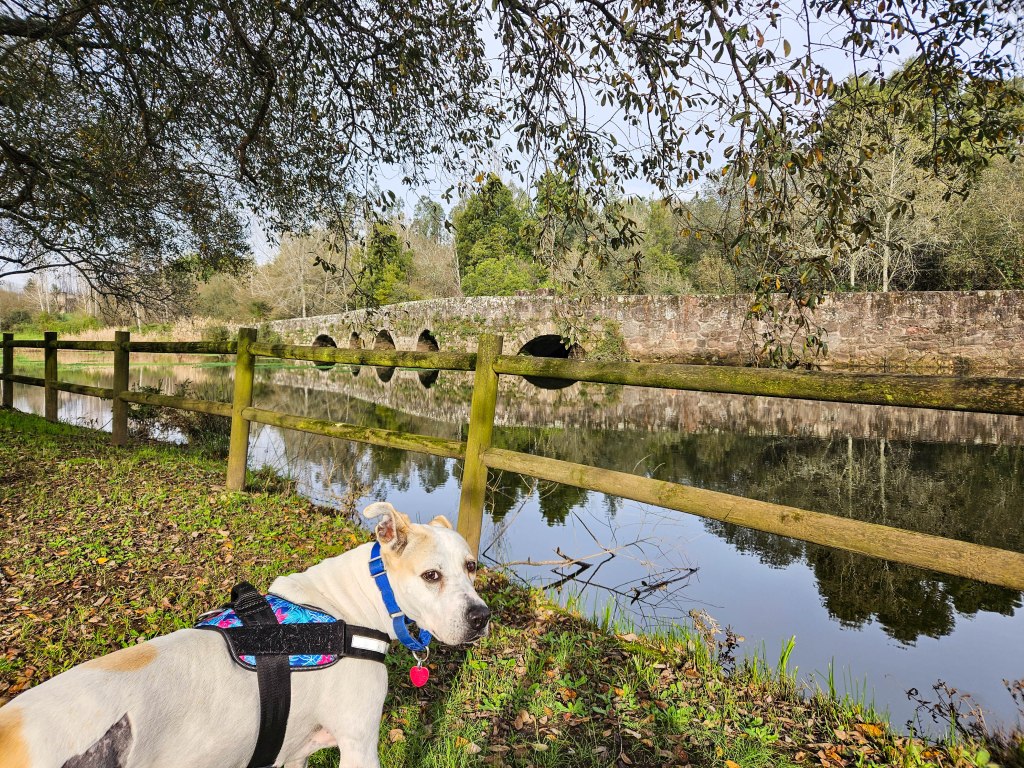
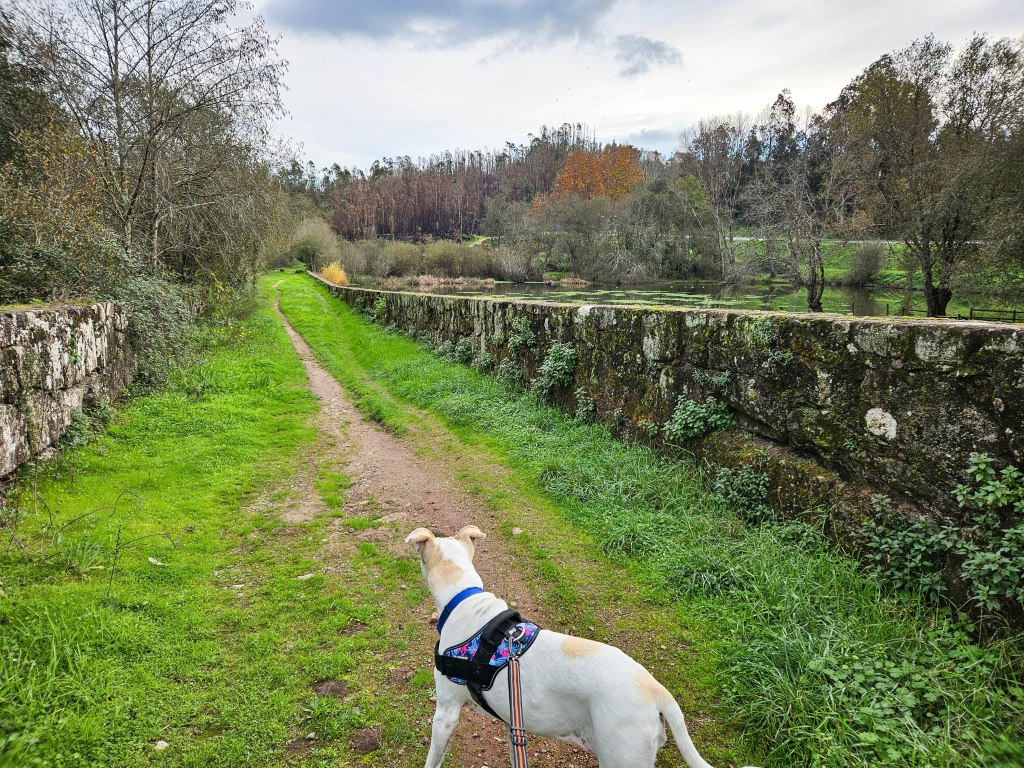
We headed to a park by the Ponte Medieval do Marnel, a medieval bridge over the Marnel river. The Marnel is a small tributary of the larger Vouga river. The park wasn’t much, but you could walk a loop around and over the bridge. It was a nice stop to get Villa out.
Afterwards, we ate lunch at a nice spot in Trofa. They had a patio, so Villa could hang out with us. The Owner was friendly, let us practice Portuguese with him and spoke slowly so we’d understand better. We continued on to Agueda and found a city park to hang out in until it got dark enough for the lights to come on.
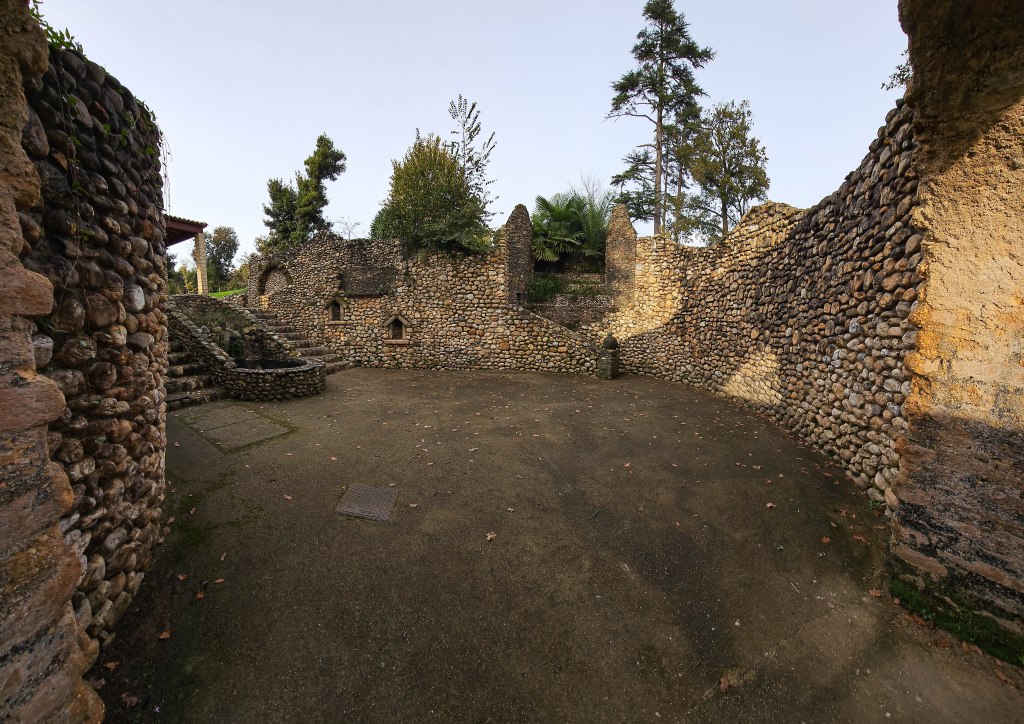
Villa met a few 4-legged friends and luckily missed the feline one I saw. There were several structures with no descriptions with them. I haven’t found any information online either. Here’s one that stood in the center of the park. It looks like ruins of a chapel or meeting place maybe.
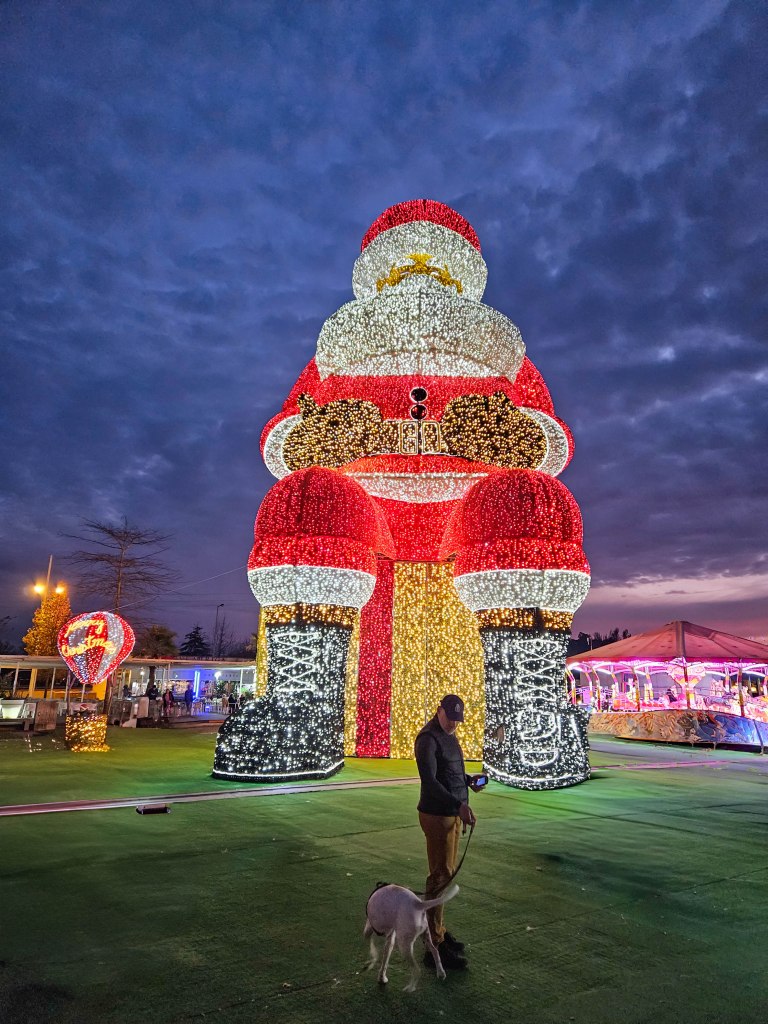
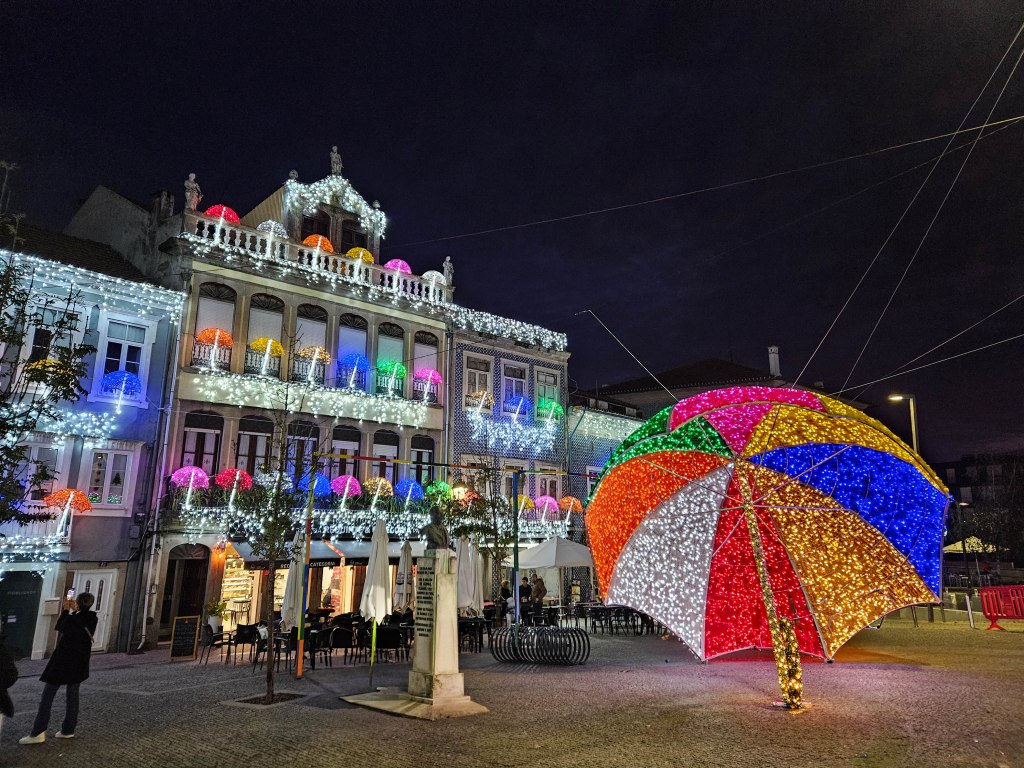
We walked down to the city center. It’s beautifully decorated with lights. We stopped here because we’d heard about the giant Pai Natal, Santa Claus. I was not ready for how large it really is! It’s the largest in Portugal.
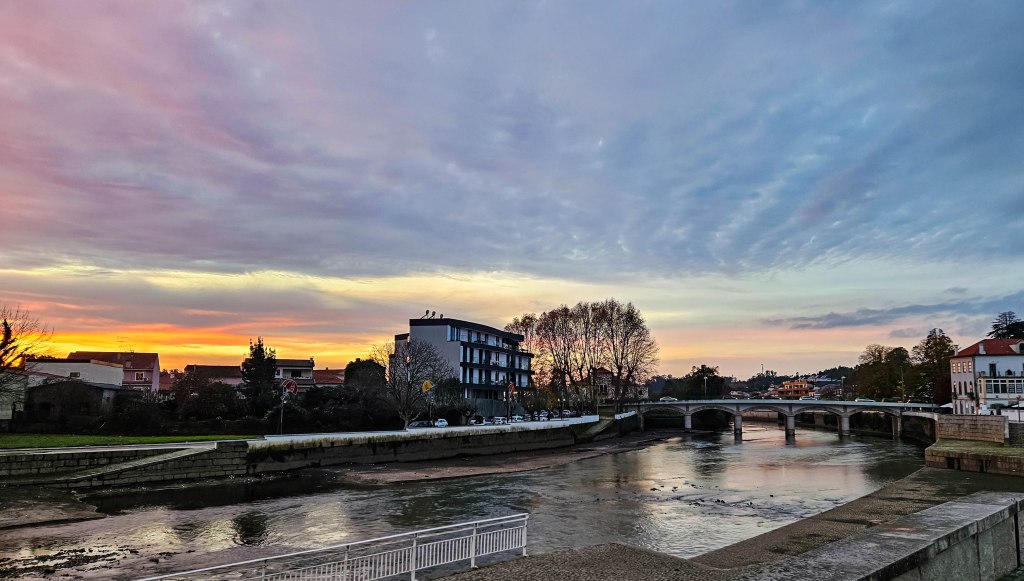
Huge right!?! We got to the park in time to see sunset. It was a nice one with lots of color. I didn’t have my SLR camera, but my phone did ok. I did LR it some to bring out the colors.
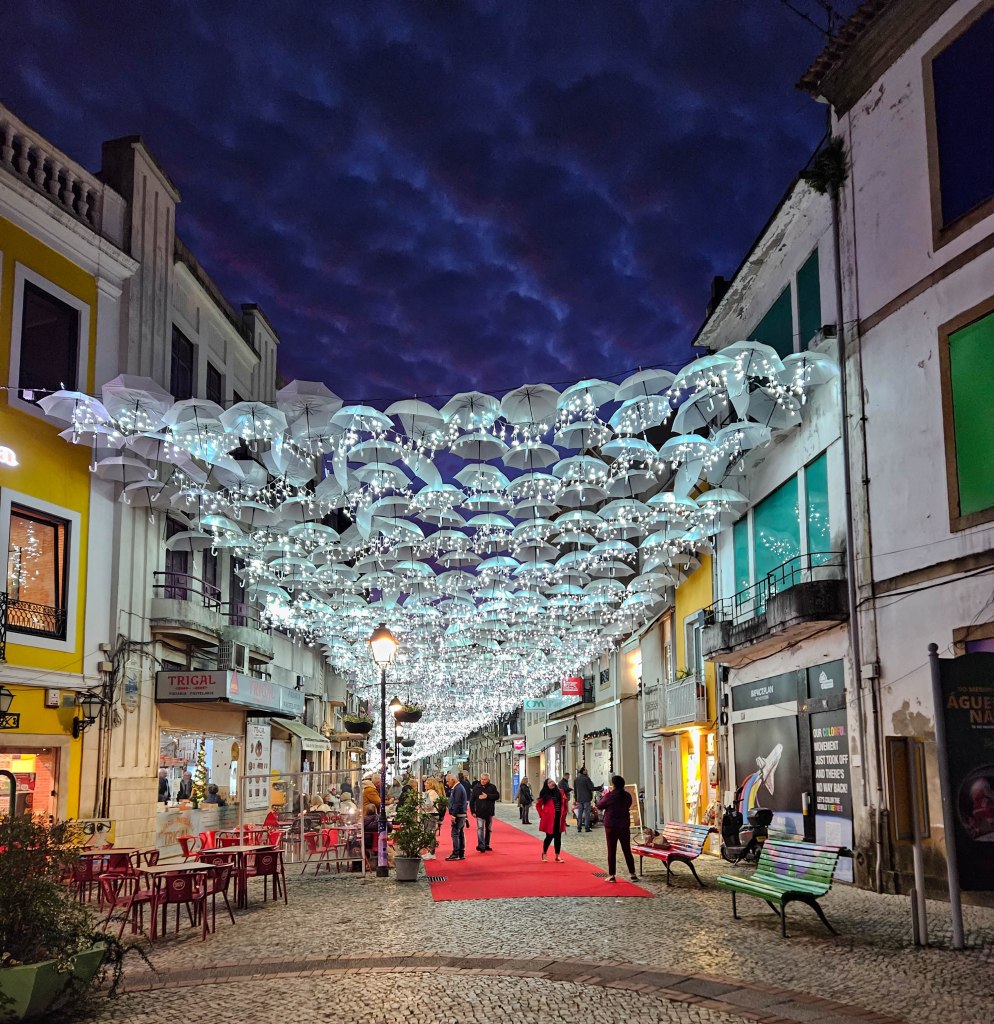
The city hosts an art installation called the Umbrella Sky Project. It began in 2012 and was apparently inspired by Mary Poppins. It is on display during the summer, but I guess they also have them up and lit during Christmas. It was a pleasant surprise.
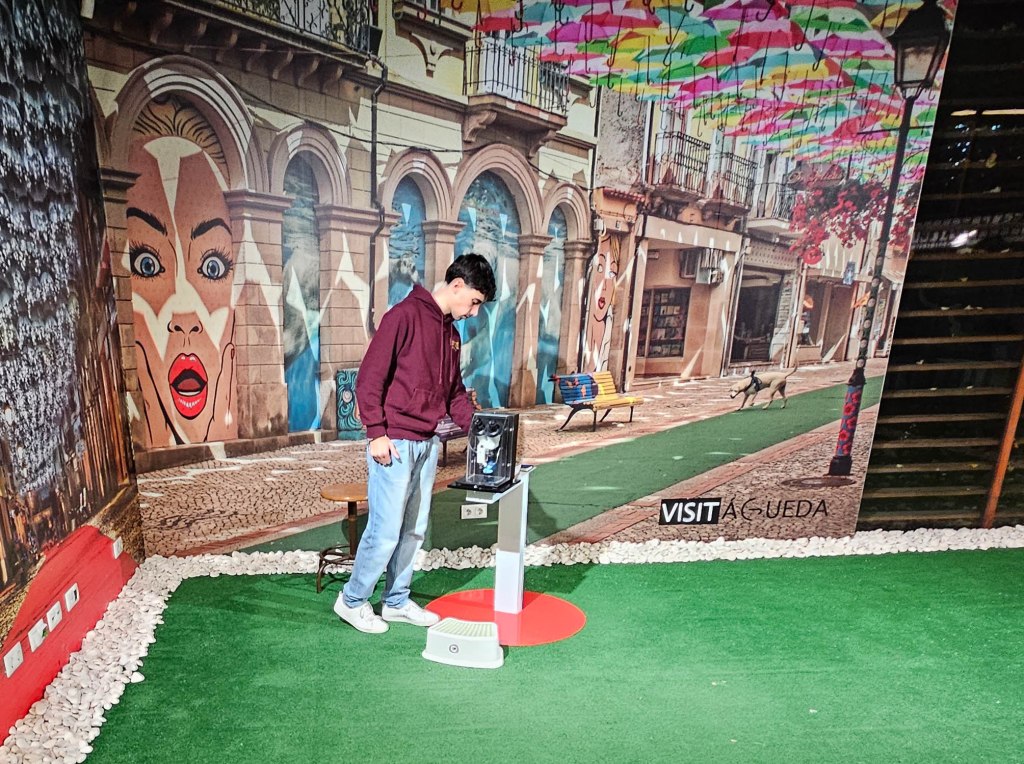
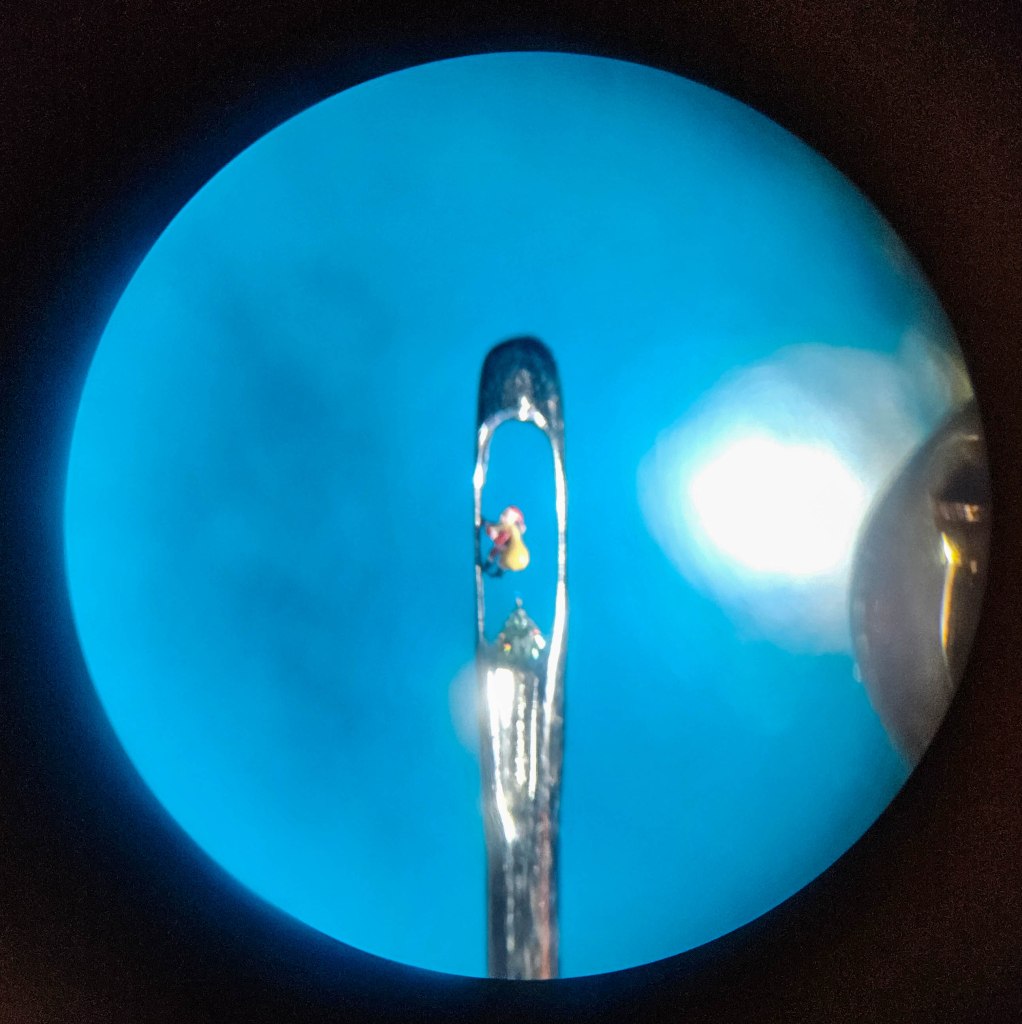
Not only does Agueda have the tallest Santa, it has the smallest as well. It’s in the eye of a sewing needle, and you look at it through a microscope. I took a photo of the room and did my best to capture the tiny Santa.
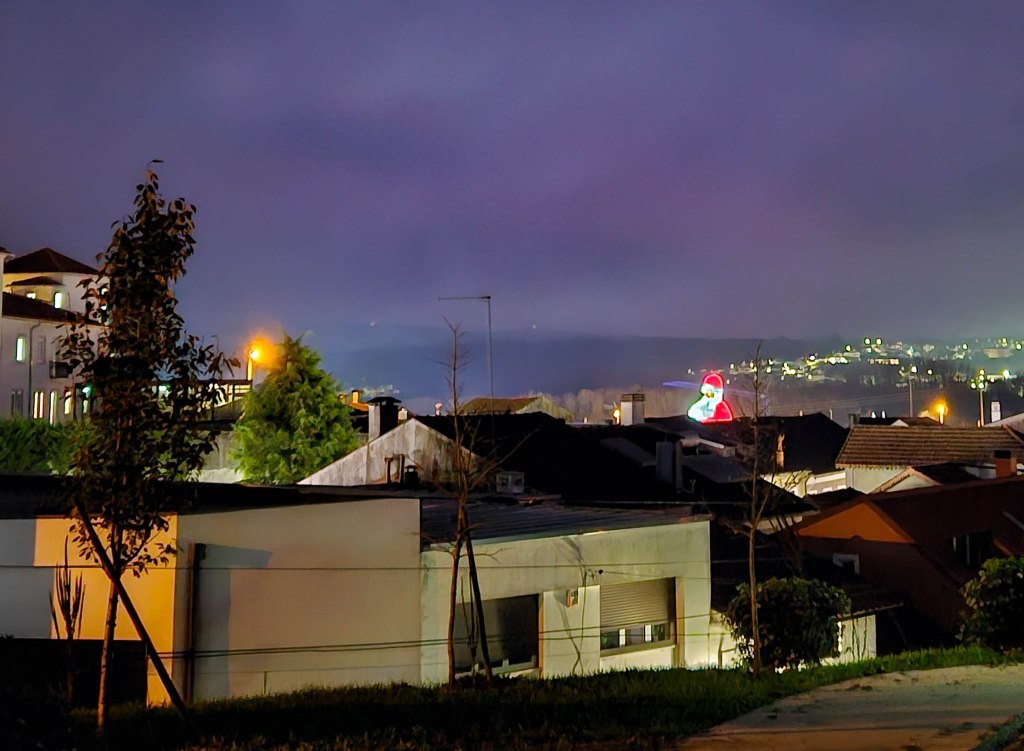
Here’s the Santa from the earlier park. His head rises above the buildings down the hill.
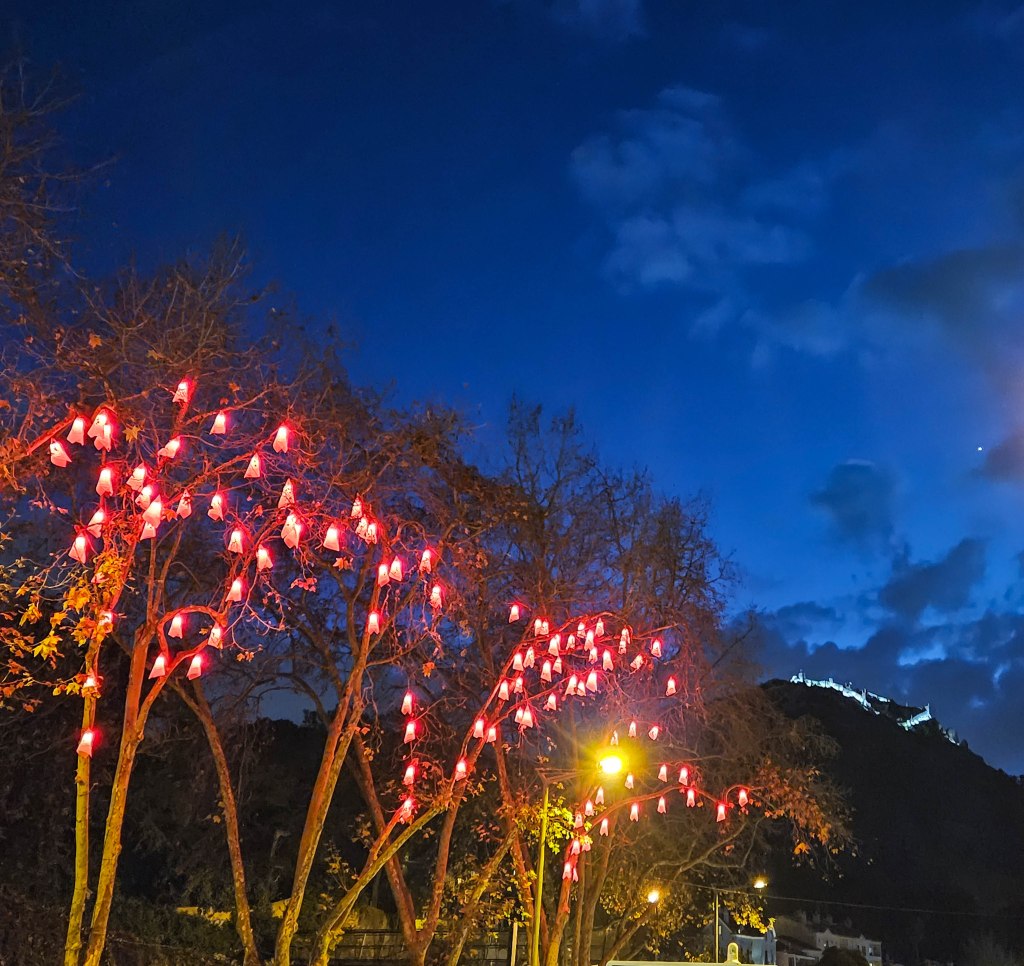
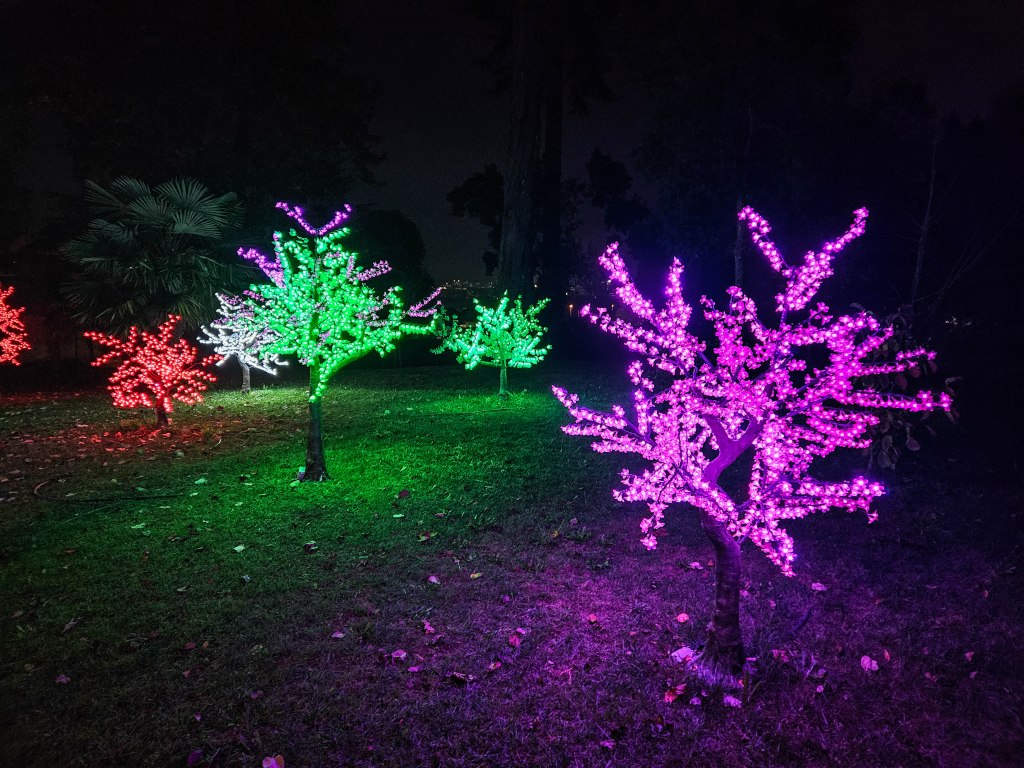
The park had trees with their branches wound with lights like leaves or flowers. We saw them earlier in the daylight, and they are beautiful at night!
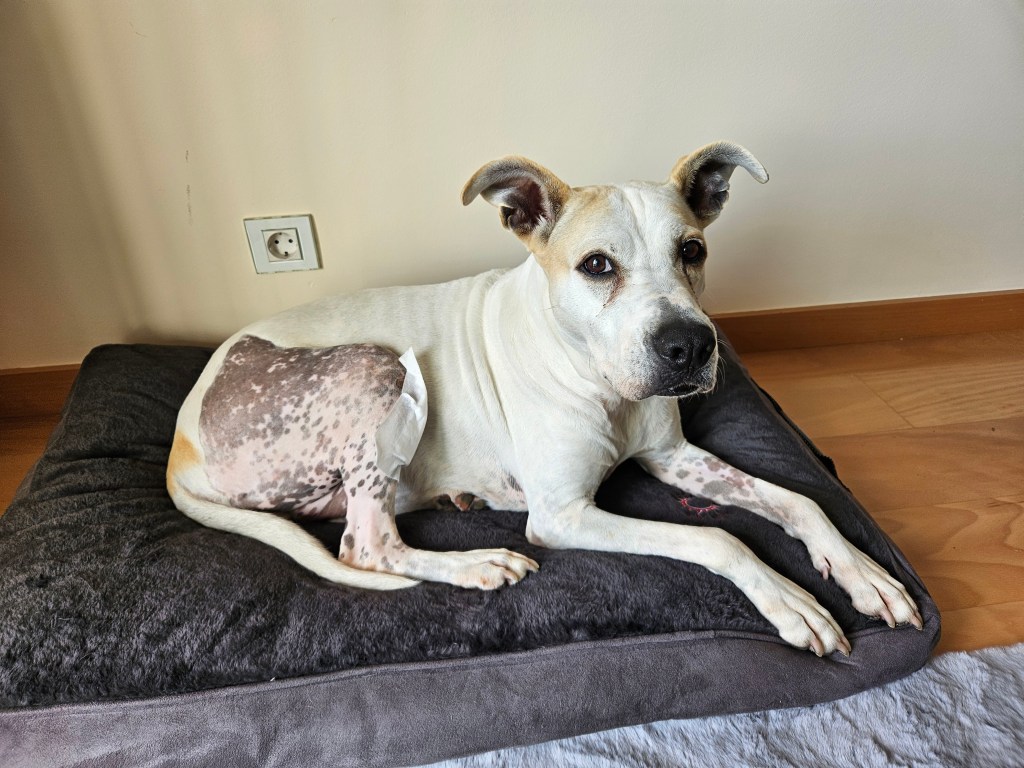
Villa has to have x-rays done on her leg at 30 and 60 days after the surgery to check that it’s healing correctly. We decided to stay in Porto a couple of nights to see a Porto match and more of the city at Christmas. Her x-rays look good, but she has developed a click when she walks on the leg. We believe it’s a meniscus tear. The vet gave us some anti-inflammatories, and we head back in 2 weeks to see what next steps are.
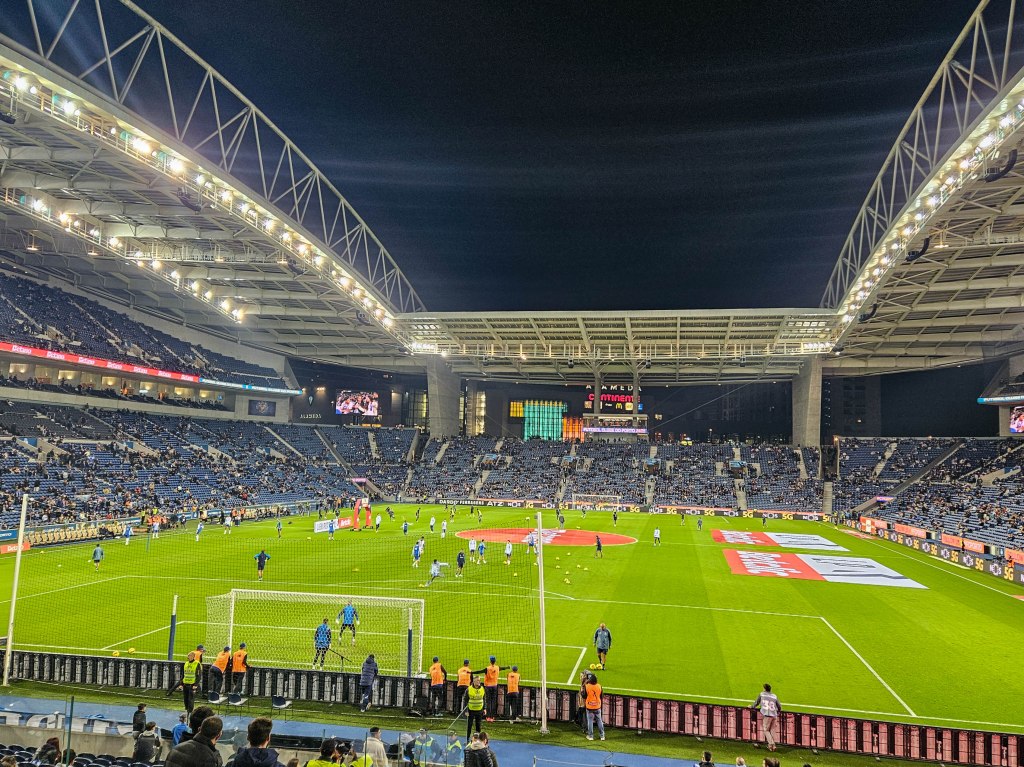
Porto played Casa Pia, a team that isn’t very good. Porto won 2-0. This was my first pro match in Europe.
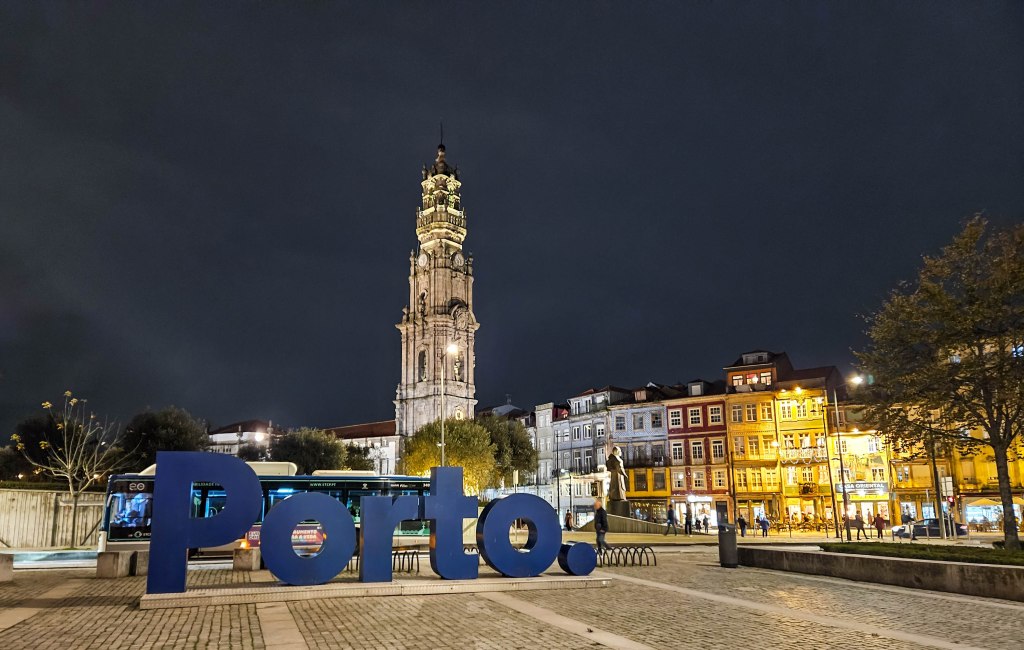
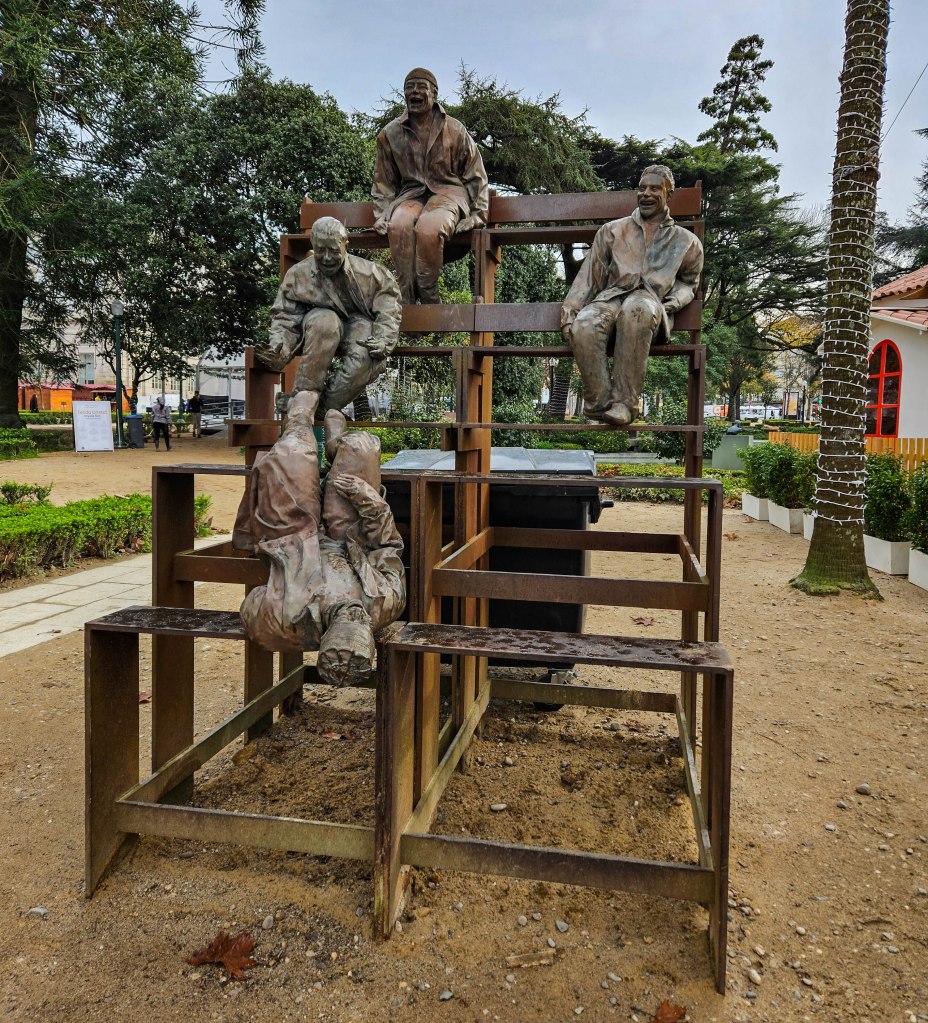
We walked around Porto the next day. We’d visited Porto last year when we were scouting places to live. We were mainly down by the waterfront then; this visit we walked around the Bolhao area and west of it. The Jardim da Cordoaria is a park with several sculptures. It’s also where a Christmas market sets up. We walked through here during the day with Villa and came back in the evening to check out the market. This sculpture was my favorite.
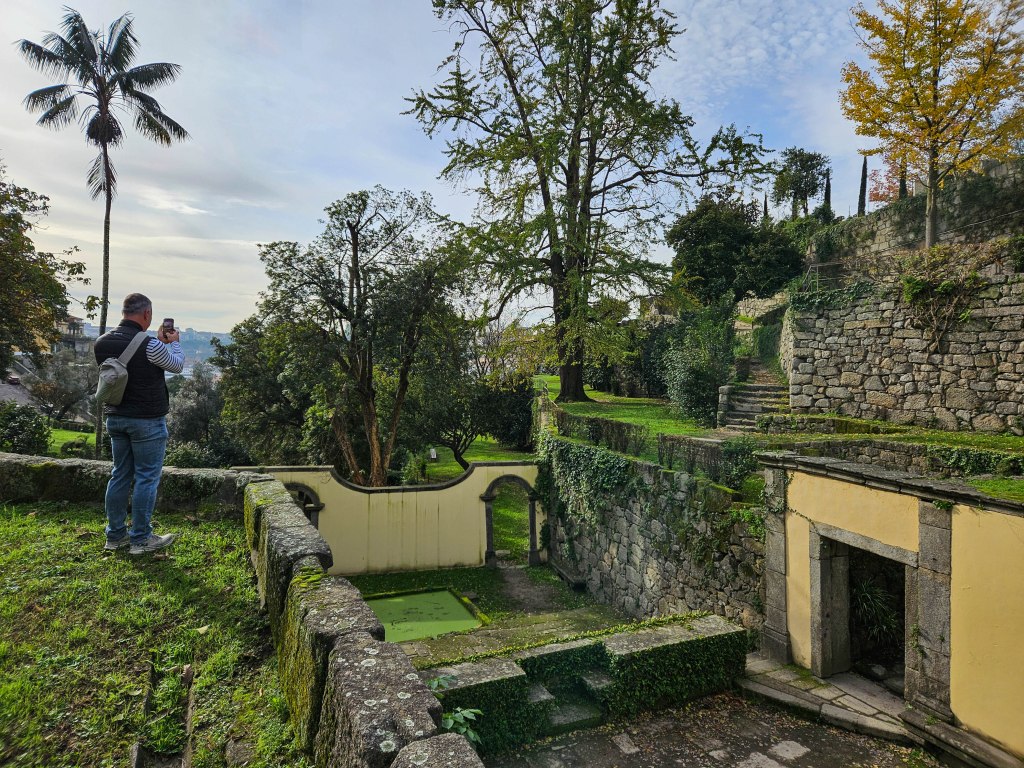
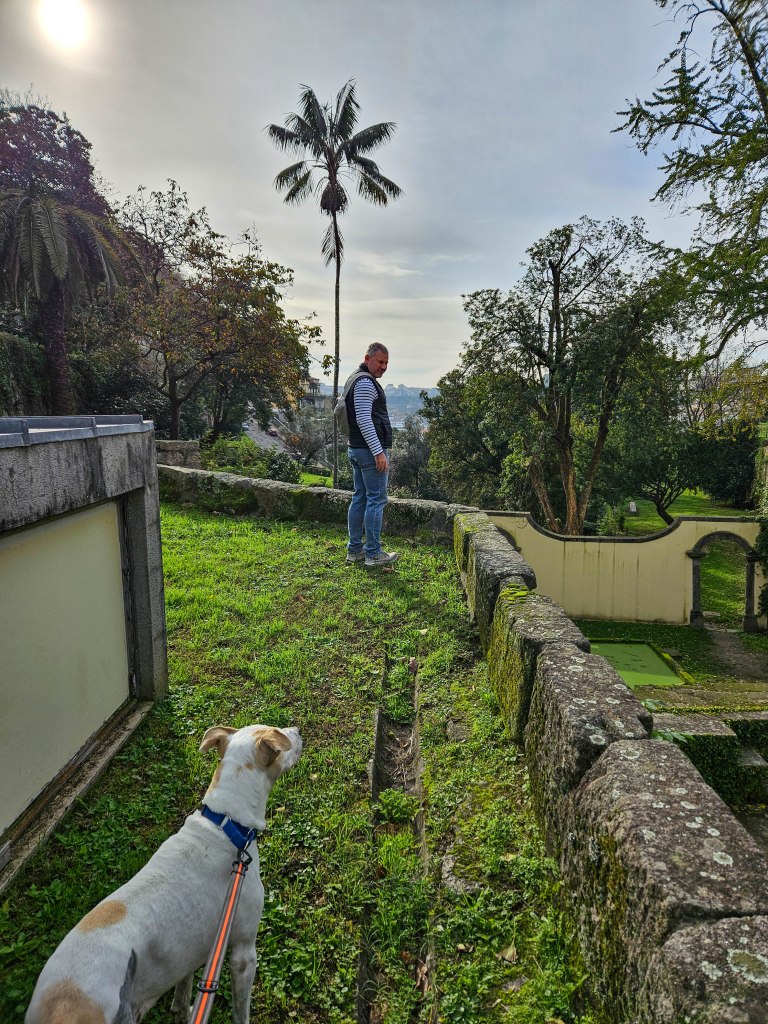
From there we walked to the Parque das Virtudes. It’s a tiered garden park with nice pathways. We didn’t explore the full park – Villa is still on “light duty” and the hills were pretty steep.
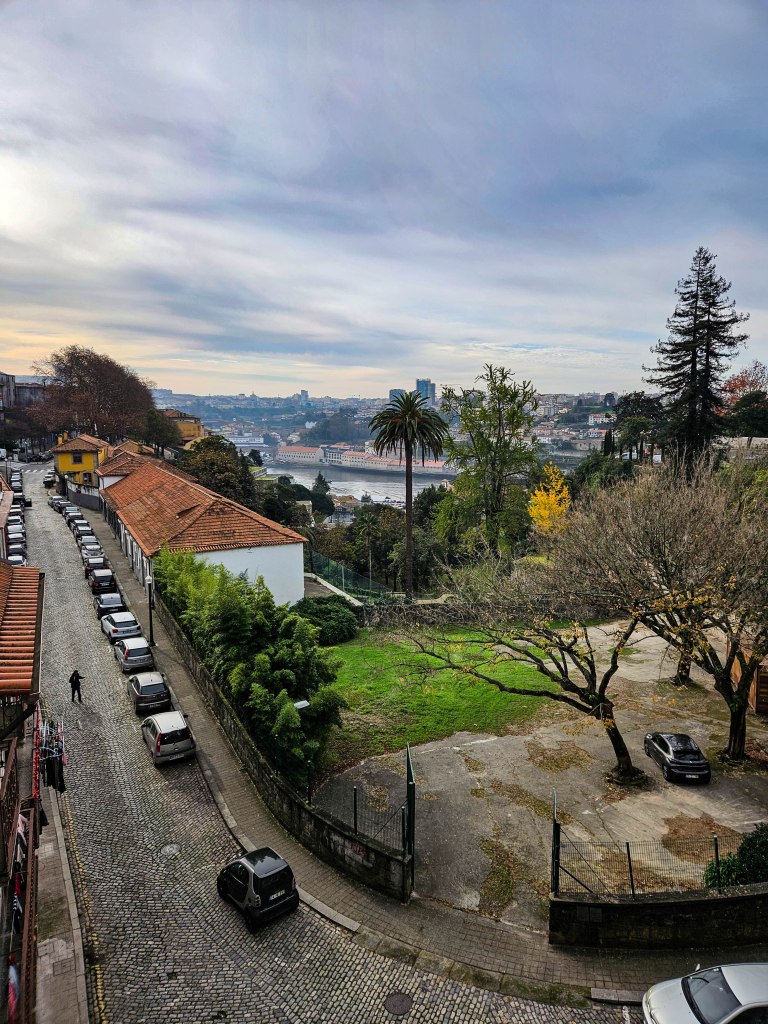
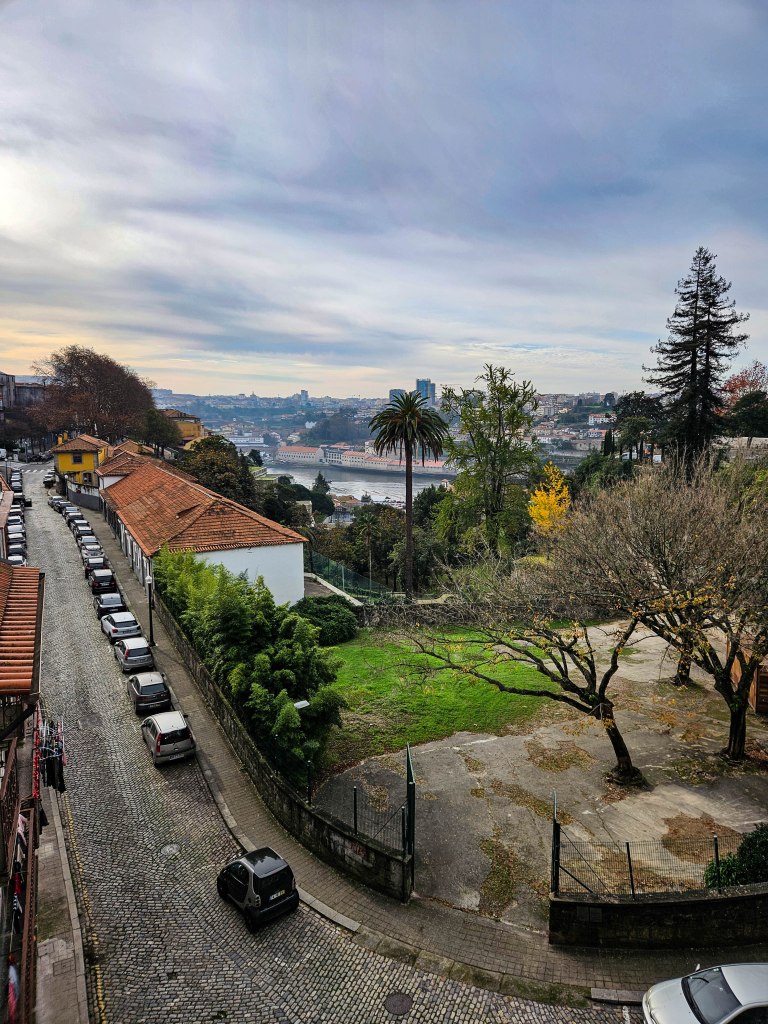
Lightroom has recently added AI removal to its software. This feature is amazing. I can remove people or objects with a click. Here’s an example, the first is a shot of the park without AI and the second is with it applied. It’s like a spot the difference game. 😉 It’s my new favorite feature.
There was a fountain of sorts in the park, though no water was flowing. It was a pretty structure to walk around.
We did not make it in to see the Livraria Lello, a beautiful book store that has become popular world wide. I didn’t realize that there’s a line and tickets to enter the bookstore since it’s become so popular with tourists. They credit the entry fee toward any book sales. It’s staircase inspired the moving staircases in Hogwarts. Maybe there will be fewer people when we come back in January.
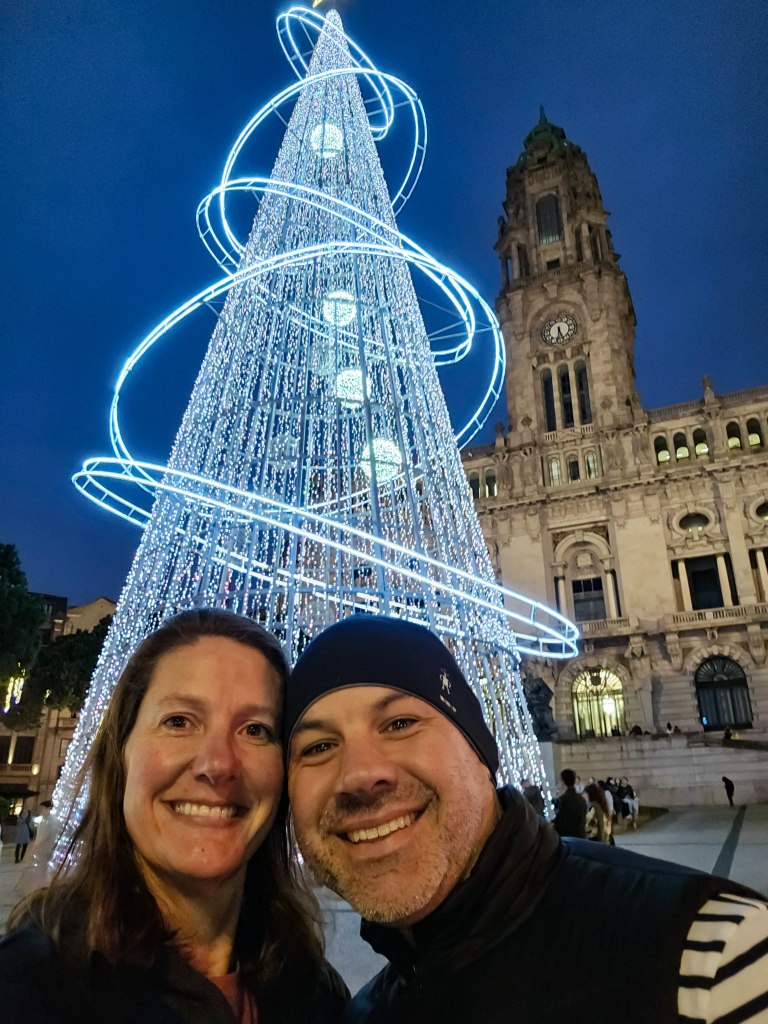
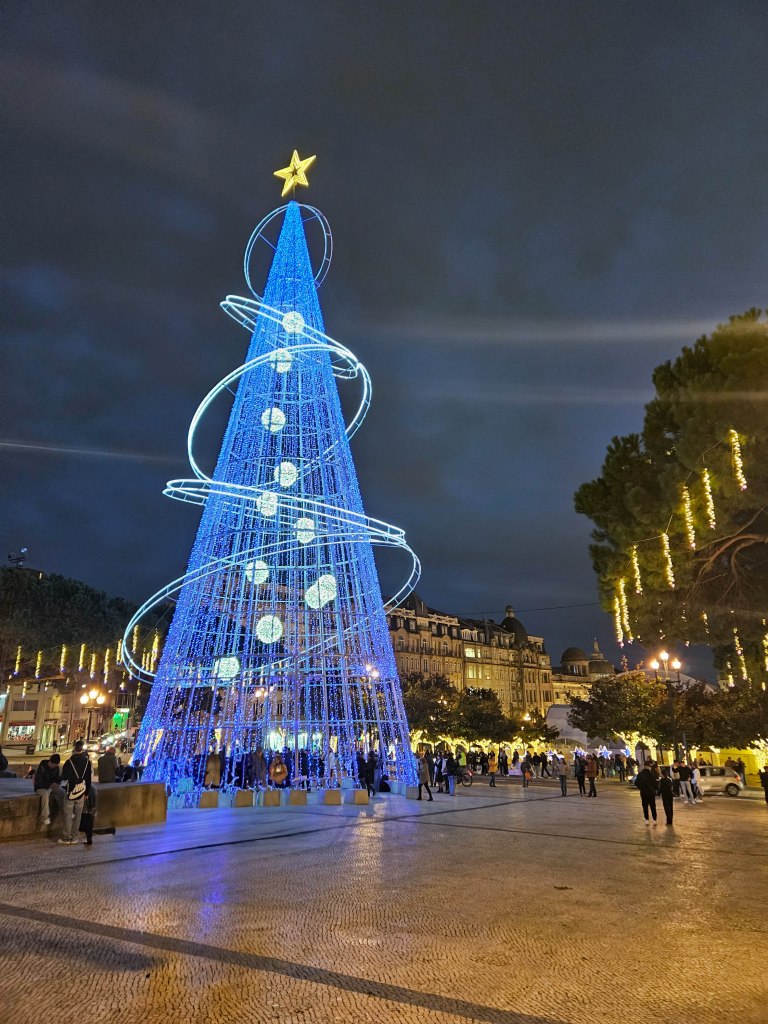
We saw the city’s Christmas tree at City Hall at the start of our evening walk. It’s huge, and the lights change color and flicker in time with music. The park next to the hall is lit with lights as well. The effect is dampened somewhat since there is major construction going on down the street, so much of the area is closed off.
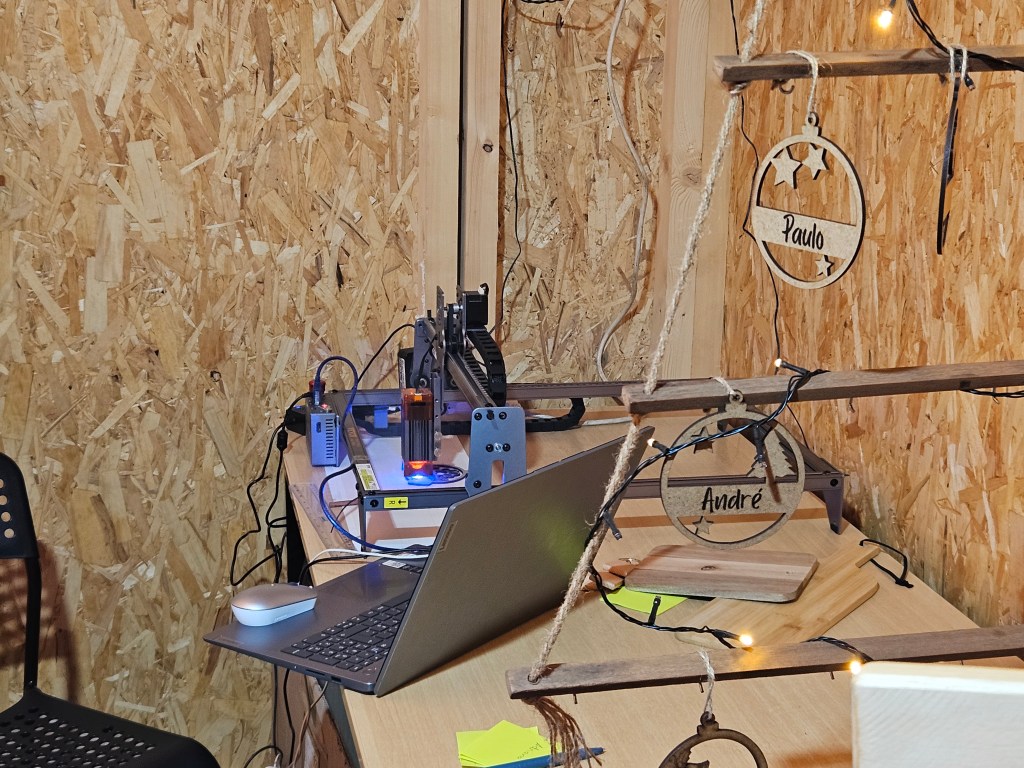
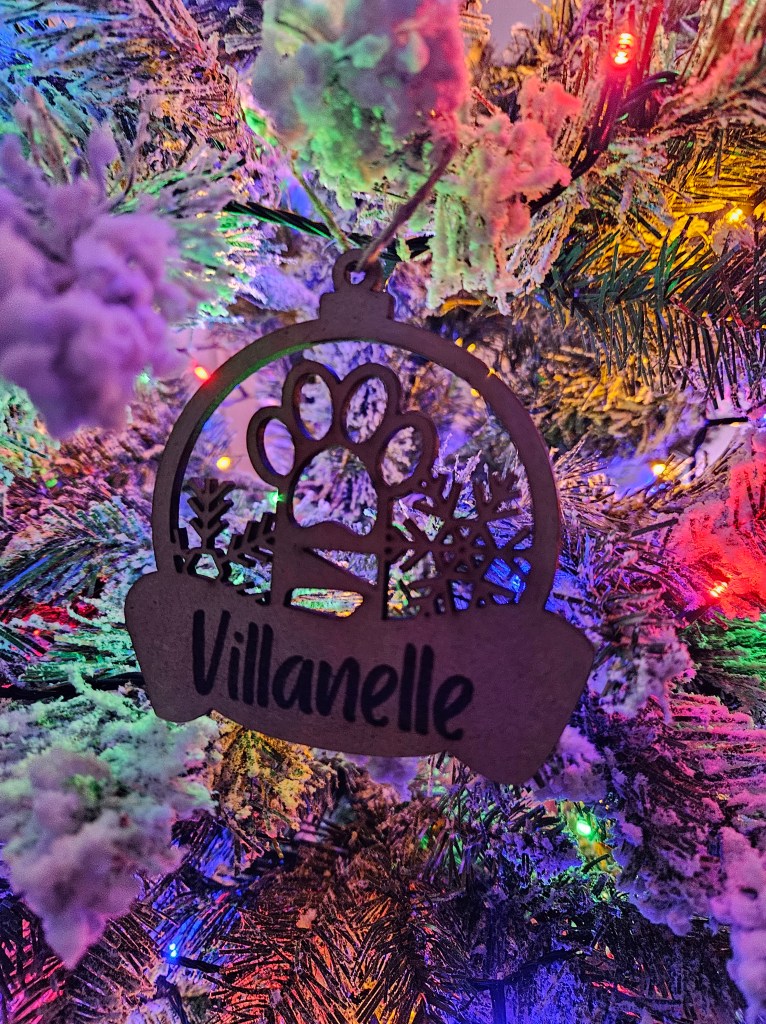
The markets were open as we walked by. We bought an custom wood ornament. This was the man’s setup for making the ornaments.
I like the ornament, it’s the first one on our tree!
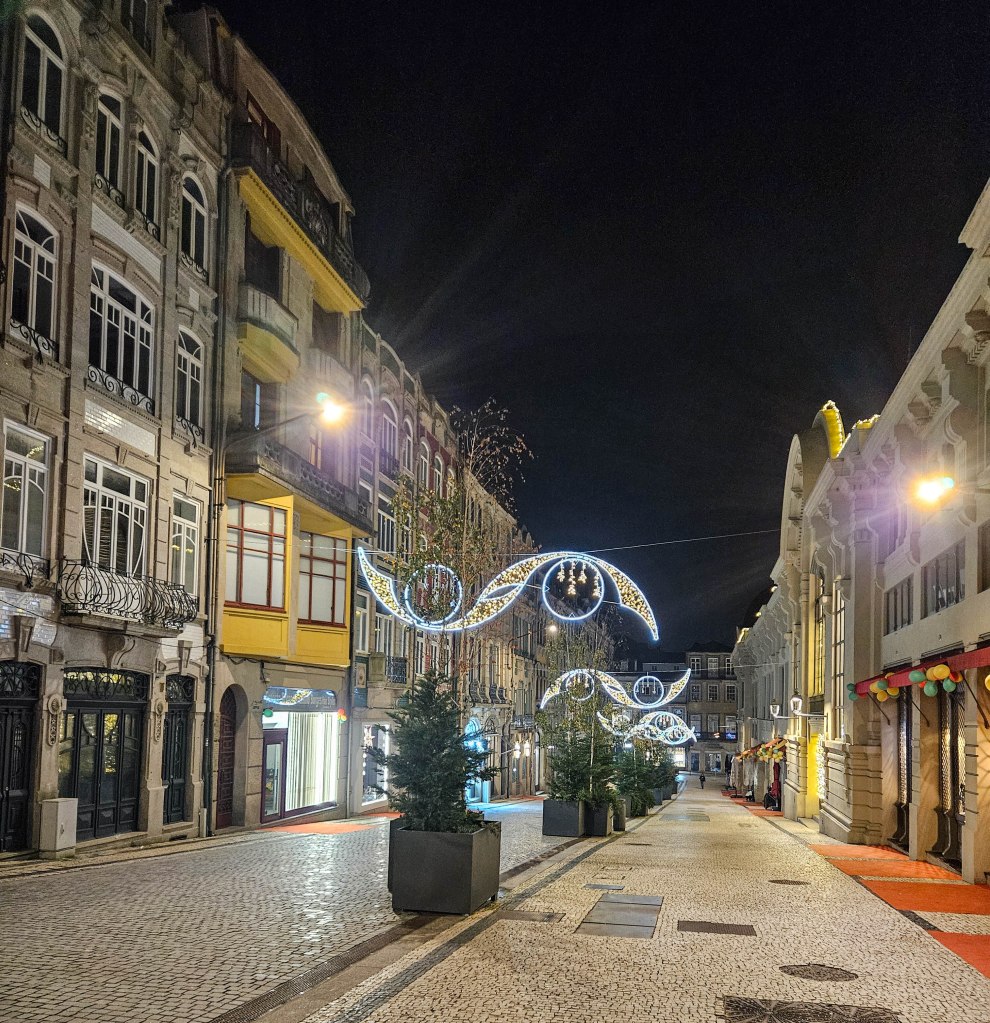
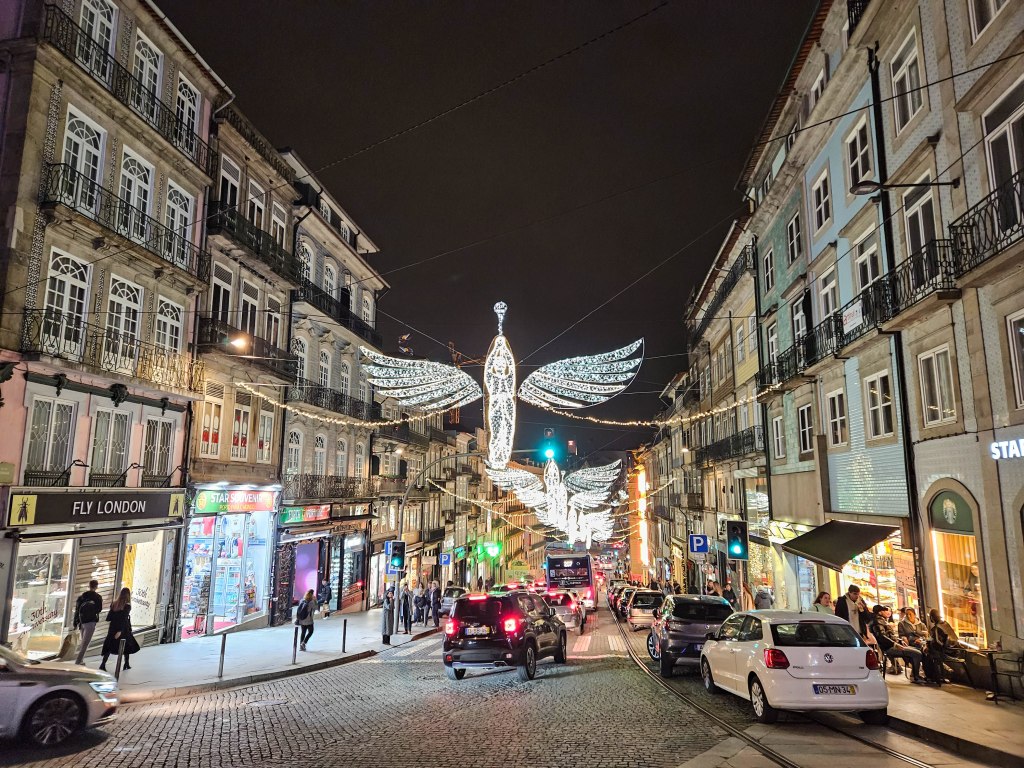
Almost every town and city we’ve visited in Portugal in December has had streets lit in various themes. They are so pretty to walk down.
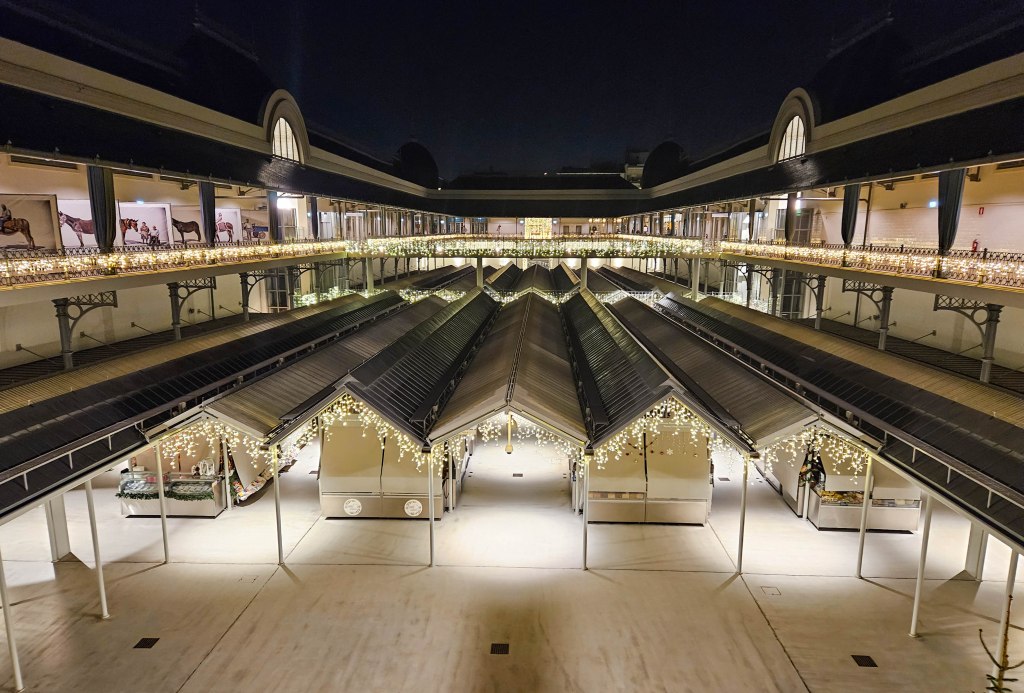
The Mercado do Bolhao is a beautiful 2-story market with shops on the first floor and restaurants around the second.
Now that I’m retired, I can finally catch up on my photo editing and blog posts! Here’s the first from our adventures in France for the Olympics.
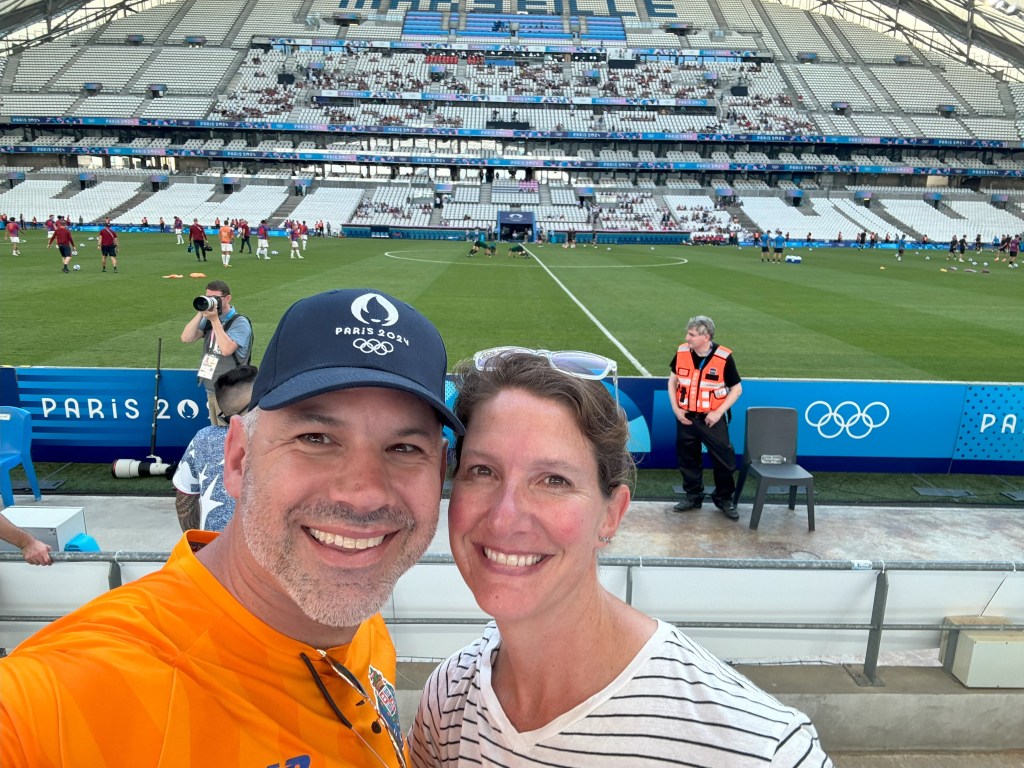
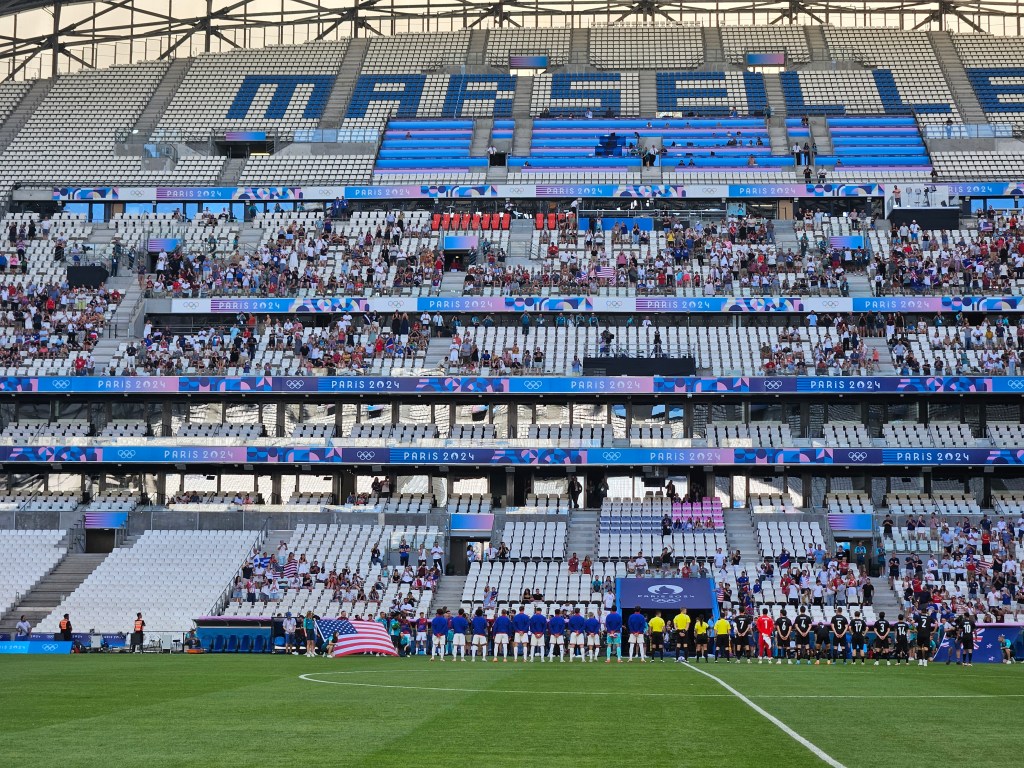
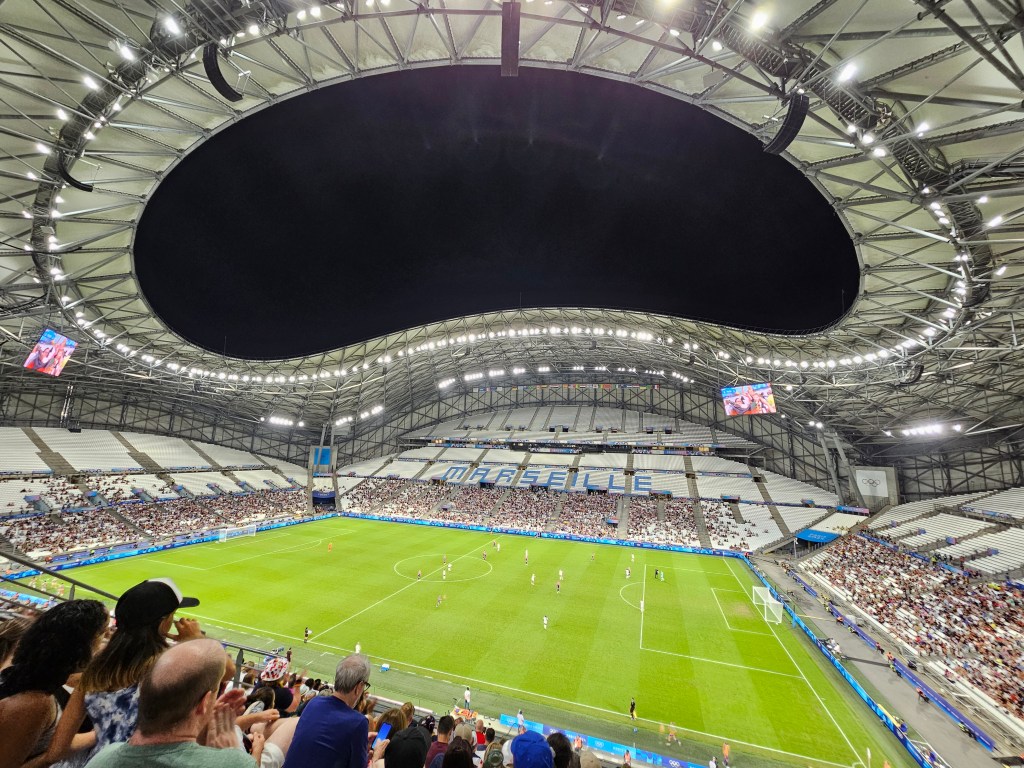
Ben and I are at the Paris Olympics. We’re visiting 3 places – Marseille, Paris, and Lille. It’s our first time in Marseille, and we have plenty of time to explore. The only match we planned on seeing was the women’s US soccer match vs. Germany. Turns out there were plenty of tickets available to the men’s soccer match vs. New Zealand, so we bought tickets to that match as well. The US men did well, they won 4-1. I found out that most men’s teams, if not all, select the top players under 23 to play in the Olympics. The up-and-comers if you will. That helps the US have a chance each match. 😉
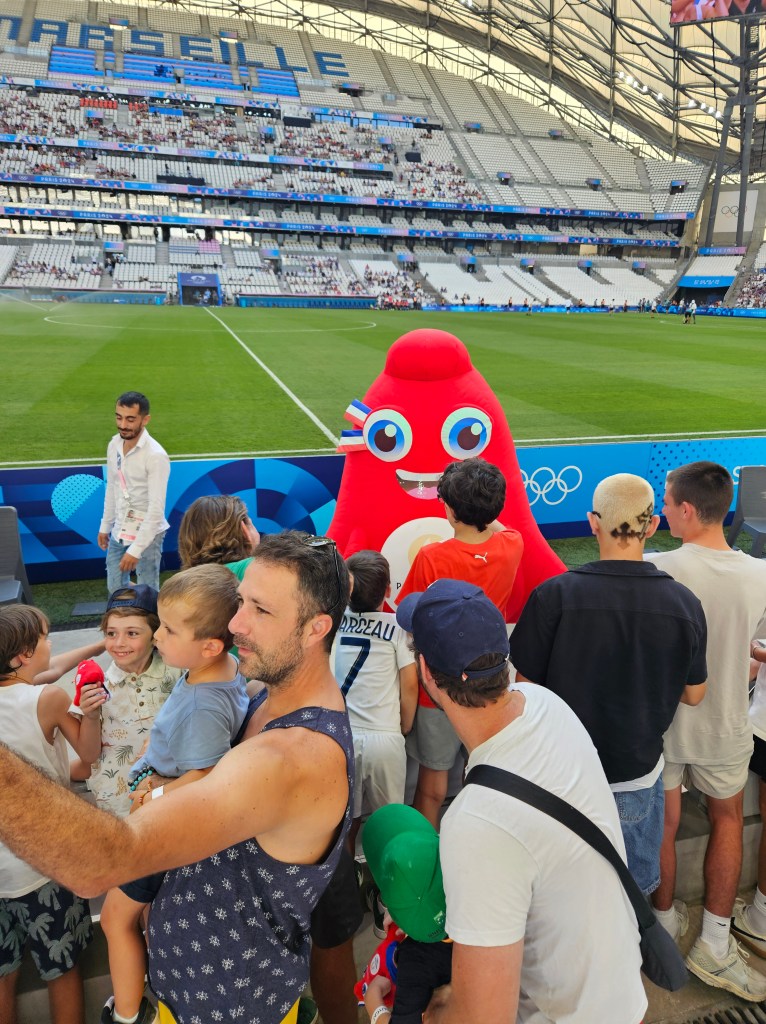
Our seats for the men’s match. The odd Olympics mascot
We’re pretty sure there were more French spectators there than any from US or New Zealand. =)
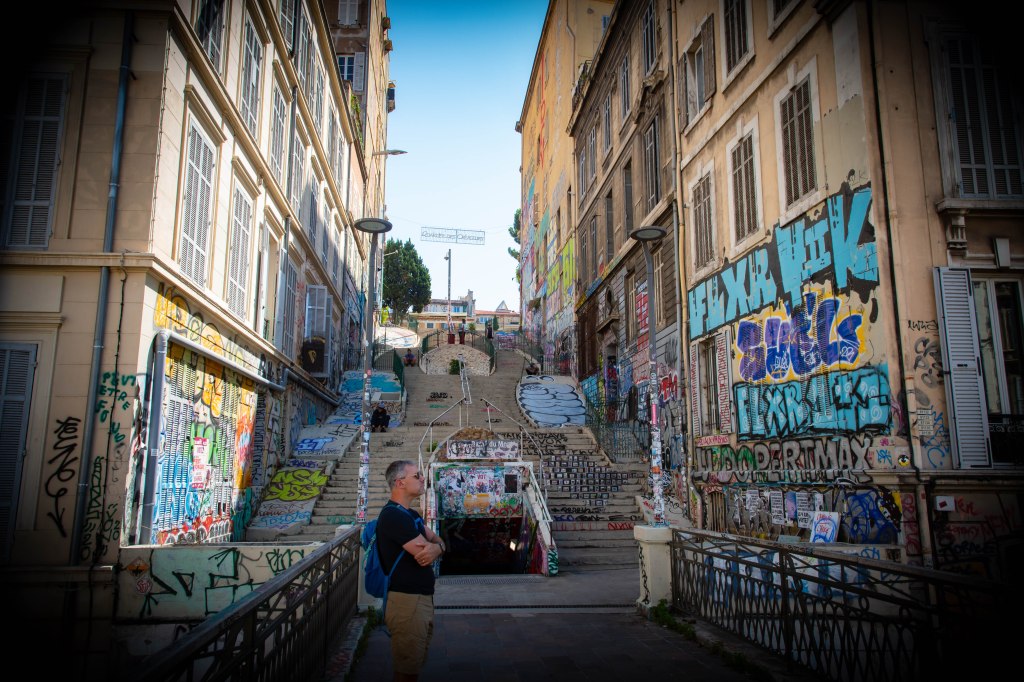
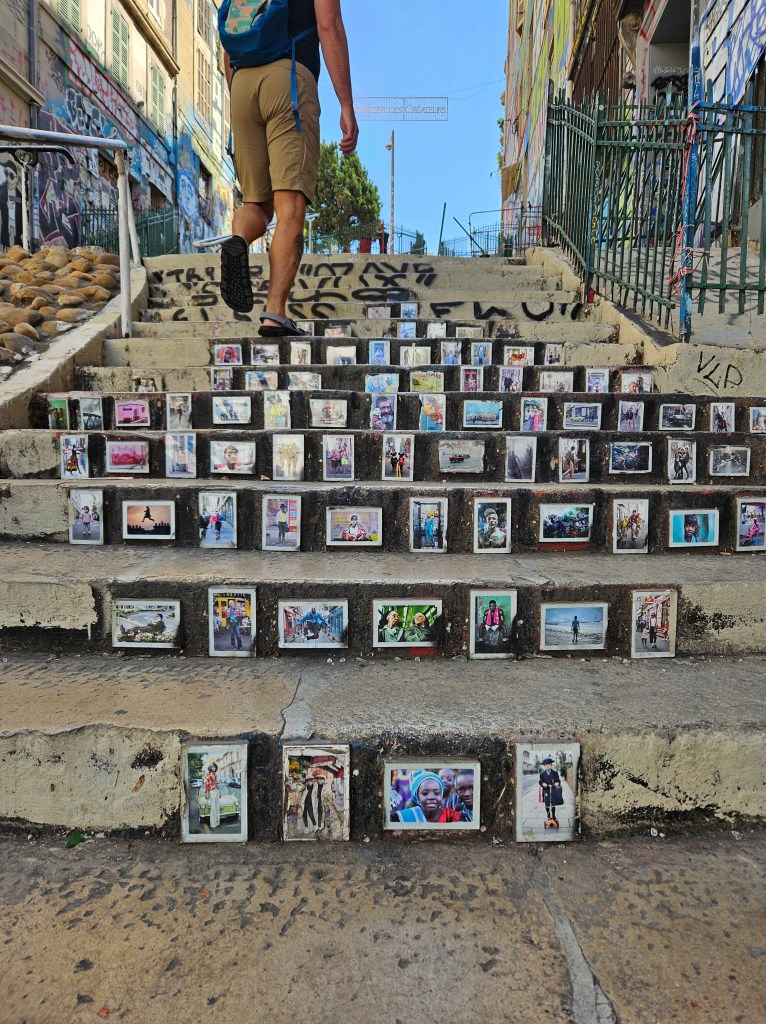
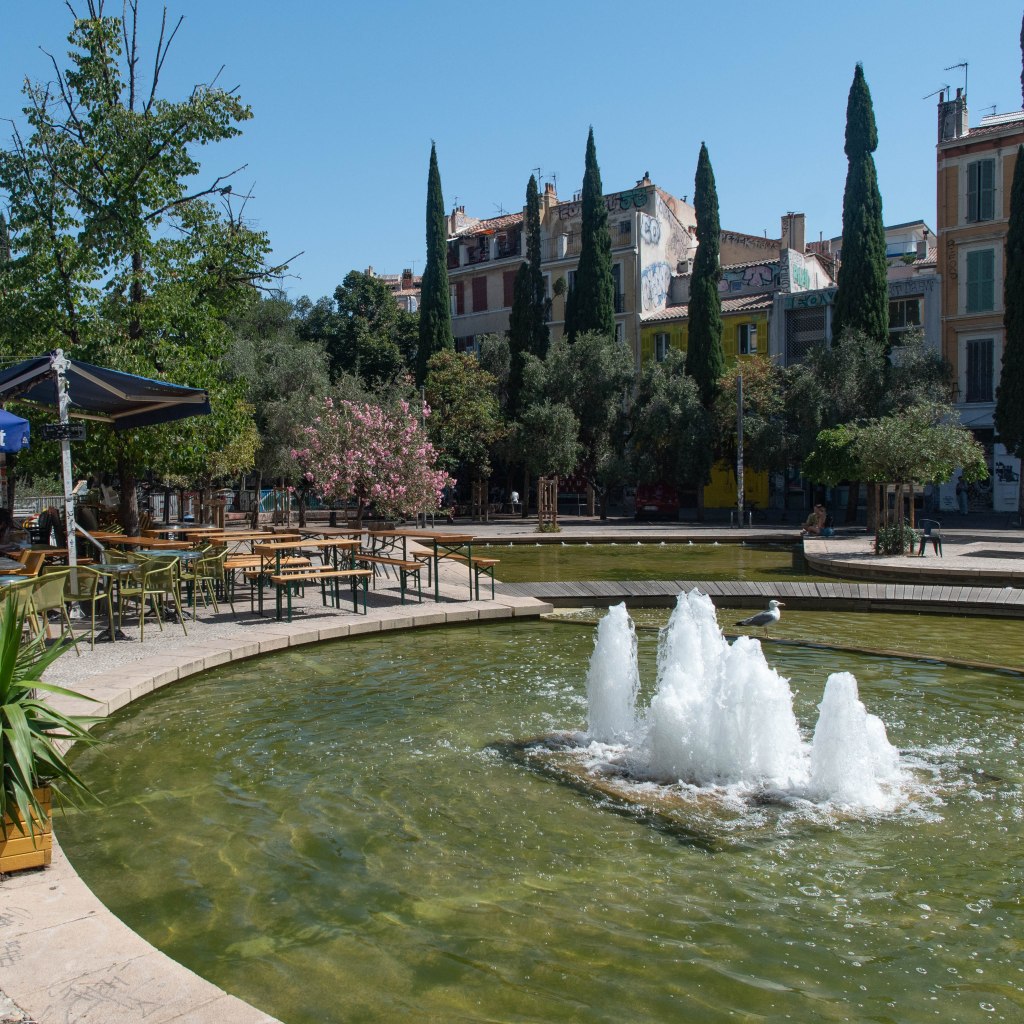
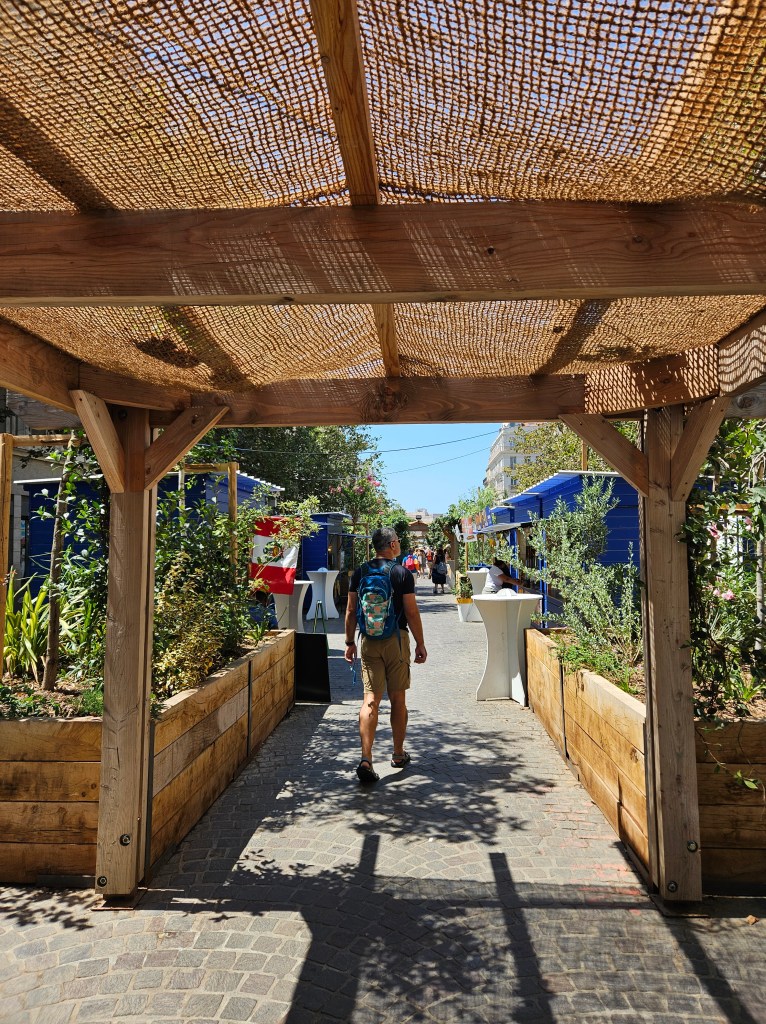
There’s a lot to see in Marseille, much of it in a walkable area. I got to visit Cannes as a midn on a summer cruise with the Roosevelt. Marseille is much bigger than Cannes with different architecture. Our first day exploring, we walked down a few streets Google Maps told us were “notable.” I don’t know what that means exactly, but I’m guessing it means they’re ones maps tracks more people. The streets were full of cafes and shops. We started with the Escaliers du Cours Julien which took us to a market area.
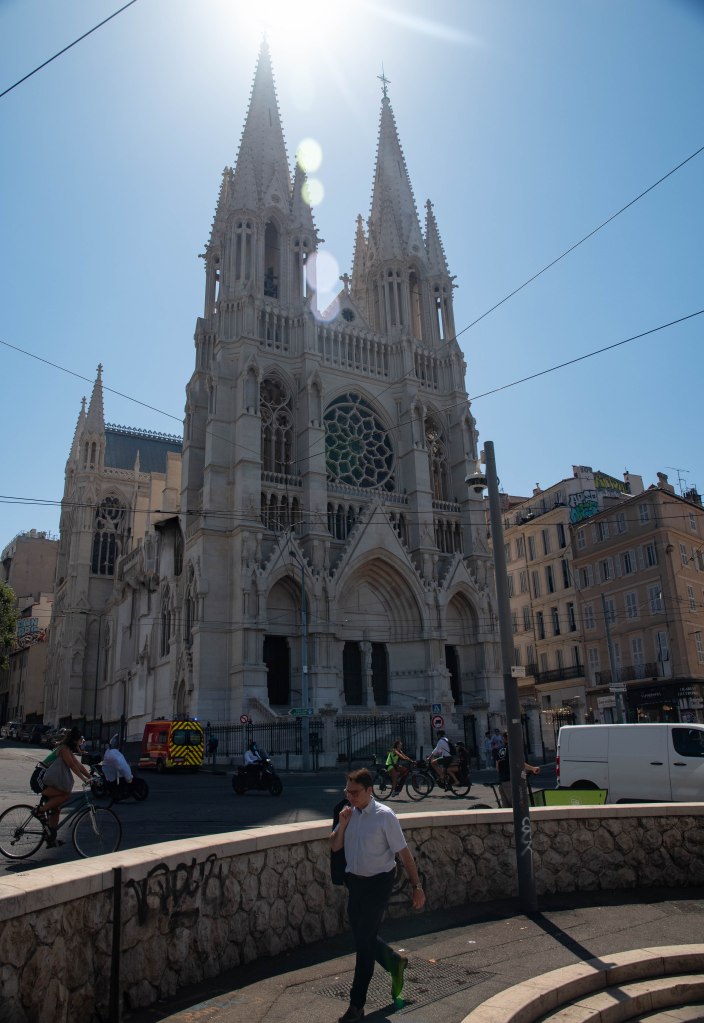
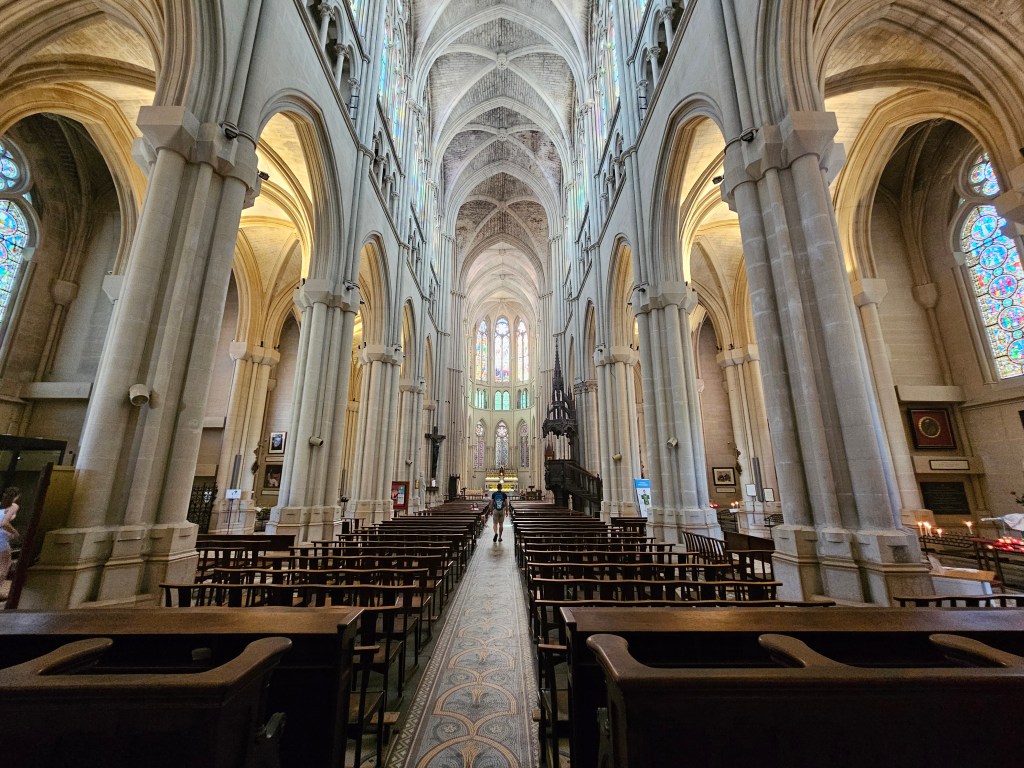
From there, we saw the spires of a gothic-style church, so we headed in that direction. The St. Vincent de Paul church was built between 1855 and 1886.
The church sits adjacent to La Canebiere, another “notable” street. We headed down Canebiere towards Old Port.
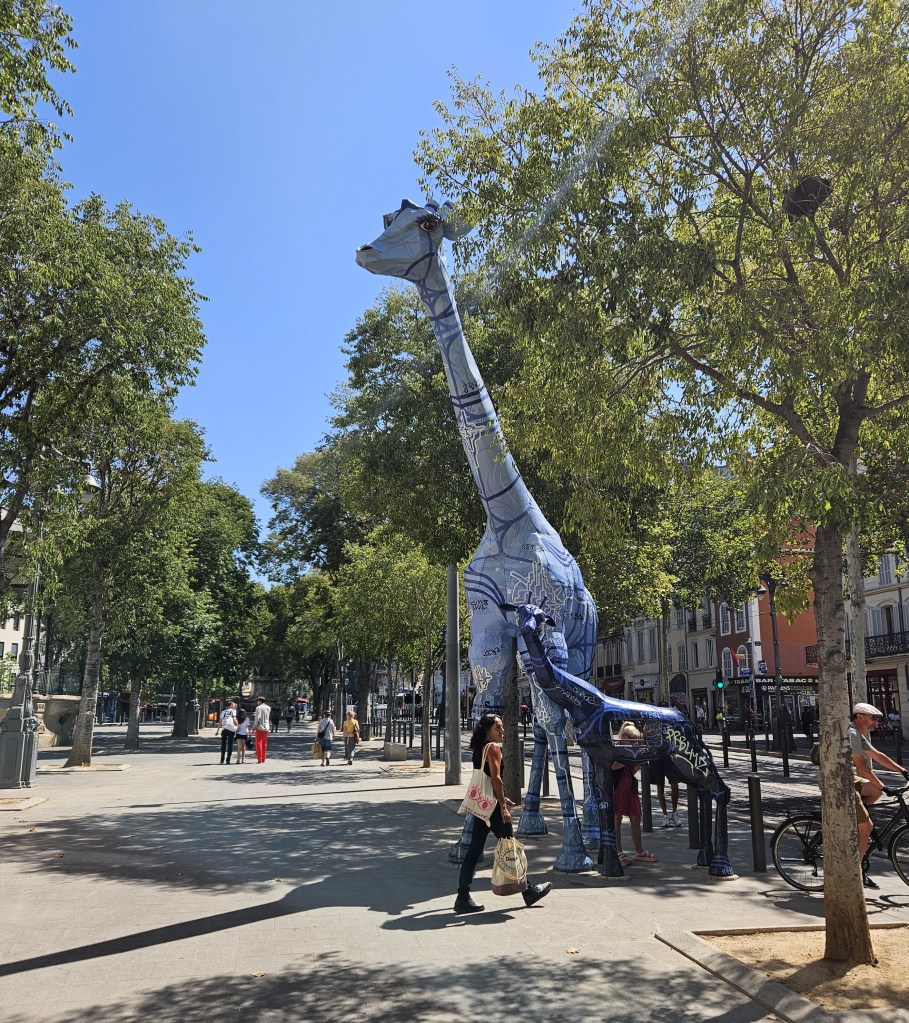
La girafe a libre
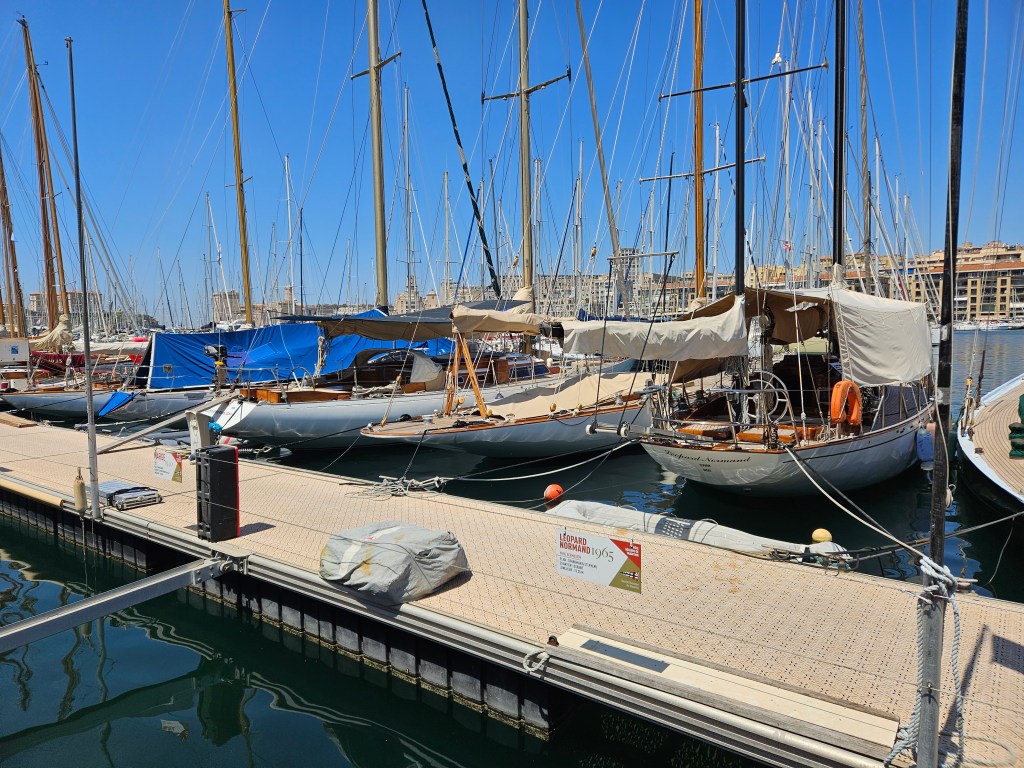
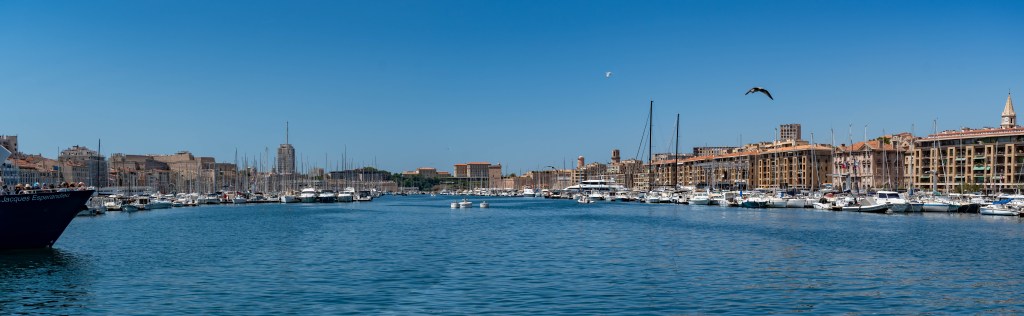
The port area is a busy tourist area. There are hundreds of boats in the marinas. How were so many boats not out on the beautiful summer Friday!?! I saw 2 boats underway that weren’t cruise ships or tourist boats. We passed several older wooden boats moored on display along the seawall. There wasn’t much information about them, only signs with their names and a few design characteristics.
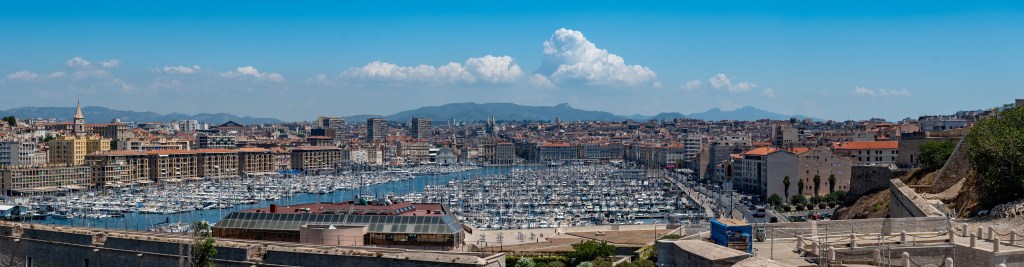
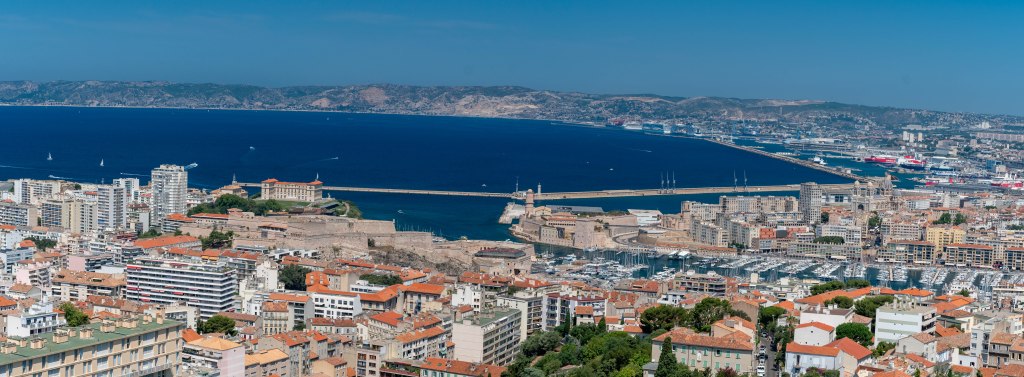
I learn so much from those around us. Pat Clark – you keyed me into HDR and bracketing on my camera. It has opened up landscape photography so much more for me. Thank you! Here’s a panoramic HDR of the old port. I like that I can take photos in a more natural perspective and remove distortion created with wide angle lenses when I’m trying to capture a larger area.
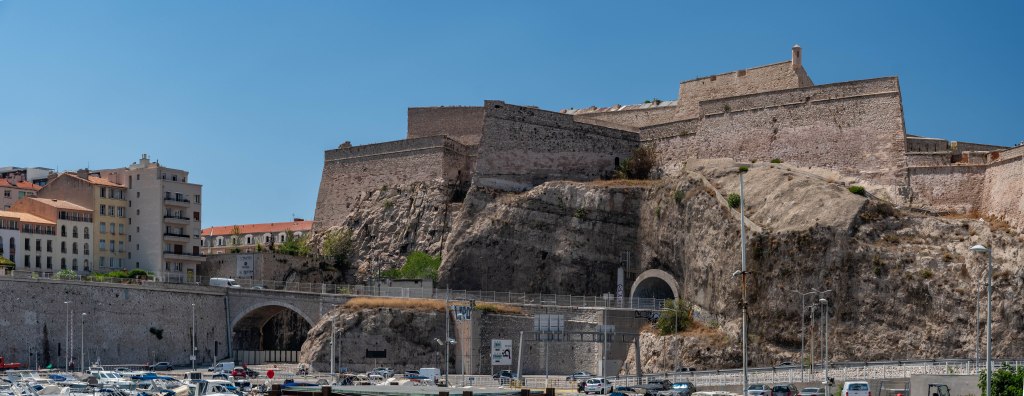
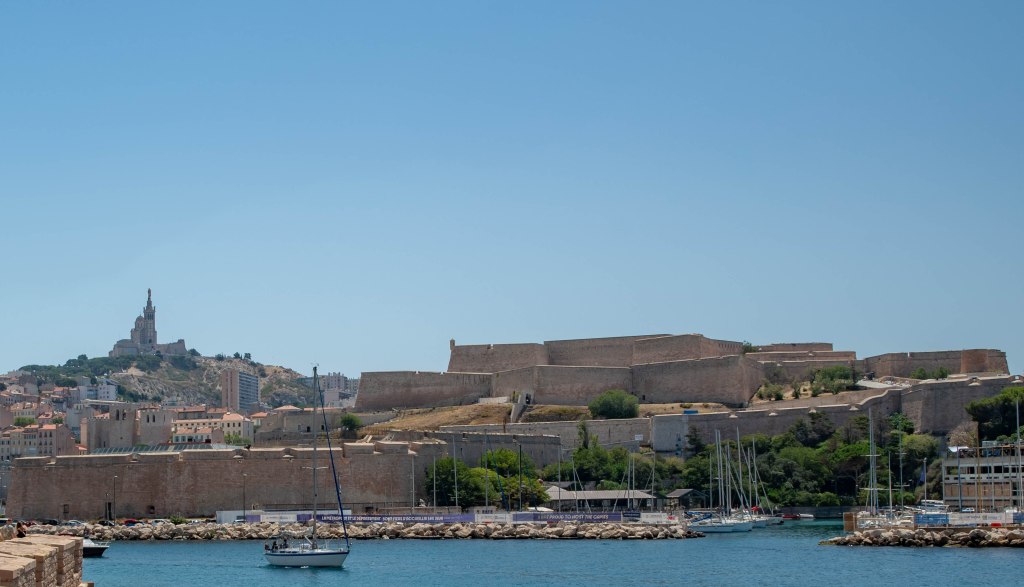
On the southern shore of the harbor entrance is the Marseille Citadel, or Saint-Nicolas Fort. King Louis XIV had it built in 1660 to expand the fort Saint-Jean, which sits on the northern shore. It has beautiful views of the city. These views were part of the reason it was sited there – it allowed the king’s army to watch over the rebellious city and guard against any attacks. (This may be the first fort I’ve visited that was built to protect against the city!) The citadel was surrendered to the people during the French Revolution in 1790.
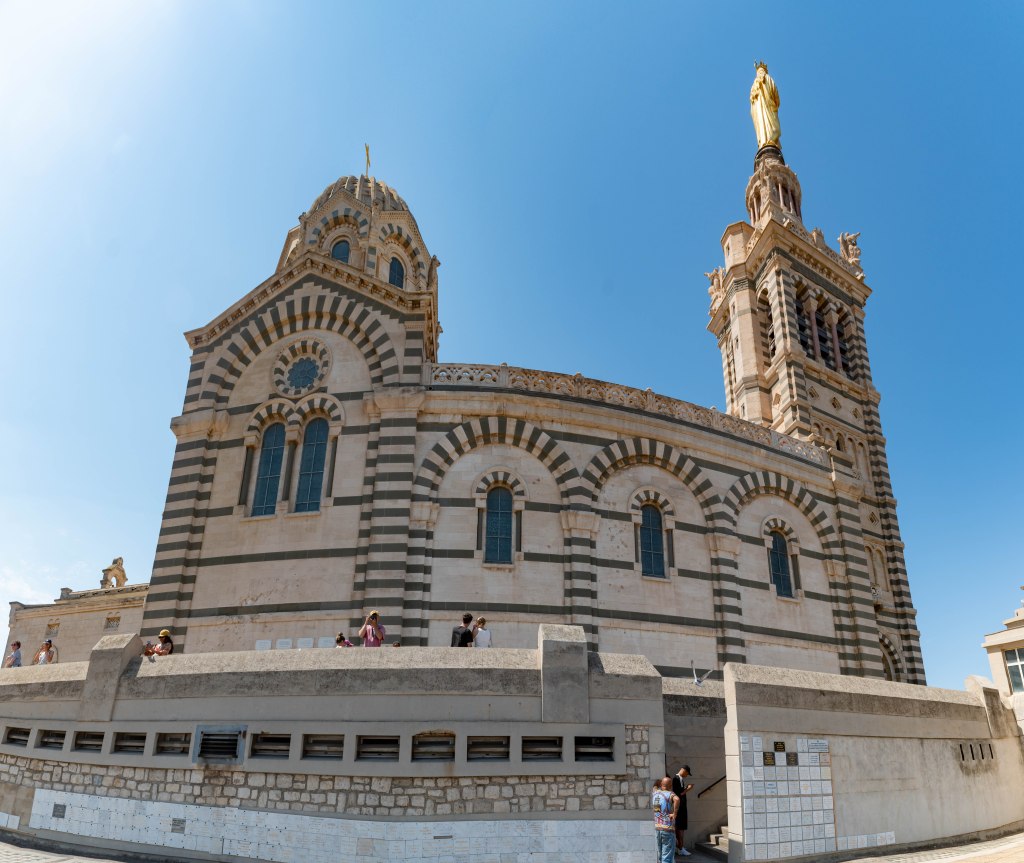
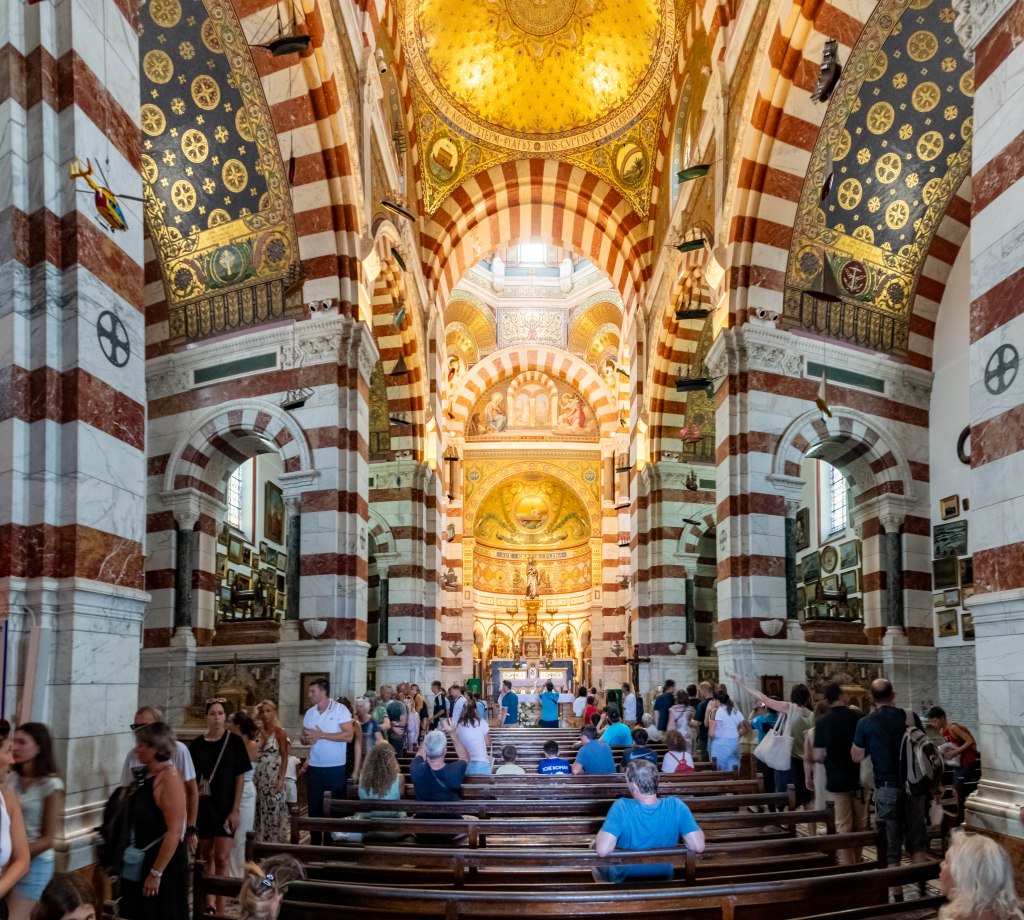
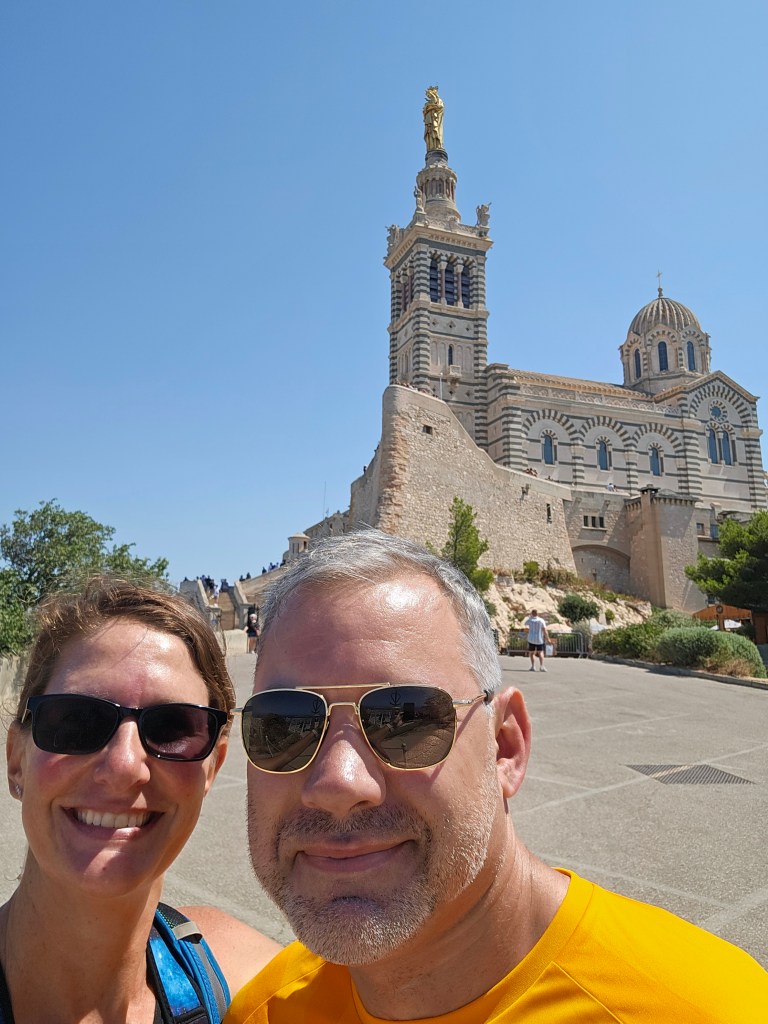
We headed to the Basilica of Notre Dame de la Garde on our 2nd day exploring. We took a bus as it sits on top of a big hill. It took 9 years to build, construction finishing in 1864, though the site has been home to a small chapel and sanctuary since 1214. The Basilica is known as the “Good Mother” in Marseille and watches over sailors, fishermen, and the people of Marseille.
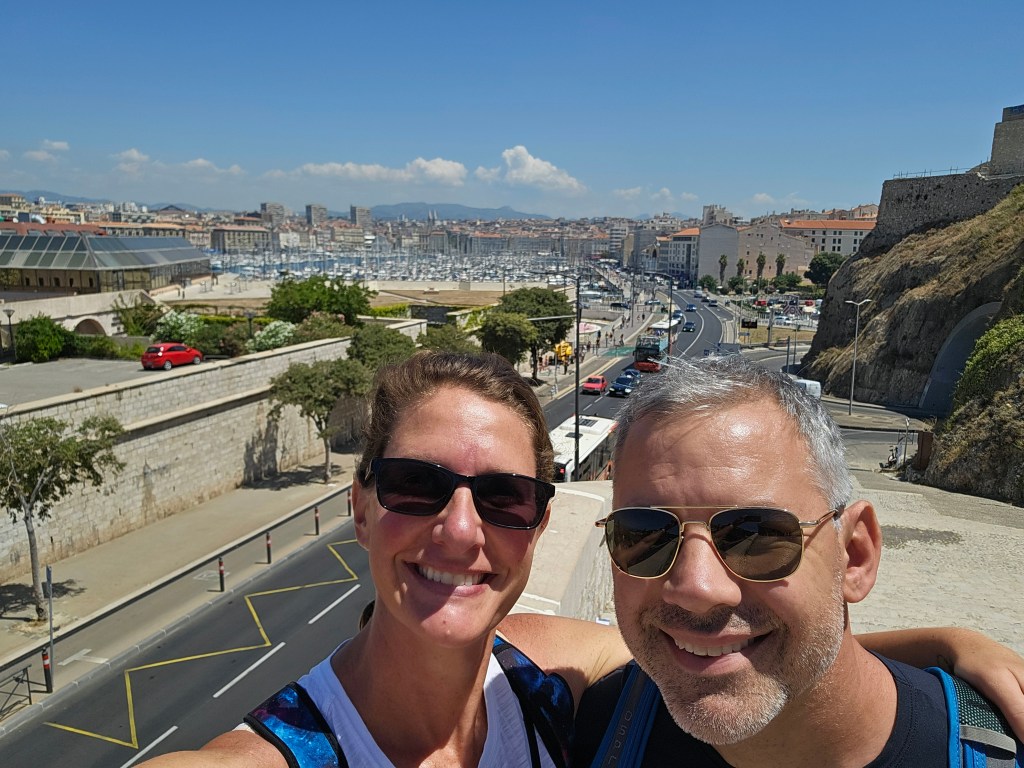
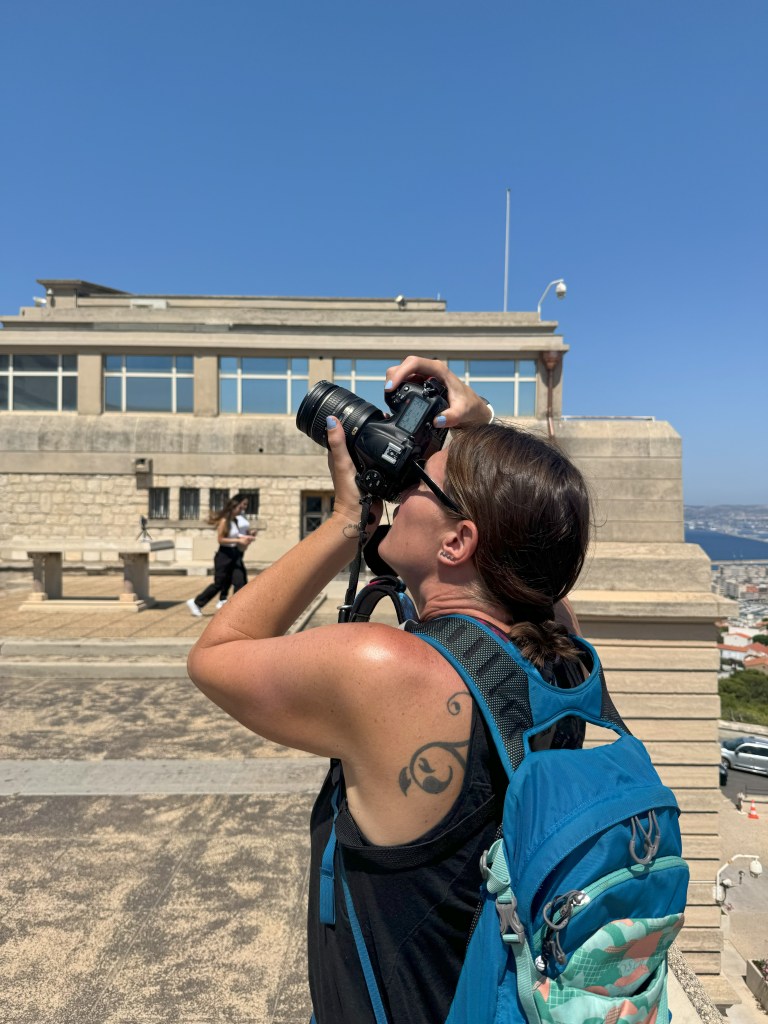
Me taking that panorama. =)
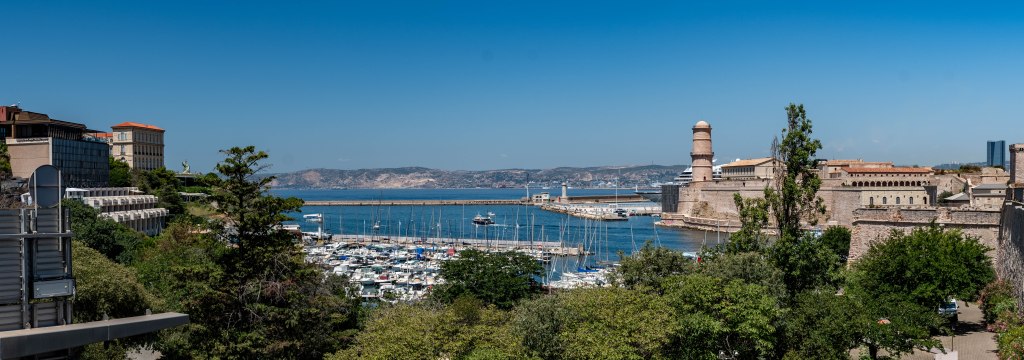
View of the citadel and Old Port area
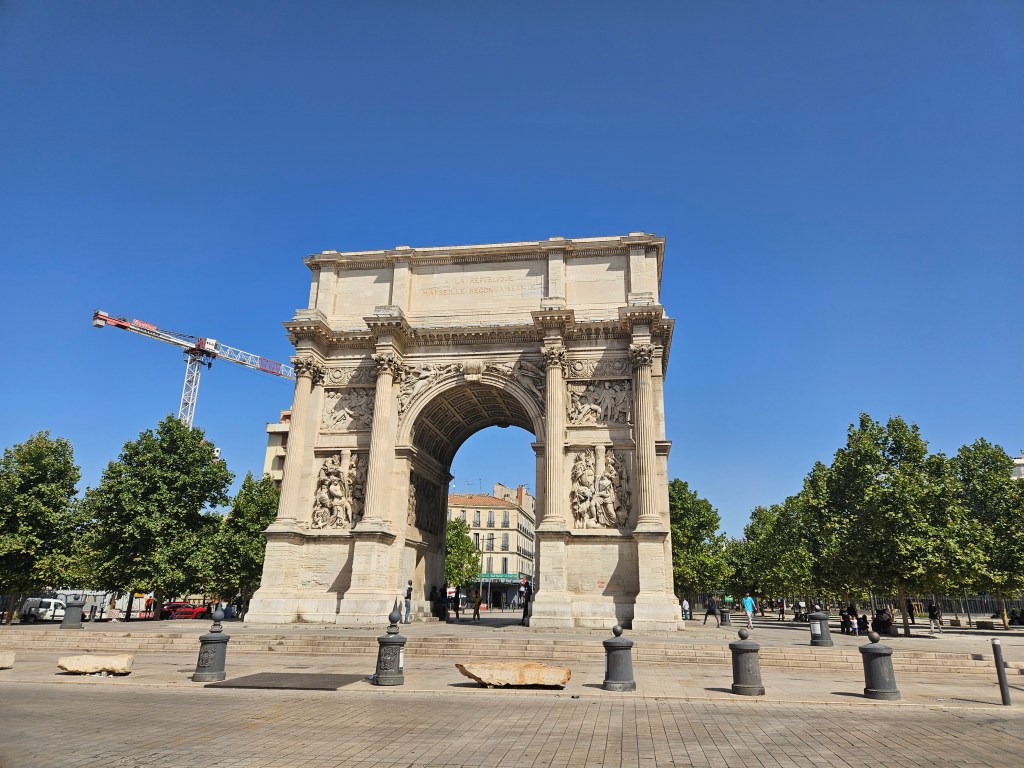
The next day we headed back toward the Old Port to check out the other side of the harbor. There is an arch in Marseille, Porte d’Aix, a smaller version of the ones in Paris and NYC.
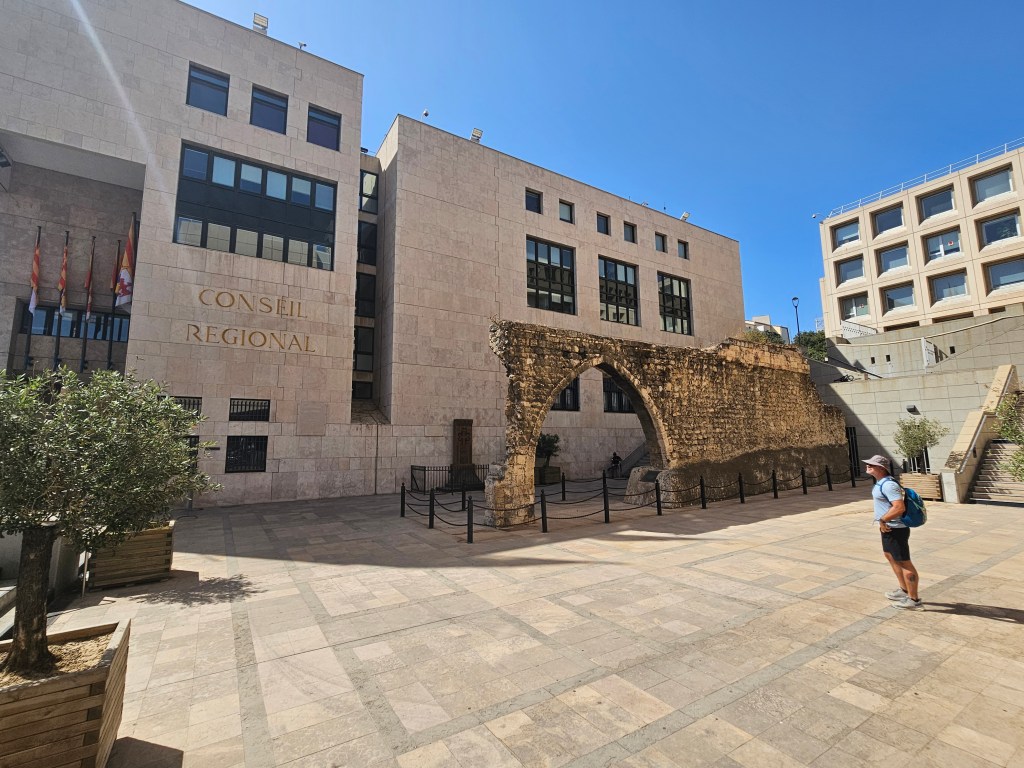
From there, we walked back towards the Old Port. We came across some ruins roped off, surrounded by buildings. It’s a portion of the aqueduct from Roman times.
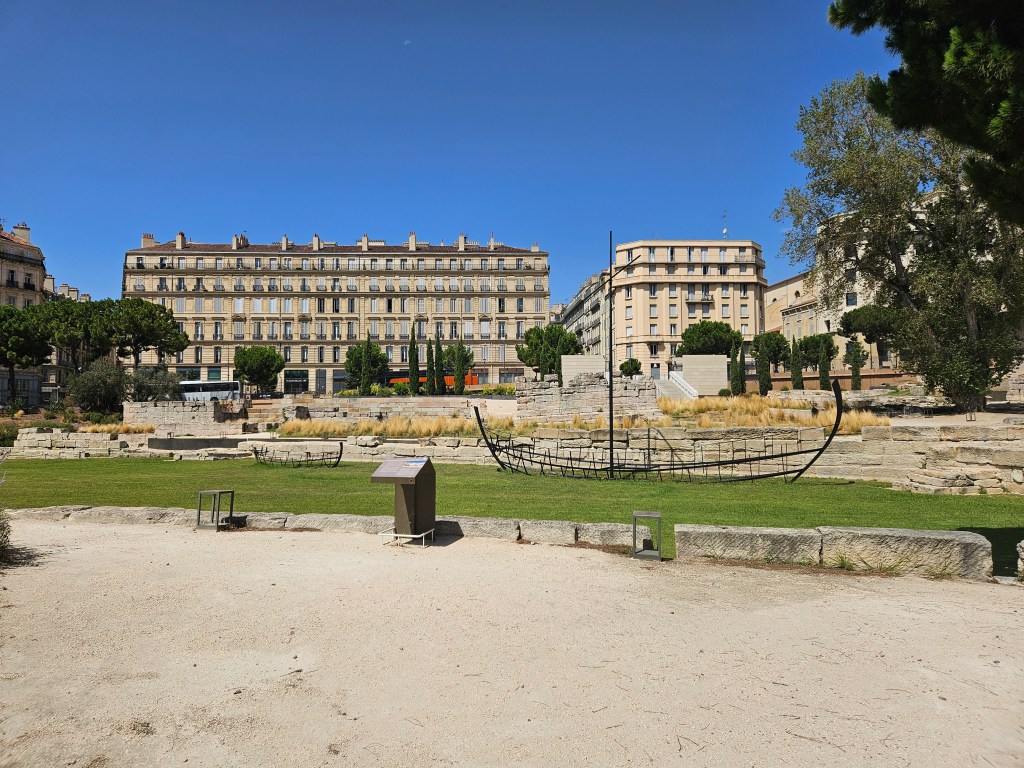
As we continued down that street, we came upon the Marseille History Museum which had ruins in the front and what looked like an archaeological dig. We couldn’t explore outside, they didn’t let you wander. I took photos from the path into the museum. The ruins there dated back to the 2nd century BCE. The Romans attacked in 49 BCE, taking over the city.
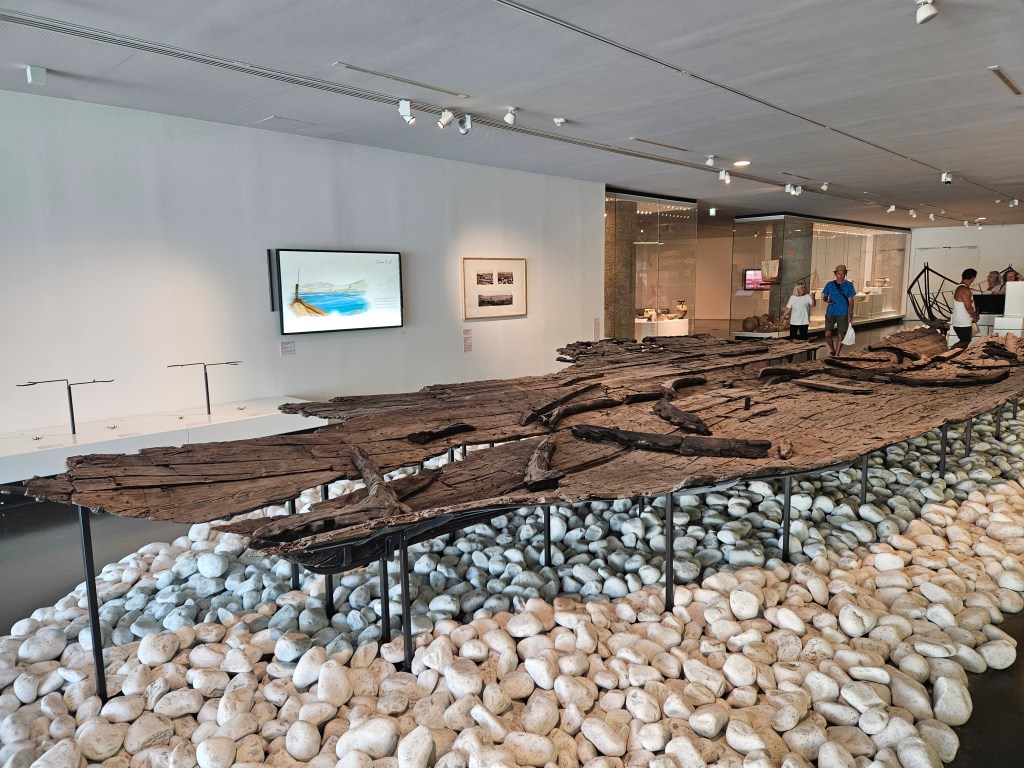
If I understood the info panel correctly, this ship dated back to 600-300 BCE from the Greeks.
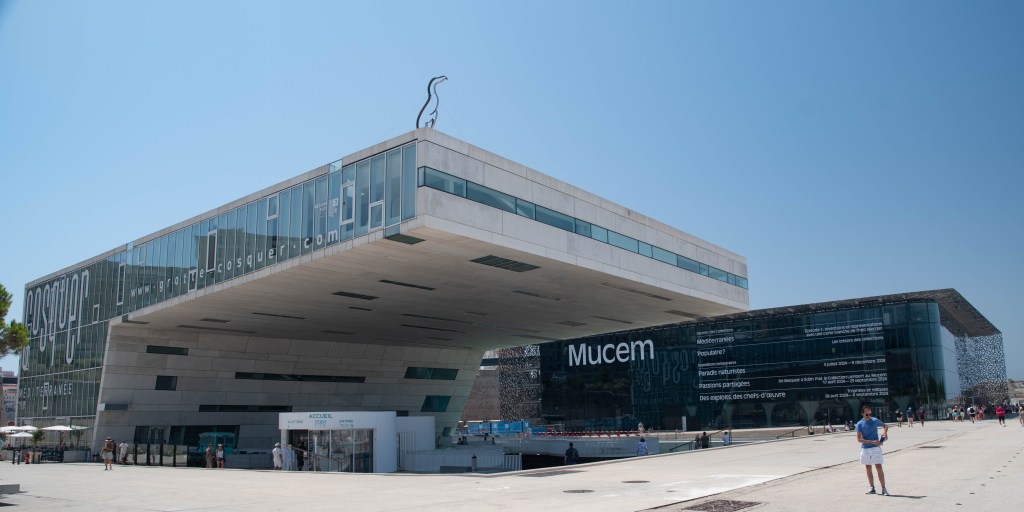
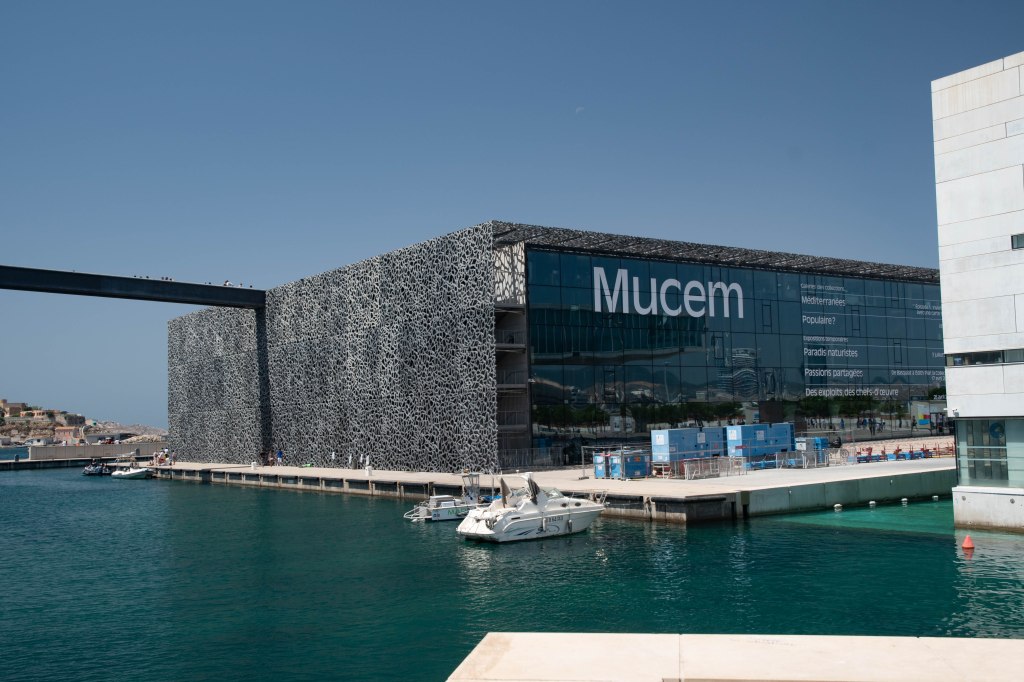
We walked along the other side of the Old Port around Fort Saint-Jean. I walked around taking photos while Ben checked out the Museum of Civilizations of Europe and the Mediterranean. It’s a beautiful building and has a walkway to the Fort.
Walkway to the leftThe Citadelle de Marseille/Fort Saint Nicolas
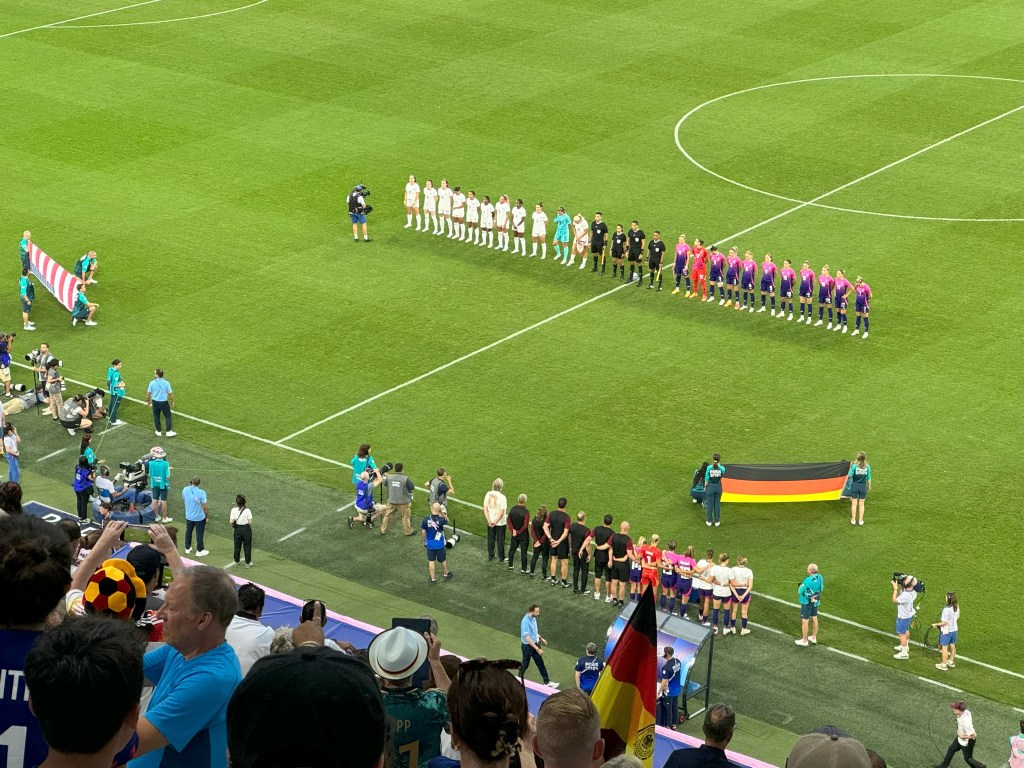
We had the women’s game that evening, against Germany. It was a good game; the ladies played well. These were the first tickets we bought for the Olympics. We knew these would be popular matches that could sell out quickly. I guess they released “box” seats first. It was a separate area, but no free food. It was nice to have comfy seats, but the bathrooms and snack areas weren’t enough for the number of people.
We’ve been fostering a dog for the last year through Mona’s House in Groton. Her rescue name is Princess. While the name fits her wonderful personality, I couldn’t bring myself to call out “Princess!” in the backyard and have this powerhouse come racing up the hill:
Playing with her friend Beckett
So we changed her name to Villanelle, Villa for short. We had not initially planned on moving her with us to Portugal; we’d hoped she would find a forever home in CT. Maybe with a nice yard for her to keep occupied. That wasn’t in the cards, so she’s become an international dog!
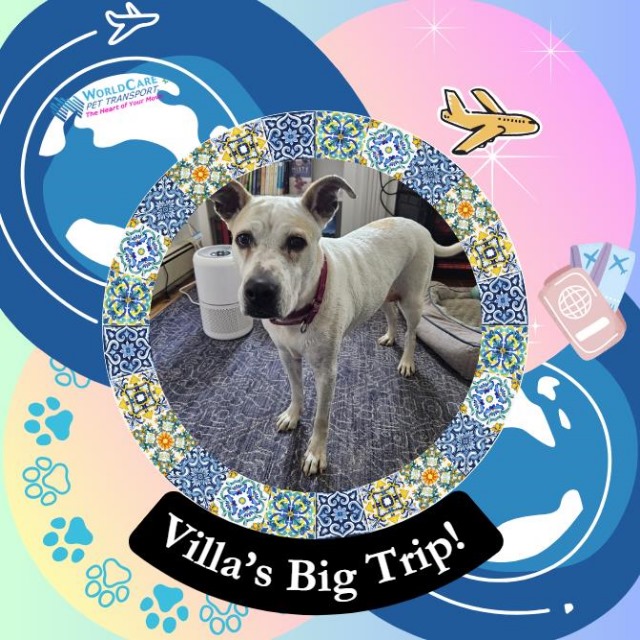
I decided to have a pet transport agency help me with this move. This turned out to be an excellent decision because there were a lot of moving pieces to her flying over here. I used WorldCare Pet Transport out of Darien, and we had a great experience. They kept me on track with the medical requirements, necessary paperwork, and even picked her up at the house and drove her to JFK! Huge bonus not having to drive there and back.
The graphic they created for her move. I love the tiles!
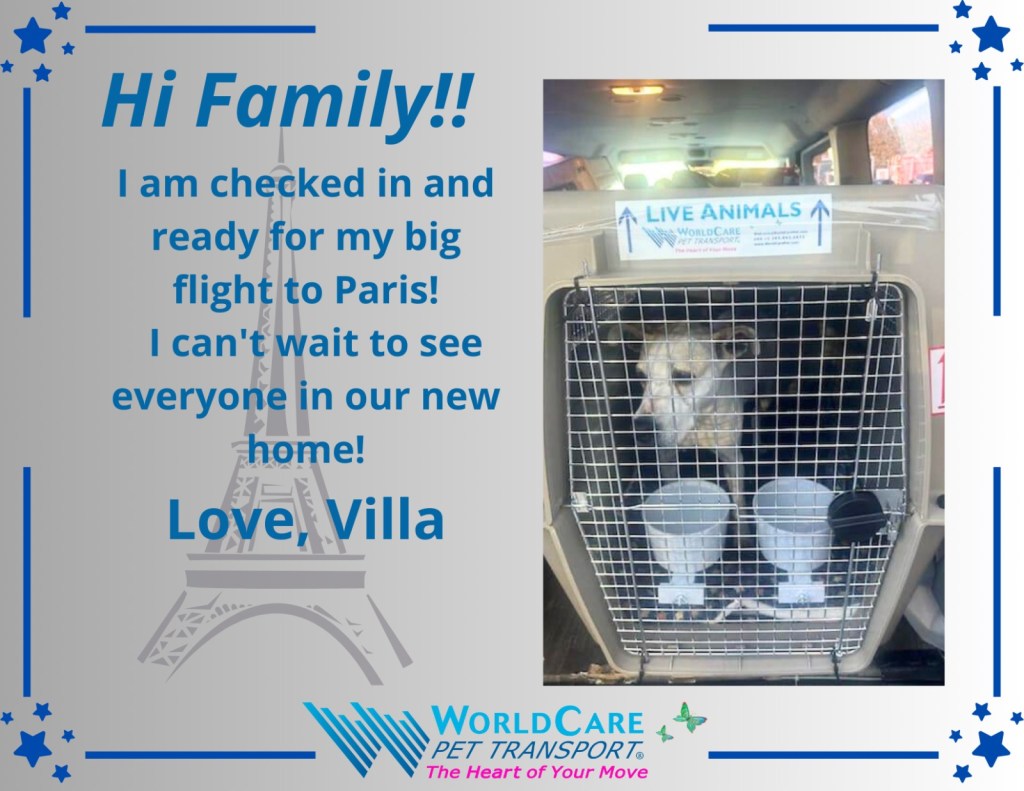
The agent working with us, Wansu, kept us in the loop during Villa’s trip. We got updates as she arrived at each airport and passed through check-in, medical screenings, or customs.
She looks thrilled. Just like me boarding a plane…
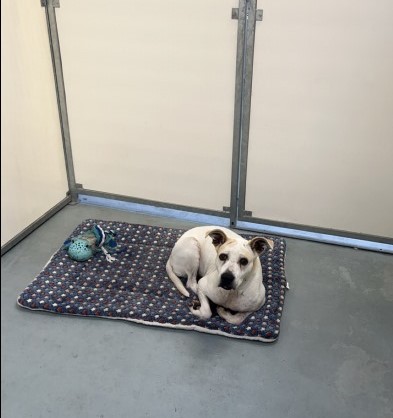
Here she is in her room at the Paris airport. She had a layover there for a full day. The EU has a requirement that pets must rest at least 6 hours before flying again. A vet screens their health at each stage as well.
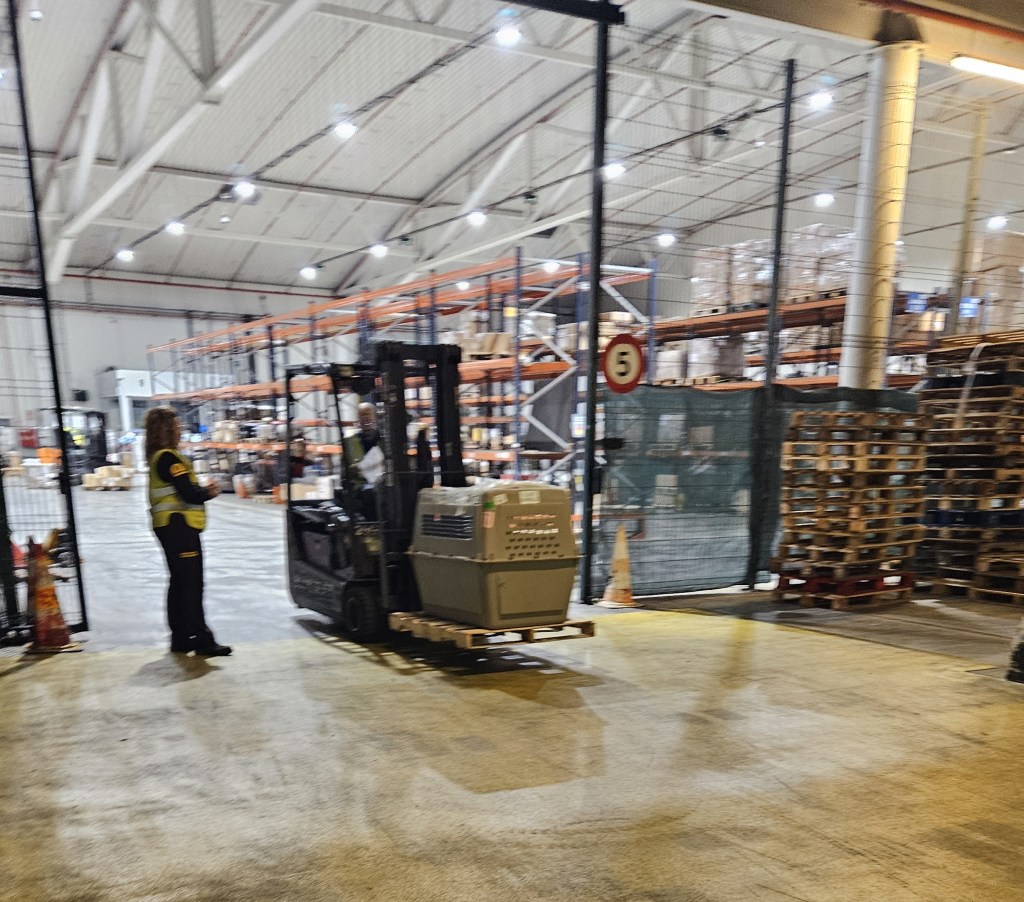
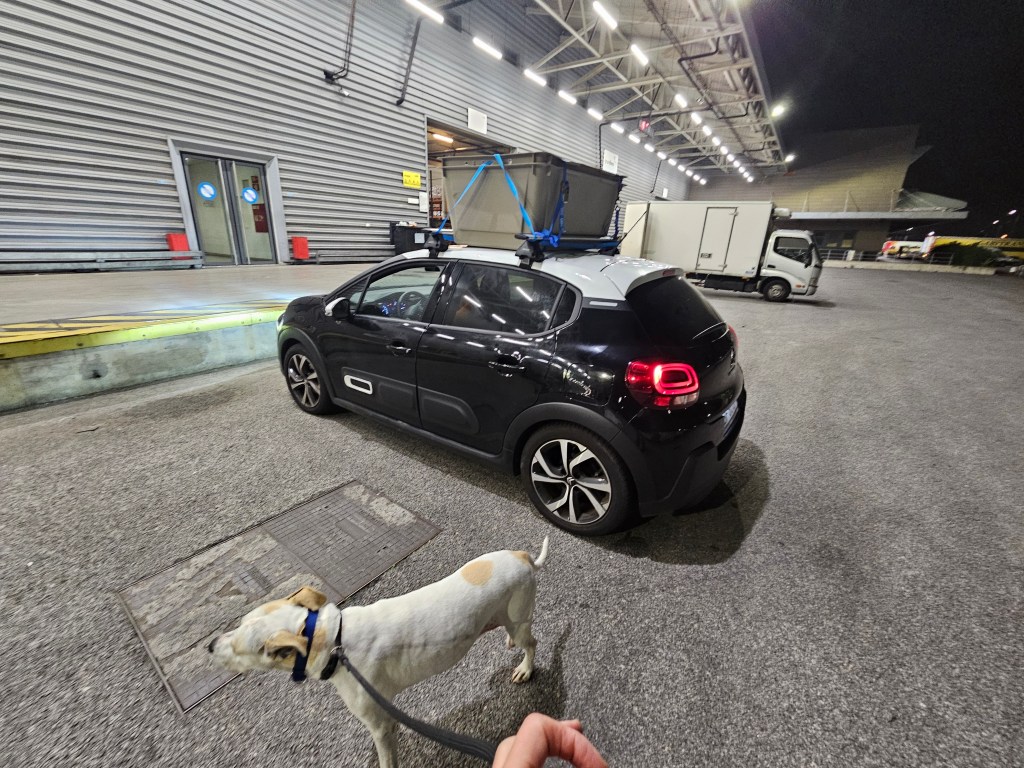
Villa flew out the day before me. We arrived in Lisbon on the same day. Ben and I found an Airbnb near the airport with an early check-in time, so we could relax while waiting for Villa to clear customs. She landed 4 hours after me, and it took 3-4 hours for her to be ready for pickup. We picked her up at the cargo terminal. There was a lady there from WorldCare to meet us.
Amazingly enough, she arrived with the toys and blankets I sent her with. I thought for sure she would have torn them to shreds during the flights. The crate is so big, and our car so small, we had to secure it to the roof, but we got everything in!
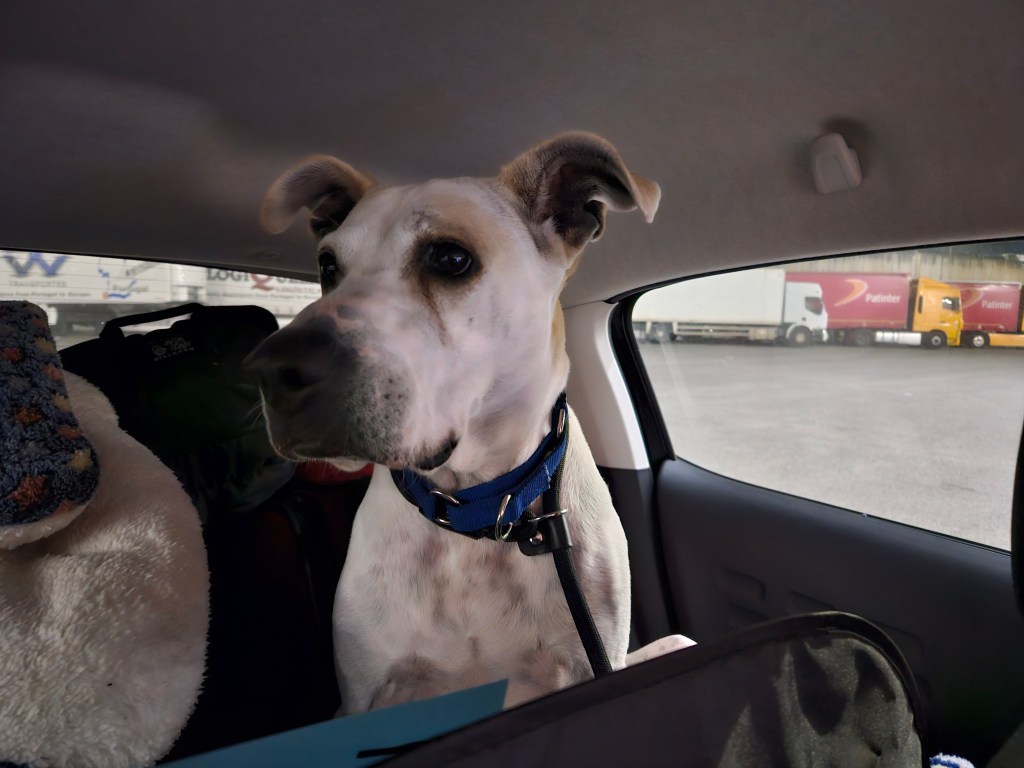
She’s a little frazzled but happy to be out of the crate
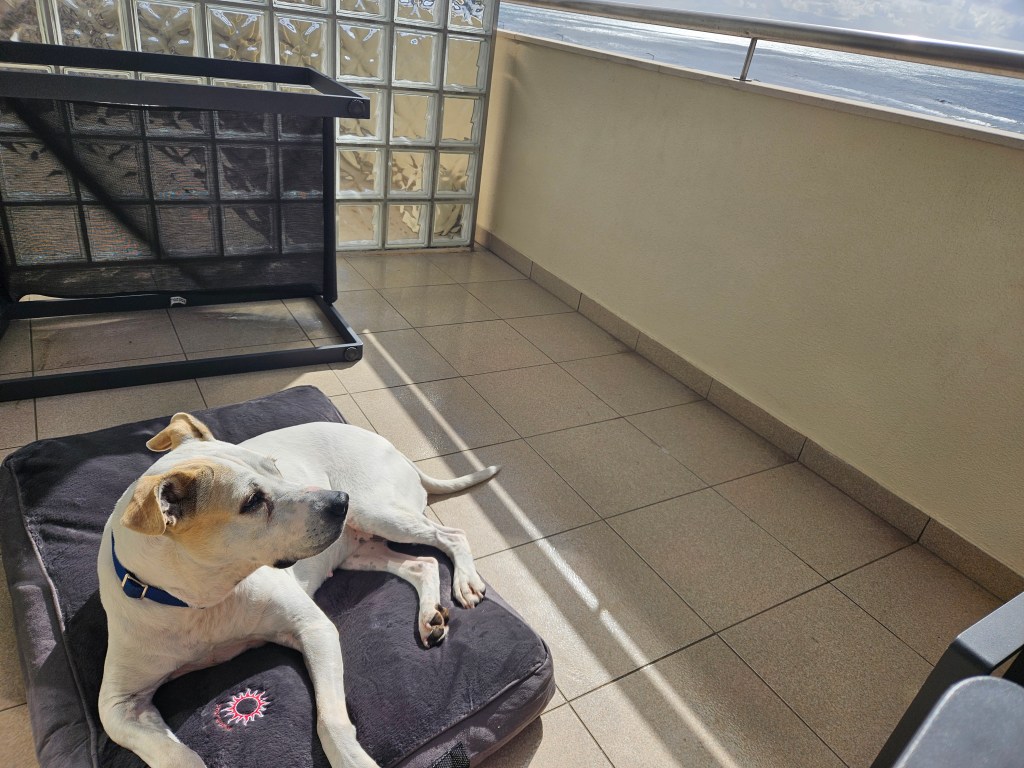
In case you were wondering, jet lag hits dogs as well. Her internal clock was thrown off for the first few days, taking a long time to wake up in the mornings and ready to play just as the day was winding down. I’m sure she misses the yard, but she enjoys the sun on the balcony. She can’t see much from it, but she can smell and hear everything. I think the sound of the ocean waves confused her, but now she’s used to it.
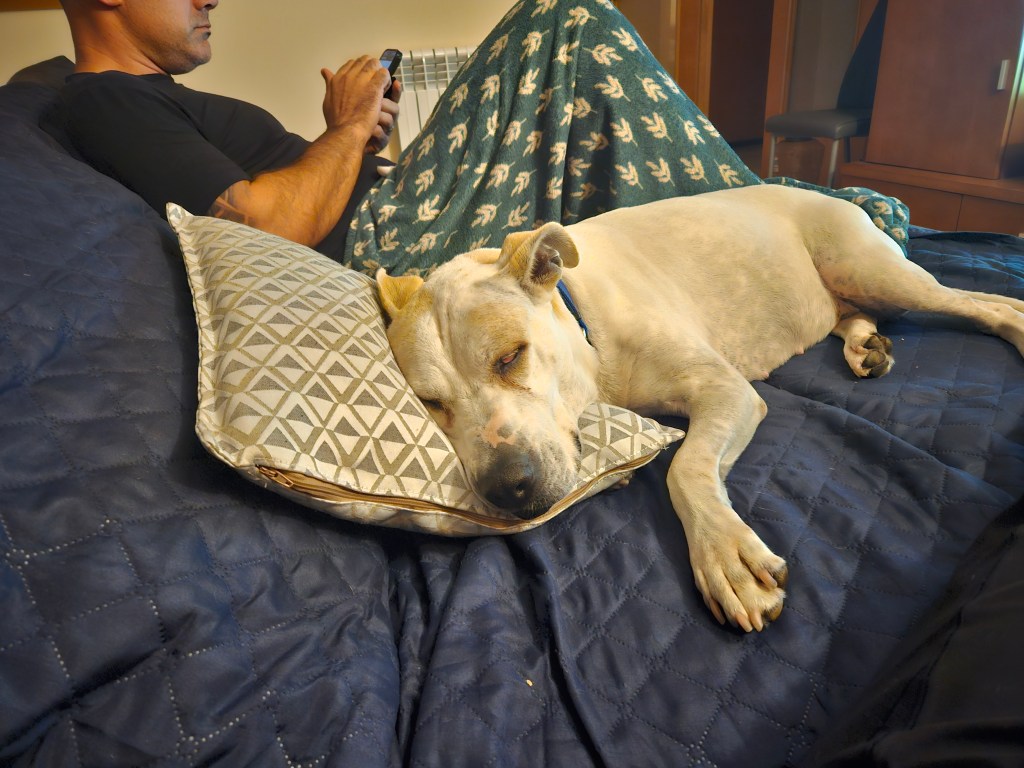
Right at home. We’re both happy to be back with Ben
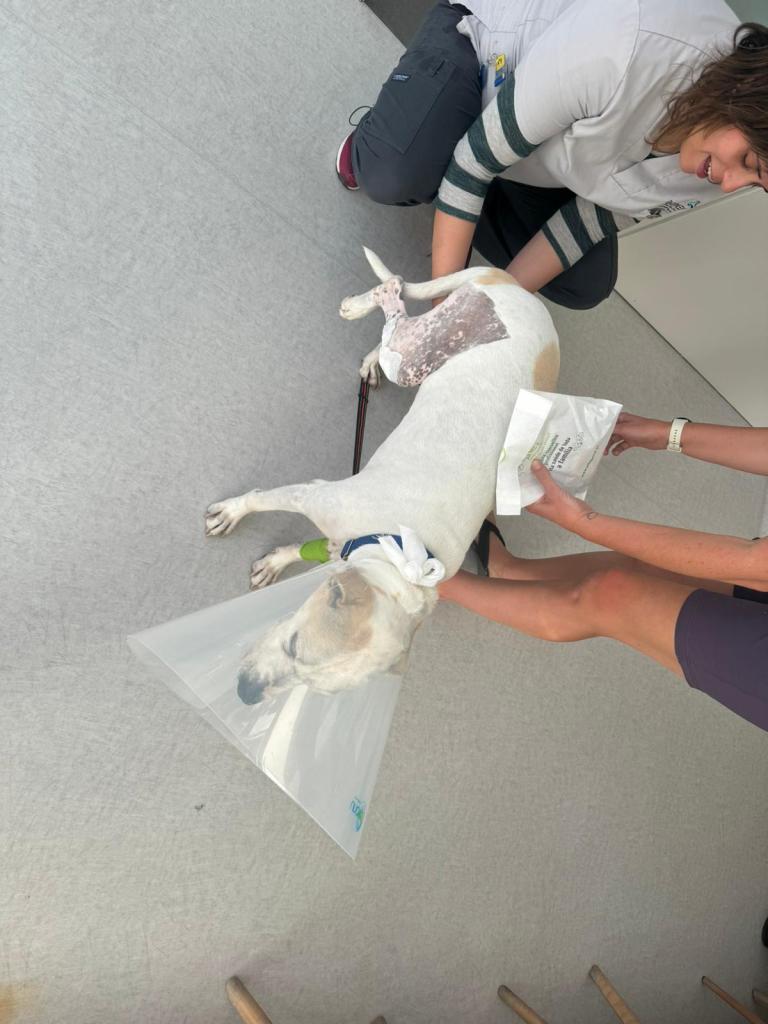
Two weeks before we left, Villa tore her cruciate ligament (like a human ACL) jumping in the back yard. Of course she does. Luckily, she could still fly with the injury, so we opted to have the surgery here. It takes at least 8 weeks to recover, and she would not have been able to fly with the cone of shame.
The surgeon in CT actually had a contact in Portugal. She gave us names of two vets over here. Ben got her an appointment with the surgeon in Porto the next week from when we arrived. We spent the day up there, the surgery went well, so now we’re in recovery. The hardest part will be to keep her from jumping for the next 2 months.
Yes, she is standing on her leash and won’t move
Can’t wait for more adventures when she’s fully recovered!
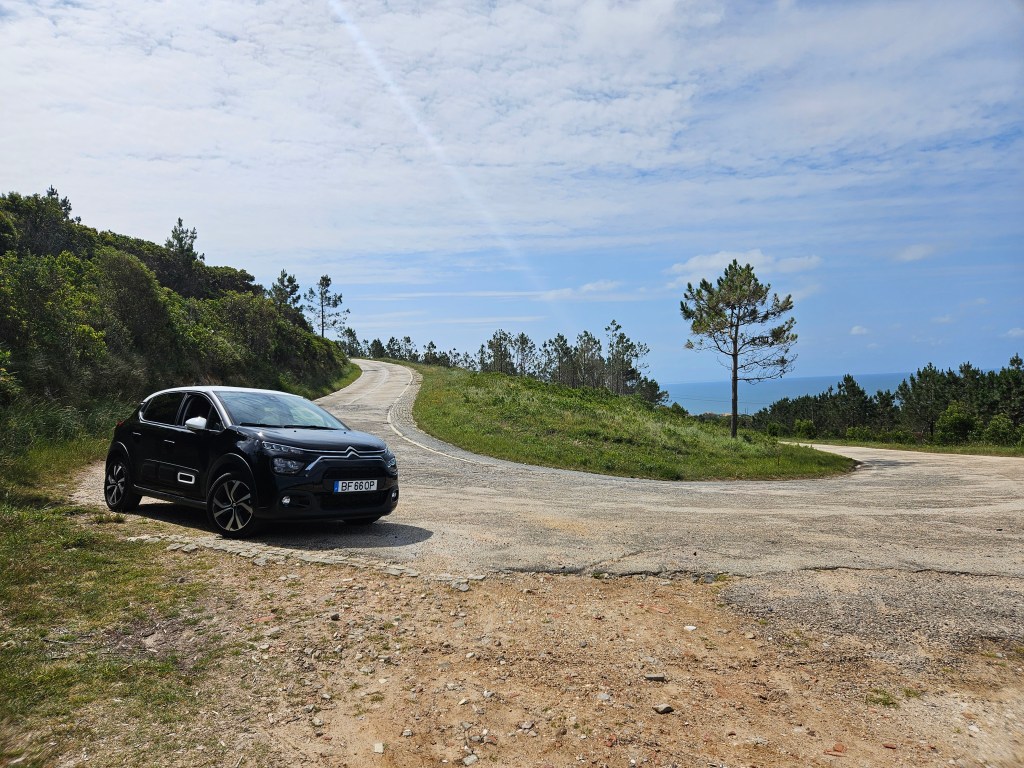
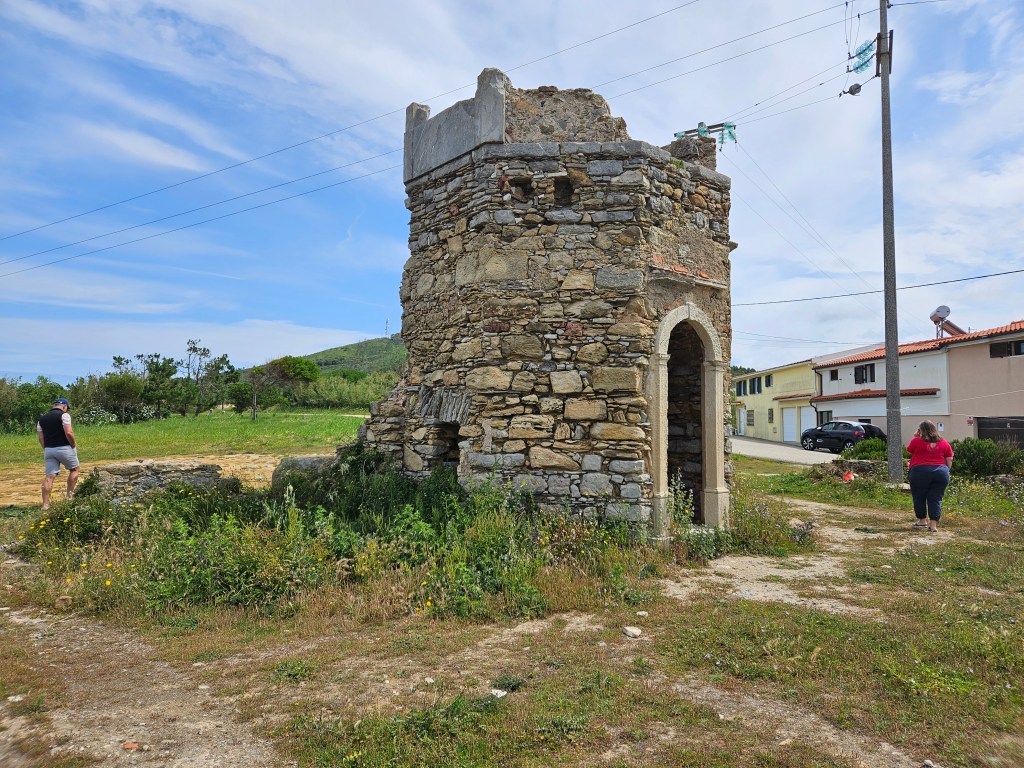
We spent our third dayventure exploring some trails and sights along the way to Quaiois Beach. Ben had earmarked a few places for us to check out on the drive over to Quaiois. There were some nice overlooks to the ocean, over to Quaiois, and back to Buarcos/Figueira. We first drove to the Miradouro do Abrigo da Montanha. It looks like it was a restaurant at one time. We walked around it and to an observation point. In the distance is Farol (lighthouse) do Cabo Mondego.
We then stopped at a small pullover area – there are a few of them along this road. There’s a trail system around the mountain, so it’s good to know there’s several access points to it.
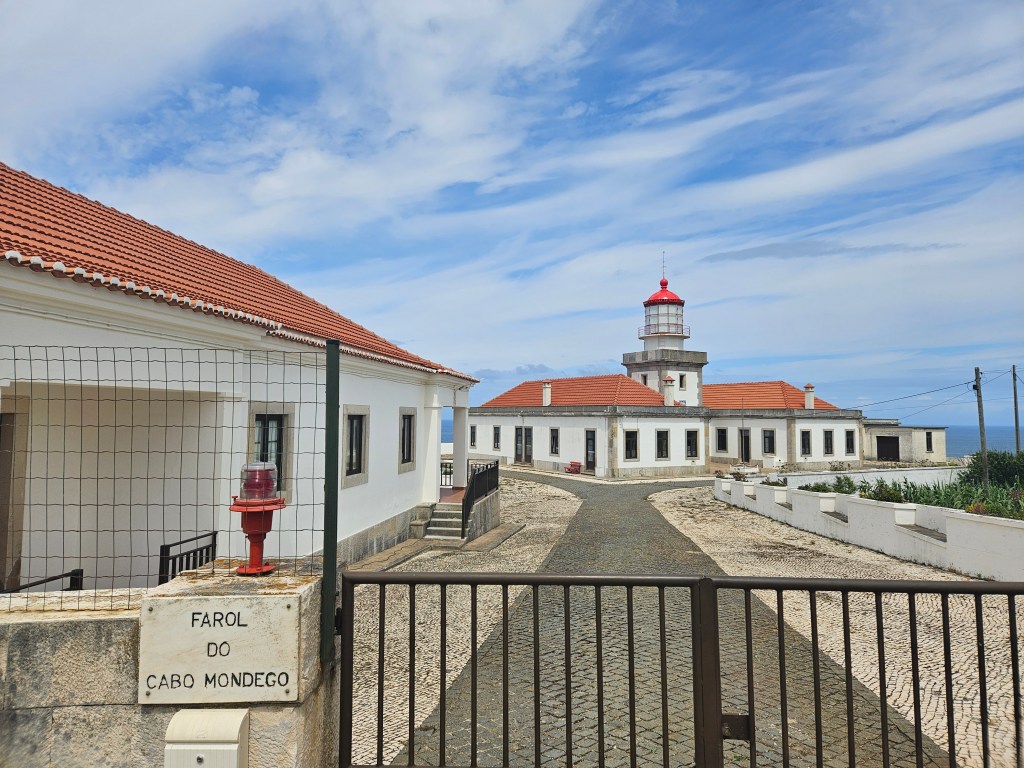
We stopped at the Farol Velho which literally translates to old lighthouse. It operated from 1865 to 1922 when it was replaced by the current Cabo Mondego lighthouse.
This is the current lighthouse. They don’t let you visit it, so we parked just outside the gate.
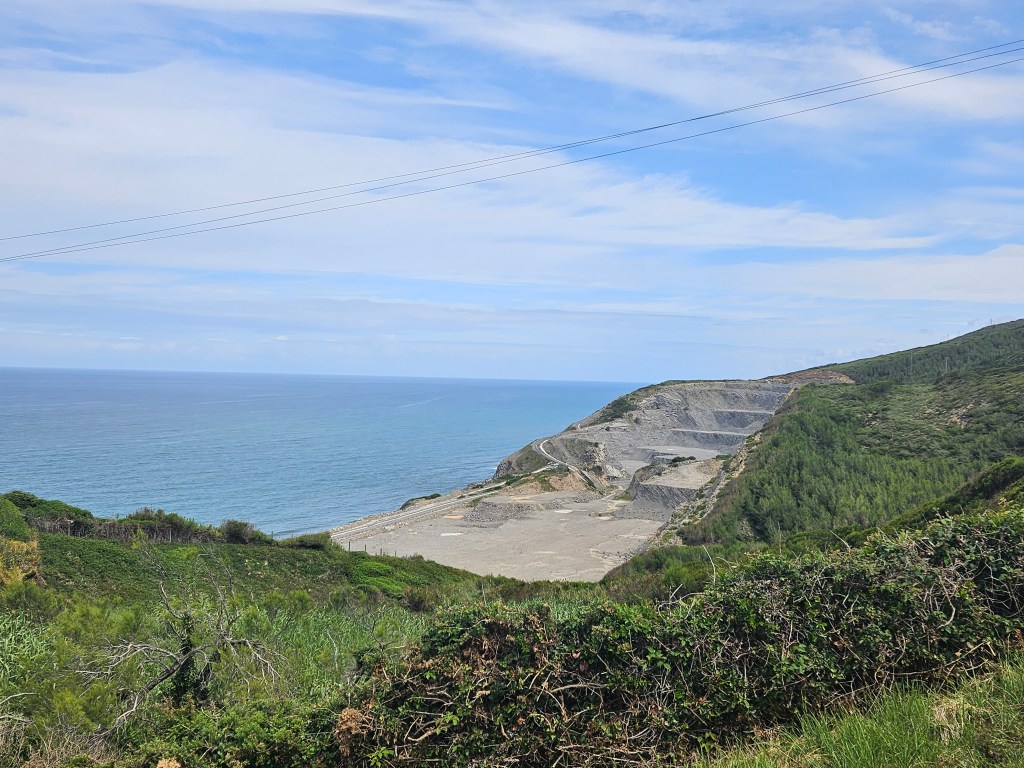
Here’s the quarry that is no longer active. There was a cement plant here, but they stopped operating several years ago. The municipality purchased the land, including the old factory buildings and the quarry, in 2022. I do not know what their plans are for the land.
We ate lunch in Quaiois, at a restaurant that was very good. We walked the beach and boardwalks afterwards. The roads to get to Quaiois are small and winding, it’s a hidden gem that doesn’t seem to attract many tourists, at least what we’ve seen.
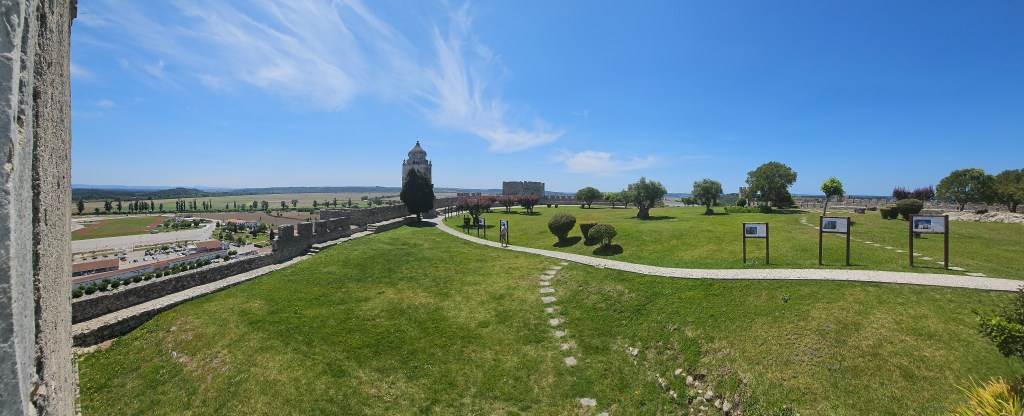
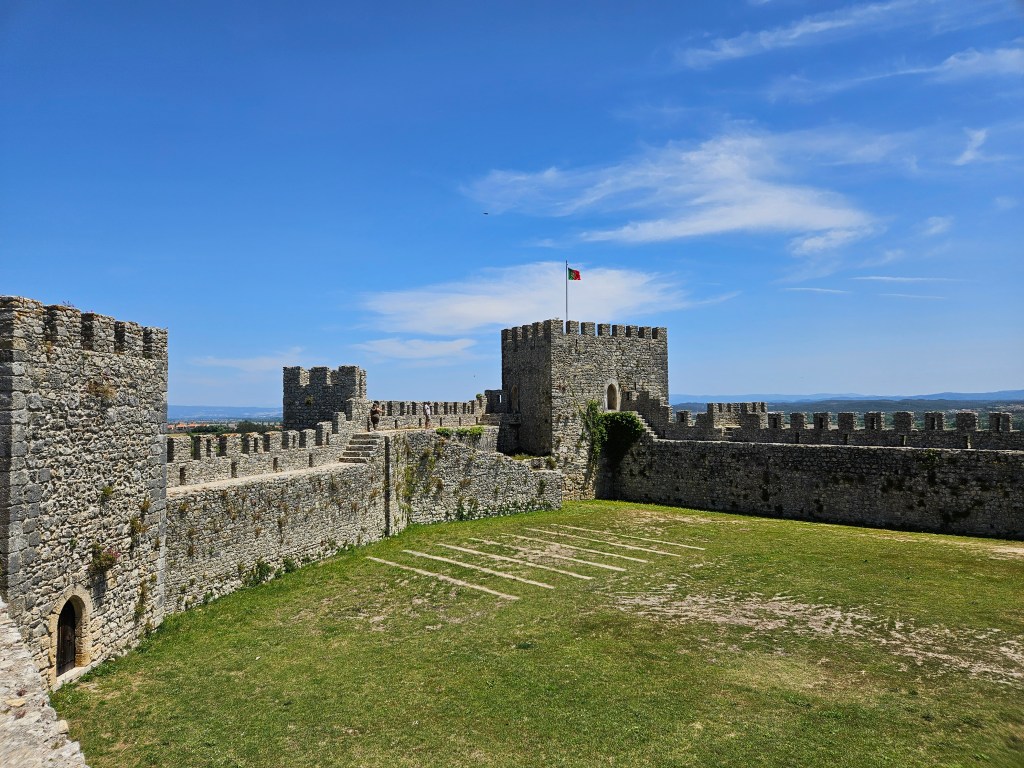
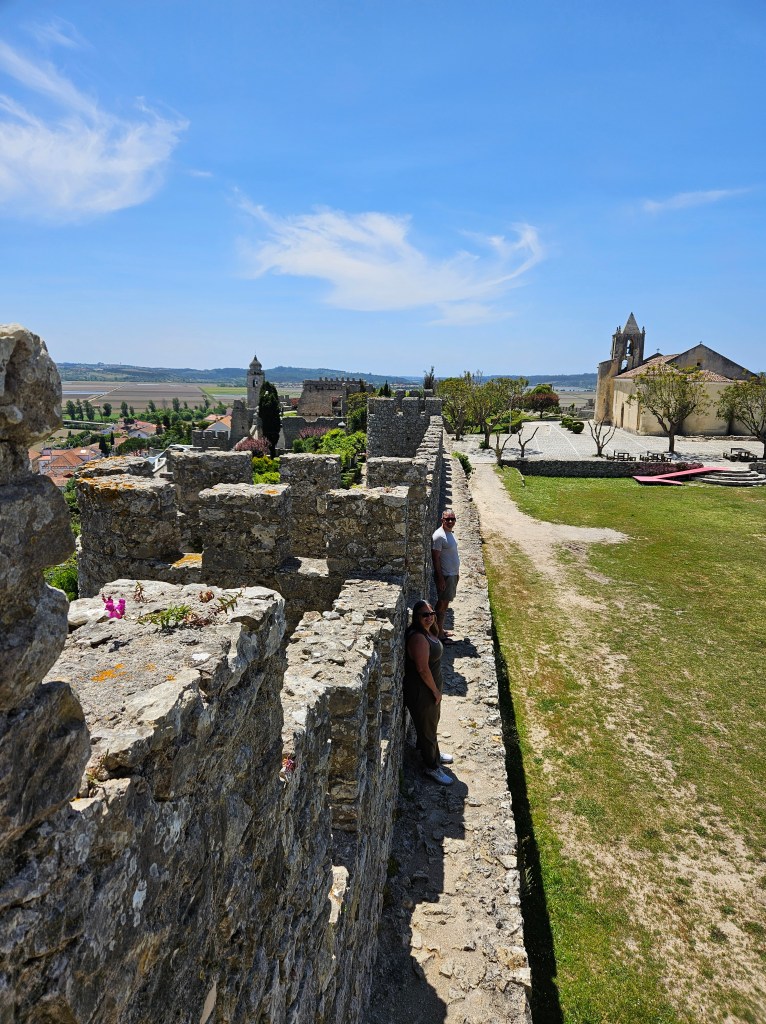
The last major area we ventured to with Amy on this trip was the Castle of Montemor-o-Velho. We’d passed it on every trip to the dealership in Coimbra, so we knew we’d go here with Amy. It’s believed that the first fortification here was done in 911 by Arabs that settled the area. Once Christians took over the region, King Alfonso VI rebuilt defensive structures and the castle that is preserved today. It was free to visit, and there weren’t many others there the day we went. My kind of sightseeing. =)
This view is from a tower I could climb using a ladder attached to it.
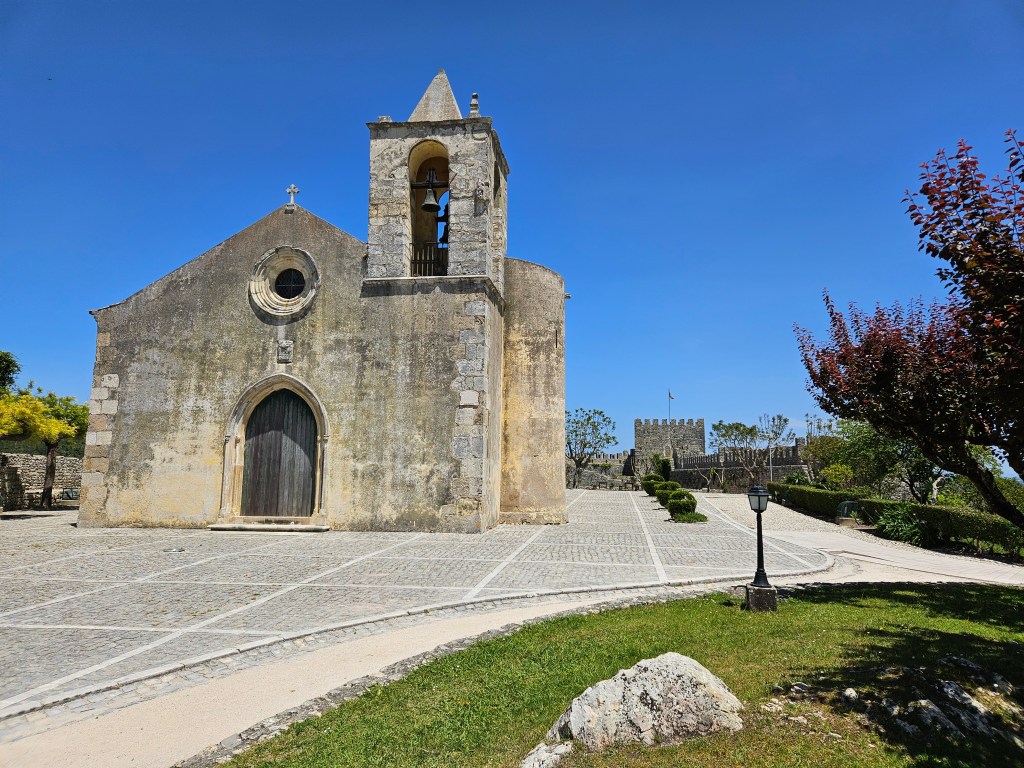
The Castle’s church.
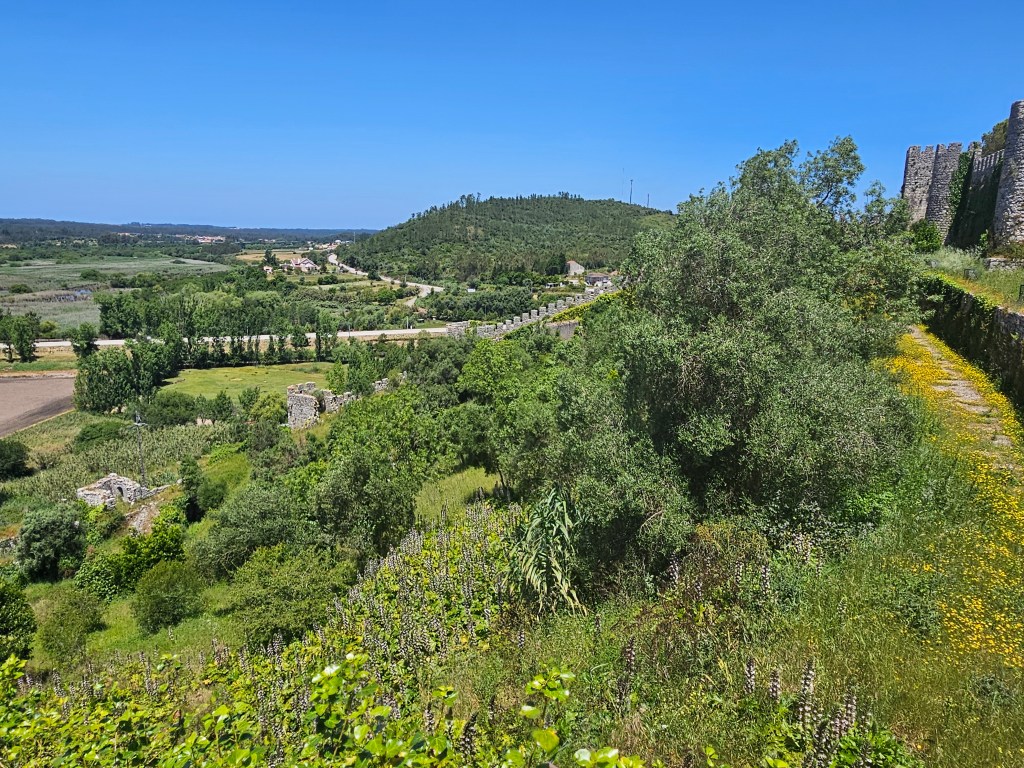
Some of the defensive wall outside the castle still extends down the hill.


 Ben and Megan Travel the World